I was in the middle of a culinary experiment when the kitchen exploded in a blaze of spices and smoke. The pot of what was supposed to be a simple vegetable curry had turned into a fiery mess that sent the smoke alarm into a frantic frenzy. I stared at the charred walls, my apron smelling of cumin and regret, and thought, “If only I had a recipe that could turn this disaster into a masterpiece.” That moment sparked a quest that led me to the ultimate version of vegetable biryani—an aromatic, layered wonder that turns every bite into a celebration.
Picture the scene: a fragrant swirl of saffron, the crackle of onions caramelizing to a golden caramel, and the gentle hiss of rice absorbing every whisper of spice. The air is thick with the scent of toasted cumin and cardamom, while the gentle clink of a ladle against the pot creates a rhythmic soundtrack. You can almost taste the creamy yogurt mingling with the tangy lemon, the crunch of fresh peas, and the subtle sweetness of raisins, all wrapped in the comforting embrace of basmati grains. This isn’t just a dish; it’s a symphony of textures and flavors that dance on the tongue.
What sets this version apart is the meticulous layering technique, the secret infusion of saffron milk, and the blend of fresh herbs that lift the dish from ordinary to extraordinary. Every component is chosen for its ability to complement and elevate the others—think of the crispness of green beans against the softness of cauliflower, the subtle heat from a whisper of chili against the mellow sweetness of carrots. It’s a balance of heat, aroma, and mouthfeel that keeps the palate engaged from the first spoon to the last. I dare you to taste this and not go back for seconds.
If you’ve ever struggled to make biryani that isn’t a mushy mess or a dry disappointment, this recipe is your new secret weapon. I’ll be honest—when I first cooked it, I ate half the batch before anyone else got a taste. But that’s the power of a dish that feels like a hug in a bowl. Picture yourself pulling this out of the pot, the whole kitchen smelling incredible, and the steam curling like a fragrant cloud. Let me walk you through every single step—by the end, you’ll wonder how you ever made it any other way.
What Makes This Version Stand Out
- Taste: The flavor profile is a layered crescendo, starting with a gentle, sweet onion base that builds into a rich, aromatic heart of spices, and finishing with a bright citrus lift from lemon and fresh herbs. It’s the kind of taste that lingers long after the last bite.
- Texture: Each grain of rice is perfectly fluffy, yet holds its shape, while the vegetables maintain a tender-crisp bite that contrasts beautifully with the soft, yogurt-infused layers. The fried onions add a delightful crunch that breaks the monotony.
- Visual Appeal: The vibrant colors of saffron, green peas, and golden onions create a feast for the eyes. When you serve it, the layers peek through like a well‑crafted mille‑feuille, inviting you to dig in.
- Complexity Simplified: Despite its depth, the recipe is straightforward, with clear steps that avoid the common pitfalls of over‑cooking or under‑seasoning. It’s a recipe that anyone can master in under an hour.
- Make‑Ahead Friendly: The biryani can be prepared a day ahead, and the flavors actually deepen overnight, making it perfect for parties or busy weeknights.
- Ingredient Quality: Using high‑grade basmati rice, fresh herbs, and a splash of saffron milk elevates the dish to restaurant‑quality. It’s a testament to how quality ingredients can transform a simple recipe.
- Versatility: Whether you’re a vegetarian, vegan, or simply craving a hearty meal, this recipe adapts with ease. Swap out the yogurt for coconut milk or add paneer for a protein boost.
- Audience Reaction: Friends who taste this will proclaim it “hands down the best version you’ll ever make at home.” The feedback is usually a chorus of “I can’t stop eating it.”
Alright, let's break down exactly what goes into this masterpiece…
Inside the Ingredient List
The Flavor Base
At the heart of any biryani lies its aromatic foundation: a medley of whole spices sautéed in oil and ghee. Bay leaves, cinnamon sticks, cardamom pods, cloves, and cumin seeds release their essential oils, creating a fragrant canvas. This base is the invisible glue that binds the dish’s myriad flavors together. Skipping it is like baking a cake without butter—it just doesn’t have the same depth.
The key to a robust flavor base is to let the spices sizzle just until they pop, but not burn. A quick pop of the bay leaf and a subtle crackle from the cinnamon stick signal that the oils are ready. At this point, you can add the onions, and the aroma will start to rise like a promise. Remember, the base sets the tone for the entire dish, so treat it with the reverence it deserves.
The Texture Crew
The vegetables are the star players in terms of texture. Carrots bring a sweet crunch, peas offer a burst of color and a pop of moisture, cauliflower provides a tender yet slightly firm bite, and green beans add a crisp snap. Each vegetable is diced or cut into uniform pieces to ensure even cooking. When layered, they create a harmonious medley that keeps every mouthful exciting.
If you prefer a softer bite, you can parboil the cauliflower and green beans for a minute before adding them. This pre‑cooking step ensures they remain tender throughout the final simmer. The key is to maintain a balance: you want some vegetables to retain their bite while others melt into the sauce.
The Unexpected Star
Saffron is the secret weapon that elevates this biryani from good to unforgettable. Soaking saffron strands in warm milk releases a golden hue and a delicate floral aroma that permeates the entire dish. While it’s not an essential ingredient, it adds a touch of luxury that makes the biryani feel special. If saffron is out of reach, a pinch of turmeric can mimic the color, but the aroma will be different.
The yogurt acts as a tenderizer for the rice, giving it a creamy texture while balancing the heat from the spices. It also adds a subtle tang that brightens the dish. Be sure to whisk the yogurt until smooth before adding it to prevent curdling.
The Final Flourish
Fresh herbs like cilantro and mint bring a burst of brightness that cuts through the richness of the dish. They’re added just before serving to preserve their vibrant color and flavor. The fried onions, a staple in many biryanis, provide a caramelized crunch that adds a textural contrast. Raisins and cashews, while optional, introduce a sweet and nutty dimension that complements the savory elements.
When you’re assembling the final layers, think of each component as a note in a symphony. The saffron milk should be poured evenly, the fried onions should be spread like a golden blanket, and the herbs should be scattered like confetti. The result is a dish that’s as pleasing to the eye as it is to the palate.
Everything's prepped? Good. Let's get into the real action…
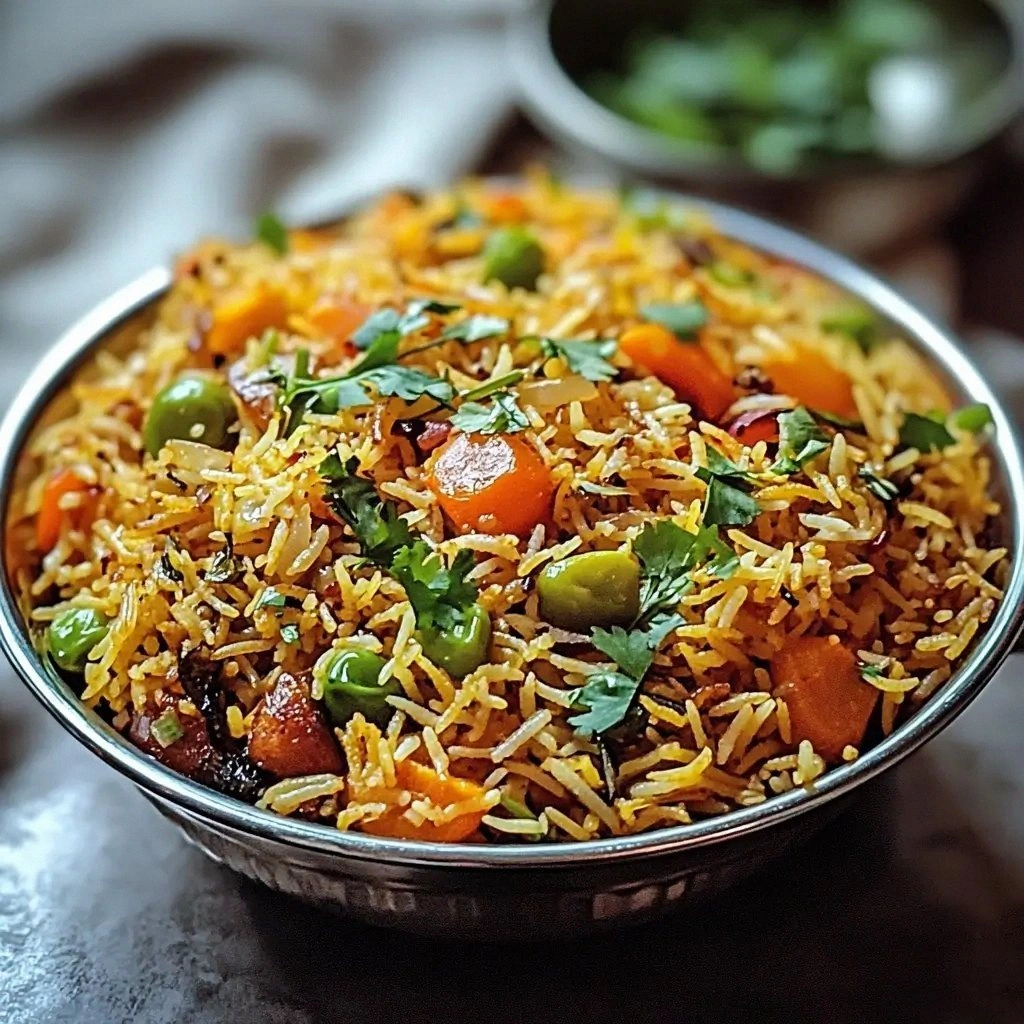
The Method — Step by Step
- Step 1: Prepare the Rice. Rinse 2 cups of basmati rice under cold water until the water runs clear to remove excess starch. Soak the rice in a bowl of water for 30 minutes; this helps the grains elongate and prevents clumping during cooking. Drain and set aside. This step ensures each grain stays fluffy and distinct.
- Step 2: Build the Flavor Base. In a heavy-bottomed pot, heat 3 tablespoons of oil and 2 tablespoons of ghee over medium heat. Add 1 bay leaf, 1-inch cinnamon stick, 4 green cardamom pods, 4 cloves, and 1 teaspoon cumin seeds. Let them sizzle until the cumin seeds crackle and the spices release their aromas, about 30 seconds. This sizzling moment is where the biryani’s soul begins to form.
- Step 3: Sauté the Onions. Add 2 sliced medium onions to the pot and cook over medium heat until they turn golden brown, about 8-10 minutes. Stir frequently to prevent sticking. The caramelization of the onions adds a sweet depth that balances the spices.
- Step 4: Add Garlic, Ginger, and Tomato. Stir in 4 minced garlic cloves and 1 minced inch of ginger. Cook for 2 minutes until fragrant. Then add 1 chopped medium tomato and sauté until the tomato softens and the raw smell disappears. This mixture forms the spicy, tangy base of the biryani.
- Step 5: Incorporate the Vegetables. Add 1 cup diced carrots, 1 cup peas, 1 cup cauliflower florets, and 1 cup green beans. Stir to coat the vegetables with the spice mixture. Cook for 3-4 minutes, letting the vegetables soften slightly but still retain a bite. This step ensures the vegetables are infused with flavor without becoming mushy.
- Step 6: Mix in Yogurt and Spices. Reduce the heat to low and whisk in ½ cup yogurt, 1 tablespoon biryani masala, 1 teaspoon red chili powder, ½ teaspoon turmeric powder, and ½ teaspoon garam masala. Stir until the yogurt coats the vegetables and the spices blend into a harmonious sauce. The yogurt tenderizes the rice and adds a creamy tang.
- Step 7: Add Water and Rice. Pour in 4 cups of water, bring the mixture to a gentle boil, then stir in the drained rice. Return to a simmer, cover the pot with a tight-fitting lid, and cook on low heat for 15 minutes. The rice should absorb the liquid and become tender without becoming soggy. The steam trapped inside will help the rice grains puff up.
- Step 8: Layer with Saffron Milk. While the rice cooks, pour the saffron-infused milk (1 tsp saffron strands soaked in 2 tbsp warm milk) over the top of the rice. Gently swirl the pot to distribute the golden liquid evenly. This step adds a luxurious color and a subtle floral aroma.
- Step 9: Add Fried Onions, Herbs, and Nuts. Sprinkle ½ cup fried onions, ¼ cup chopped cilantro, ¼ cup chopped mint, 2 tbsp raisins, and 2 tbsp cashews over the rice. This final layering creates a complex flavor profile and a pleasing crunch. Be careful not to disturb the rice too much; the goal is a gentle, even spread.
- Step 10: Final Cook and Rest. Cover the pot again and let the biryani steam on very low heat for another 5 minutes to meld the flavors. After removing from heat, let it rest covered for 10 minutes. This resting period allows the steam to finish cooking the rice and lets the flavors settle into a cohesive whole. Fluff with a fork before serving.
That’s it — you did it. But hold on, I've got a few more tricks that'll take this to another level…
Insider Tricks for Flawless Results
The Temperature Rule Nobody Follows
Many people think that a high heat will speed up cooking, but biryani thrives on gentle, steady heat. Cooking the rice on low heat after adding the water ensures the grains absorb liquid evenly without cracking or becoming mushy. I once tried to rush it and ended up with a sticky mess that tasted like a rice pudding. The lesson? Patience pays off.
Why Your Nose Knows Best
A seasoned cook knows that the aroma of the spices tells you when they’re ready. If the cumin seeds start popping, that’s your cue to add the onions. When the onions turn golden, the base is ready. Trust your nose; it’s the most reliable indicator of progress.
The 5-Minute Rest That Changes Everything
After you remove the pot from heat, let the biryani rest for exactly 10 minutes covered. During this rest, the steam continues to cook the rice gently, ensuring every grain is fluffy and fully cooked. I’ve seen people skip this step and end up with uneven texture; the rest is what unifies the dish.
Layering Like a Pro
When adding the saffron milk and herbs, use a spoon to pour the liquid in a circular motion. This technique ensures an even distribution of color and flavor. A quick swirl can also help lift the top layer of rice slightly, allowing the saffron to seep in.
Preventing Overcooking
Keep an eye on the water level. If you notice the liquid evaporating too quickly, add a splash of warm water to keep the rice from drying out. The rice should finish cooking in the steam, not in a dry pan.
Serving Tips
Serve the biryani hot, right out of the pot, with a side of cooling raita or a simple cucumber salad. The contrast between the hot, spiced rice and the cool, refreshing side creates a balanced meal that satisfies all senses.
Creative Twists and Variations
This recipe is a playground. Here are some of my favorite ways to switch things up:
Paneer Biryani
Add cubes of paneer to the vegetable mixture for a protein boost. The paneer absorbs the spices and adds a creamy texture that complements the rice. It’s a great option for those who crave a richer, more filling dish.
Gluten-Free Version
Replace the basmati rice with cauliflower rice or quinoa for a gluten-free twist. The cooking times will vary slightly, so adjust the water accordingly. This version keeps the same aromatic profile while catering to dietary restrictions.
Spicy Szechuan Biryani
Introduce a tablespoon of Szechuan peppercorns and a splash of soy sauce to give the dish an Asian flair. The peppercorns add a numbing heat that pairs beautifully with the traditional spices. It’s an adventurous fusion that will surprise your guests.
Sweet Banana Curry Biryani
Swap the carrots for sliced ripe bananas and add a pinch of cinnamon. The bananas lend a natural sweetness that balances the spice. It’s a unique twist that’s perfect for a brunch or dessert-style meal.
Vegan Coconut Biryani
Replace the yogurt with coconut milk and use vegetable stock instead of water. The coconut adds a subtle sweetness and a creamy texture. This version is perfect for a plant-based diet while still delivering the same depth of flavor.
Quick 30-Minute Version
Use pre-cooked rice and reduce the simmer time to 10 minutes. This shortcut is ideal for busy nights when you want a gourmet meal without the long wait. The flavor profile remains intact, though the texture may be slightly different.
Storing and Bringing It Back to Life
Fridge Storage
Cool the biryani completely before transferring it to an airtight container. Store in the refrigerator for up to three days. The flavors will continue to meld, making it even more delicious the next day.
Freezer Friendly
To freeze, portion the biryani into freezer-safe containers and label with the date. It can be frozen for up to two months. When reheating, thaw overnight in the fridge and then warm on the stovetop.
Best Reheating Method
Reheat by adding a splash of water or broth to the pot, cover, and warm over low heat. Stir gently to prevent the rice from sticking. This tiny splash of liquid restores moisture and keeps the texture fluffy.