Love this? Pin it for later! 📌
I still remember the first November I spent working from home full-time. The leaves outside my window had turned the same shade of amber as the soup I was cradling in my favorite oversized mug, and for the first time in years, I wasn’t racing through lunch at my desk. That soup—this exact silky butternut squash version—was the silver lining of a hectic morning. It’s become my weekday ritual: I roast the squash while answering emails, blitz everything together during a conference-call lull, and suddenly the house smells like Thanksgiving even when it’s just a random Tuesday. If you’re looking for a lunch that feels like a warm blanket, clocks in under 200 calories a bowl, and can be prepped in the same time it takes to scroll Instagram, keep reading. I’ve refined this recipe through ten winters, three blenders, and countless “I need something healthy but comforting” afternoons. The result is a vibrant, slightly sweet, gently spiced soup that keeps you full without weighing you down, and it freezes beautifully in single-serve jars for those days when even five minutes feels like a luxury.
Why This Recipe Works
- Low-calorie satisfaction: Each generous serving is under 180 calories thanks to roasted vegetables and zero heavy cream.
- Meal-prep friendly: Make a double batch on Sunday; lunch is sorted for the week.
- One-pan roasting: Caramelized squash = naturally sweet depth, no added sugar needed.
- Immersion-blender easy: Puree right in the pot—less dishes, more sanity.
- Freezer hero: Thaws in the microwave in four minutes flat.
- Vegan & gluten-free: Everyone at the table can enjoy without label scanning.
Ingredients You'll Need
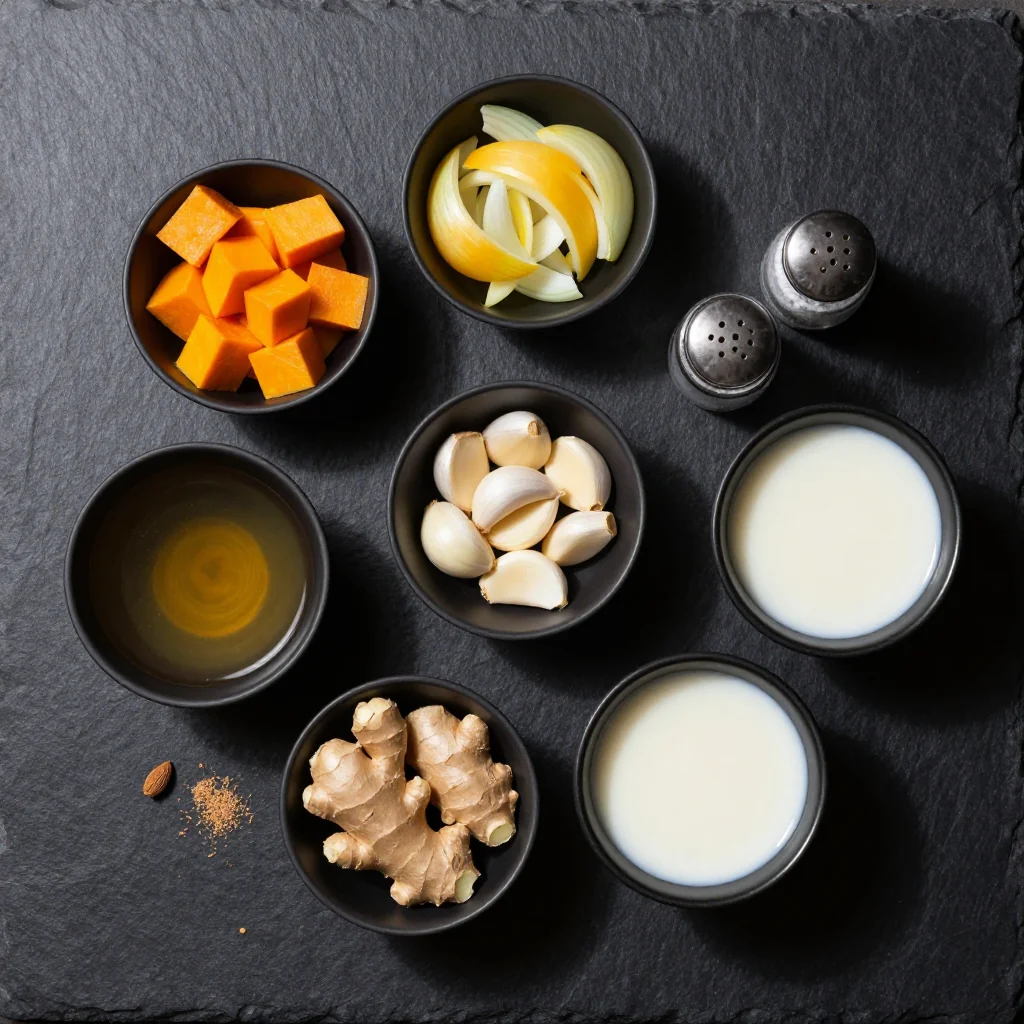
Quality ingredients make or break a low-calorie soup because you’re relying on the produce itself for flavor. Start with a butternut squash that feels heavy for its size and has a matte, tan skin—no green streaks or soft spots. I prefer the long-necked varieties; they’re easier to peel and yield more flesh. For the creamiest texture without cream, grab a Yukon Gold potato; its lower starch content blends silkier than russets. Vegetable broth should be low-sodium so you control salt levels as the soup reduces. Fresh thyme is worth the up-charge—dried works in a pinch, but the tiny leaves give grassy pops that sing against the sweet squash. Coconut oil spray keeps the roasting calories in check, but if you’re oil-free, use a parchment-lined sheet and add two tablespoons of broth to the vegetables before roasting to create steam. Finally, keep a good curry powder on hand; the turmeric brightens color and adds anti-inflammatory perks perfect for winter wellness.
Substitutions? Swap butternut for red kuri or kabocha—both have edible skins, cutting prep time. No potato? A rinsed can of white beans adds similar body for an extra protein bump. If you’re nightshade-sensitive, substitute celery root; it roasts to a mellow sweetness. And if coconut milk feels too indulgent, stir in evaporated skim milk or simply blend longer for aerated thickness.
How to Make Low Calorie Butternut Squash Soup for Lunch
Preheat & prep
Heat oven to 425 °F (220 °C). Line a rimmed sheet with parchment. Peel, seed, and cube the squash into ¾-inch pieces for even roasting. Keep them slightly larger if you like a rustic bite, smaller for faster caramelization.
Season & roast
Spread squash, potato, and onion on the sheet. Lightly coat with coconut oil spray, sprinkle curry powder, salt, pepper, and thyme leaves. Roast 25 minutes, turning once, until edges are chestnut-brown. Those dark bits = flavor depth without calories.
Simmer
Transfer roasted veggies to a Dutch oven. Pour in broth and 1 cup water. Bring to a gentle boil, then reduce to low, cover, and simmer 10 minutes so flavors meld and potato finishes cooking.
Blend
Remove from heat. Using an immersion blender, puree until satin-smooth, 60–90 seconds. Tilt the pot so the head is submerged to avoid splatter burns. No immersion blender? Work in batches in a countertop blender—fill only halfway and crack the lid for steam.
Finish & taste
Return pot to low heat. Whisk in coconut milk or additional broth to reach your preferred consistency. Season with a pinch of white pepper and a squeeze of lemon—the acid brightens all the sweet notes.
Serve lunch-size portions
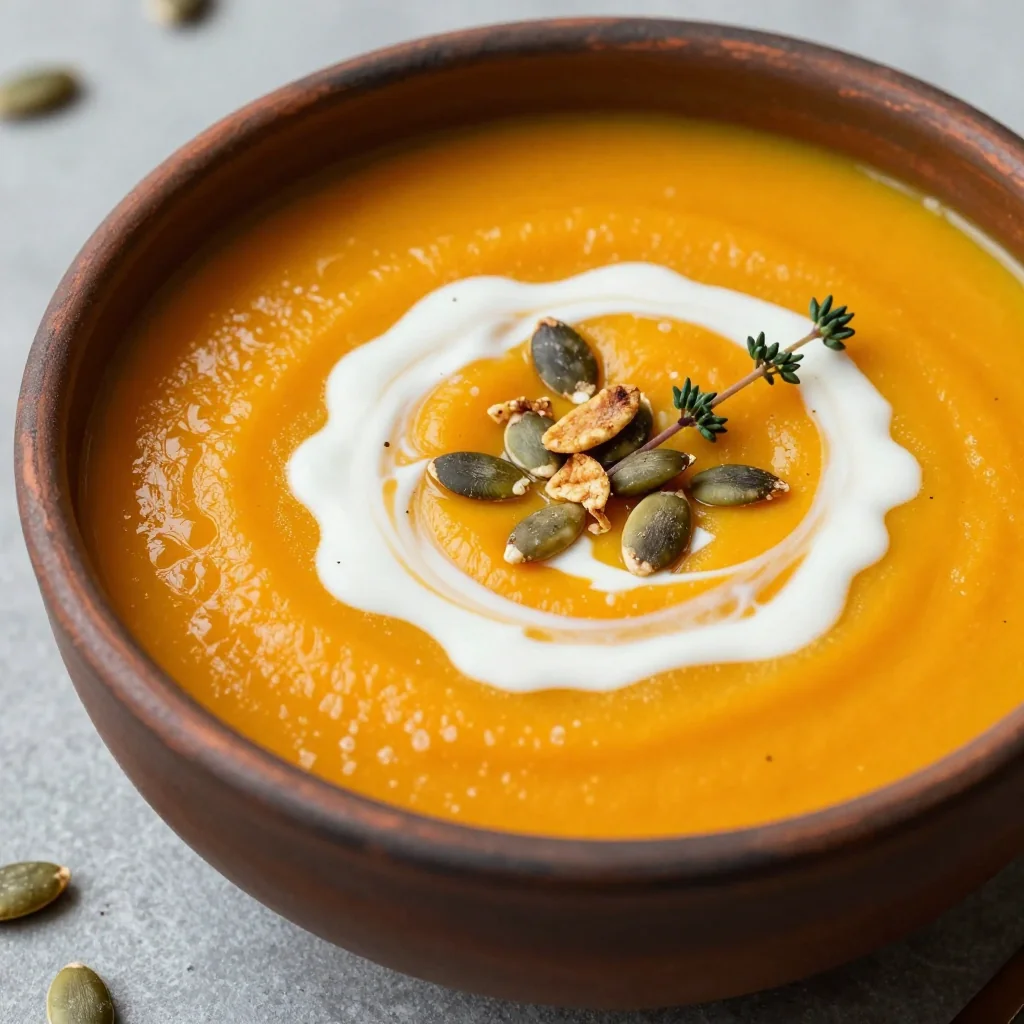
Ladle 1½ cups into a heat-proof mug or bowl. Garnish with toasted pumpkin seeds for crunch, micro-greens for color, and a swirl of yogurt if desired. Pair with whole-grain crackers or apple slices for a complete 300-calorie lunch.
Expert Tips
Roast hotter
425 °F browns squash faster than 400 °F, evaporating moisture so you don’t need flour or thickener.
Low-sodium stock
Taste after blending; saltiness concentrates as liquid steams off. Adjust at the end to avoid over-salting.
Chill quickly
Divide hot soup among shallow containers so it drops through the danger zone fast and keeps texture silky.
Blend longer
An extra 30 seconds aerates the soup, mimicking the richness cream would offer without added calories.
Color pop
Reserve a few roasted cubes, toss with smoked paprika, and float on top for restaurant-worthy presentation.
Batch math
A 2 lb squash yields exactly 4 lunch portions; scale linearly so weekday containers line up perfectly.
Variations to Try
- Carrot-ginger twist: Swap half the squash for carrots and add 1-inch knob of fresh ginger before blending.
- Apple & sage: Replace potato with a tart apple and finish with crisped sage leaves in lieu of thyme.
- Spicy chipotle: Stir in ½ tsp chipotle powder and top with roasted corn kernels for a smoky Southwest vibe.
- Green protein boost: Add two cups baby spinach during the last minute of simmering; blend as usual for extra iron.
- Thai-inspired: Use lite coconut milk, swap curry for red Thai paste, and finish with lime zest and cilantro.
Storage Tips
Refrigerate cooled soup in airtight containers up to 4 days. For longer storage, ladle into silicone muffin trays, freeze, then pop out soup “pucks” into zip bags—each puck is roughly ½ cup, so you can thaw exactly what you need. When reheating, add a splash of water or broth; the starches absorb liquid as it sits. Microwave on 70% power, stirring every 45 seconds to heat evenly without explosive bubbles. If the soup separates after thawing, whisk vigorously or give it a quick buzz with the immersion blender; the emulsion comes right back together.
Frequently Asked Questions
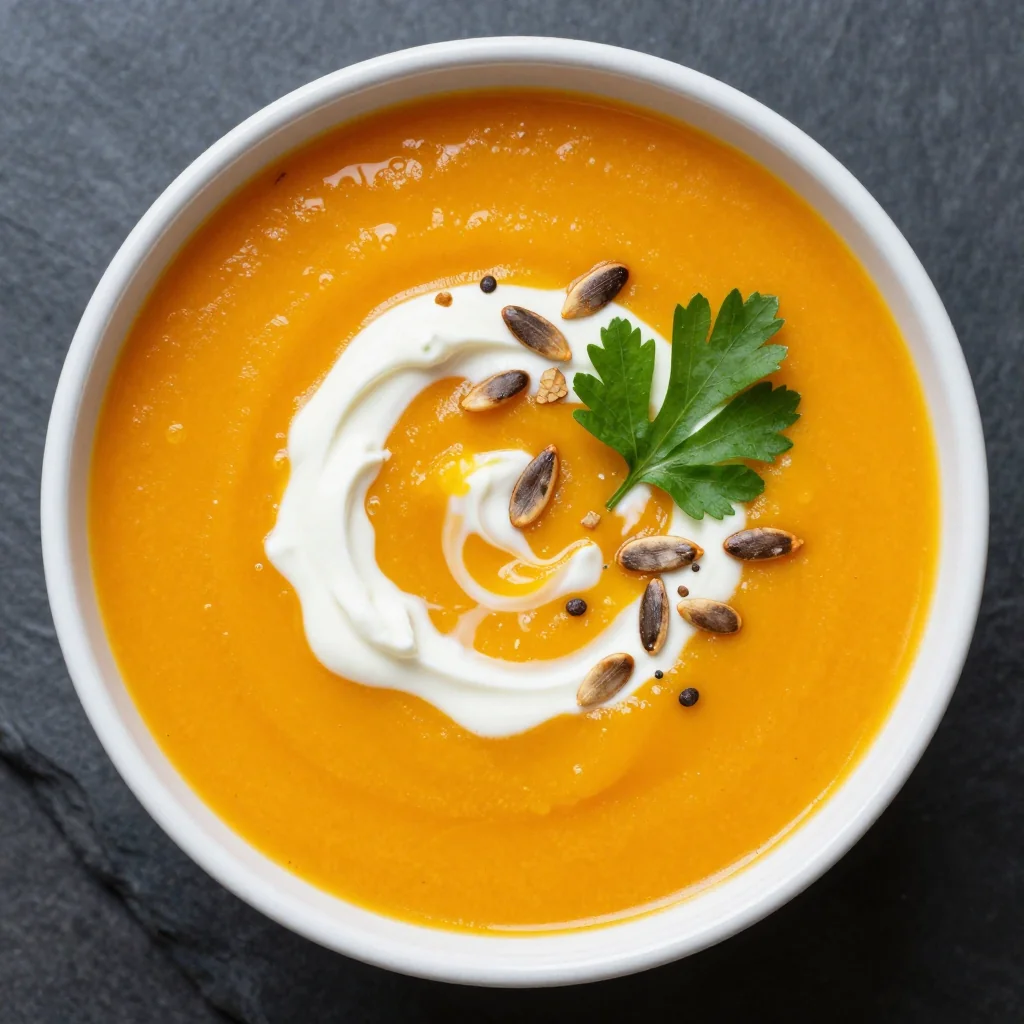
Low Calorie Butternut Squash Soup for Lunch
Ingredients
Instructions
- Preheat oven: Line a rimmed baking sheet with parchment and preheat to 425 °F (220 °C).
- Roast vegetables: Toss squash, potato, and onion with coconut spray, curry powder, salt, pepper, and thyme. Spread in single layer; roast 25 min, turning once.
- Simmer: Transfer vegetables to pot, add broth plus 1 cup water. Simmer 10 min.
- Blend: Puree with immersion blender until velvety.
- Finish: Stir in coconut milk and lemon juice; warm gently. Adjust salt.
- Serve: Ladle into bowls, garnish, and enjoy hot.
Recipe Notes
For ultra-smooth texture, strain through fine mesh after blending. Soup thickens on standing; thin with broth when reheating.