Love this? Pin it for later! 📌
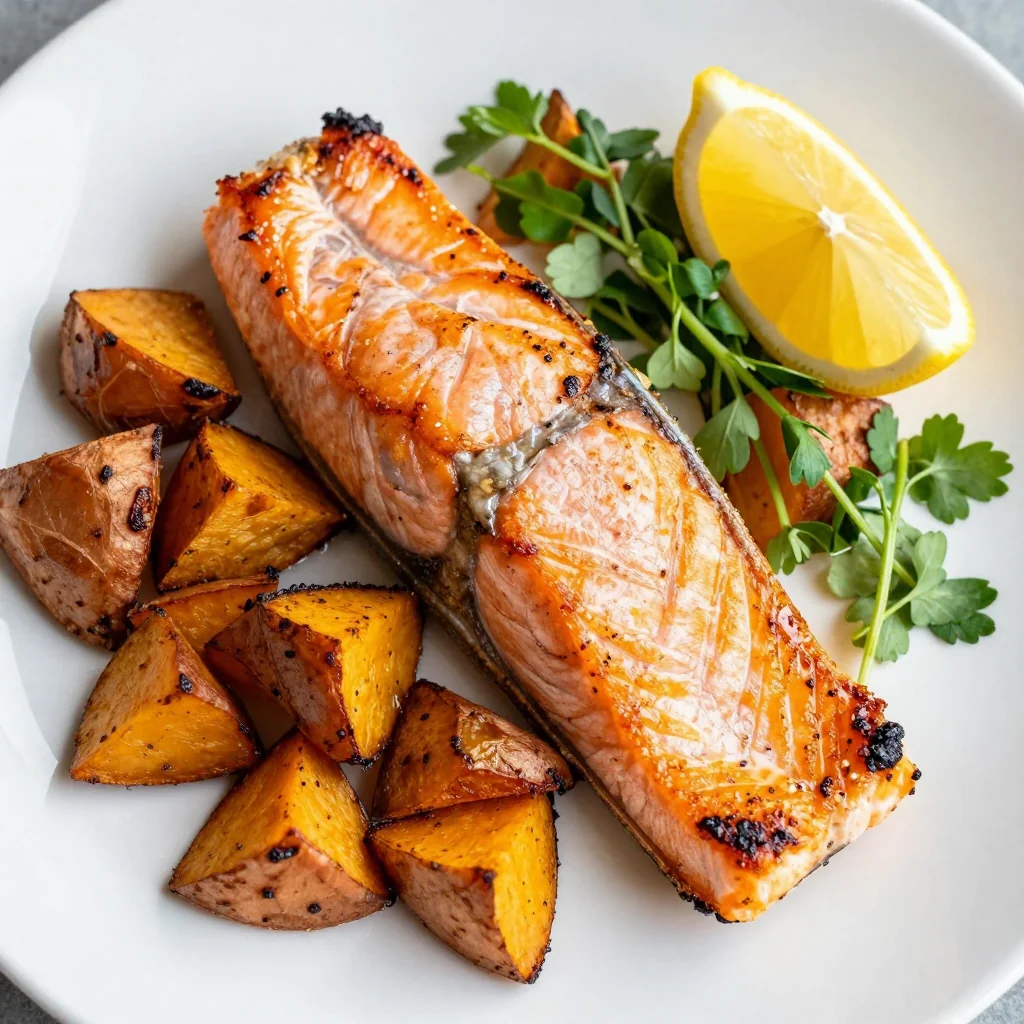
There’s a moment—about halfway through roasting—when the sweet potatoes start to caramelize and the salmon begins to flake just so, and the whole kitchen smells like you’ve booked a table at your favorite seaside bistro. That moment is why I keep coming back to this sheet-pan supper. It was born on a frantic Tuesday when the fridge held little more than a side of salmon and a forgotten bag of sweet potatoes, yet it has quietly become the meal my family requests most often. We serve it when friends come for Sunday supper, when we need something nourishing after a long hike, and when we want the satisfaction of comfort food without the post-dinner slump. If you can chop and stir, you can master this dish; if you can breathe, you can enjoy it.
Why This Recipe Works
- One pan, zero fuss: Salmon and vegetables roast together, saving dishes and time.
- Omega-3 powerhouse: Each portion delivers over 2 g of heart-healthy EPA & DHA.
- Balanced macros: 38 g protein, complex carbs, and anti-inflammatory fats in every plate.
- Meal-prep friendly: Components hold beautifully for up to four days in the fridge.
- Customizable spice level: Cajun-style kick or mellow lemon-pepper—your call.
- Restaurant glaze, home price: A 3-minute maple-mustard reduction tastes like fine dining.
- Fail-safe salmon: My 135 °F trick guarantees moist fillets even if you over-run the timer by two minutes.
Ingredients You'll Need
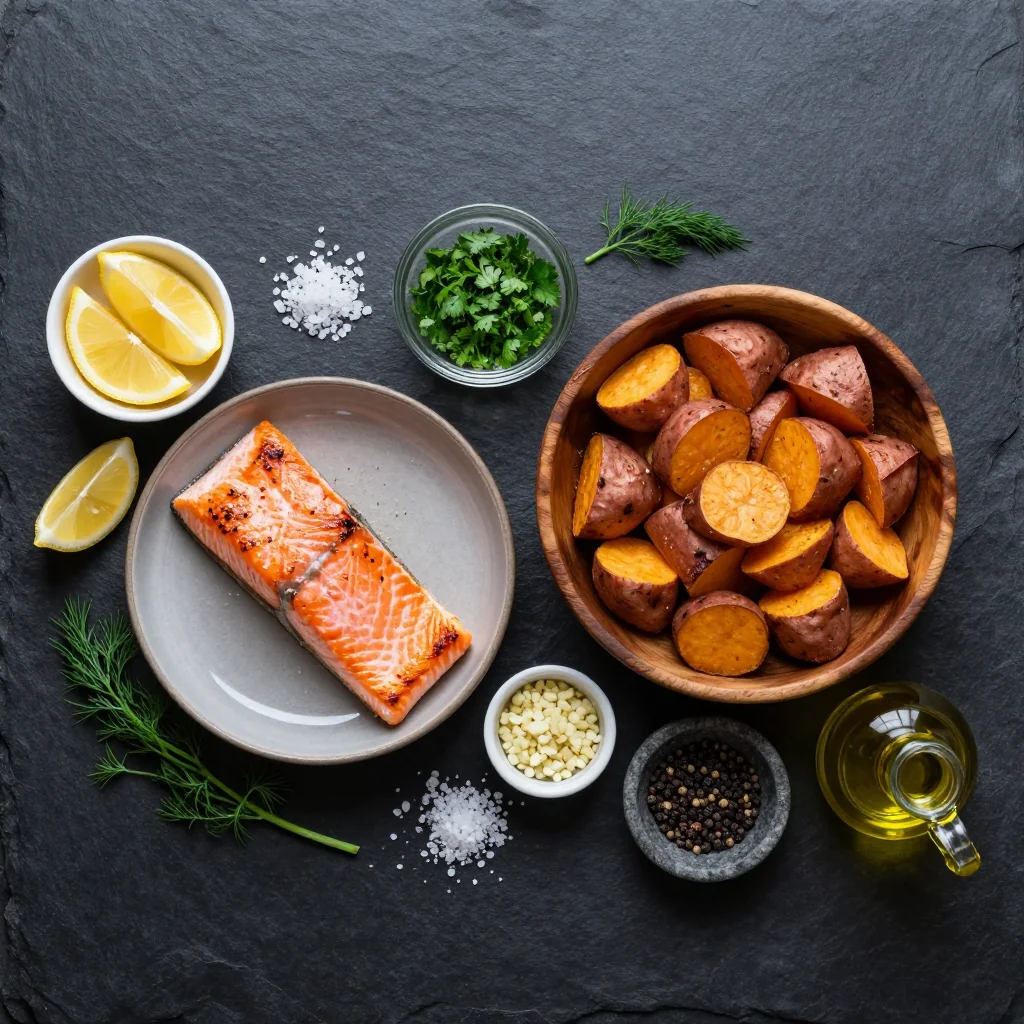
Great ingredients don’t need much adornment, but they do deserve a little understanding. Let’s break it down:
- Salmon: Look for center-cut fillets that are at least 1 in (2.5 cm) thick so they stay juicy. Wild-caught Coho or King is magnificent, but responsibly farmed Atlantic works well and is budget-friendlier. Skin-on prevents sticking and crisps beautifully if you give it a quick broil at the end.
- Sweet potatoes: Jewel or garnet varieties roast creamier than the pale Hannah types. Pick firm tubers with unblemished skins; they’ll store for weeks in a cool cupboard.
- Avocado oil: Neutral flavor and a sky-high smoke point (500 °F/260 °C) mean no burnt off-notes. Extra-virgin olive oil is fine if you keep the oven at 400 °F.
- Fresh herbs: Dill and salmon are classic, but parsley, tarragon, or cilantro all brighten the plate. Buy bunches that look perky, not slimy, and store them upright in a jar of water like flowers.
- Maple syrup: Grade A amber offers the most rounded sweetness. In a pinch, honey works, though it will brown faster because of the higher fructose content.
- Whole-grain mustard: The seedy texture gives a rustic pop and emulsifies the glaze. Dijon is a smooth substitute if that’s what’s in the fridge.
- Lemon zest: Oils in the peel contain limonene, an antioxidant that boosts bioavailability of the omega-3s—food synergy at its best.
- Garlic: Fresh cloves, minced just before use, provide allicin, the compound responsible for both aroma and heart benefits. Jarred garlic is convenient but milder.
- Sea salt & pepper: Use kosher salt for even sprinkling; finish with flaky salt for crunch if you’re feeling fancy.
- Optional add-ins: Asparagus spears, bell-pepper strips, or halved Brussels sprouts can share the tray and turn this into a complete rainbow meal.
How to Make Healthy Baked Salmon with Roasted Sweet Potatoes
Preheat & prep the sheet pan
Position rack in center of oven and preheat to 425 °F (220 °C). Line a rimmed 18 × 13-inch sheet pan with parchment or a silicone mat for effortless cleanup. Lightly oil the surface so potatoes don’t cement themselves in place.
Season the sweet potatoes
Peel 2 medium sweet potatoes (about 1.5 lb/680 g) and cut into ¾-inch cubes. In a bowl, toss with 1 Tbsp avocado oil, ½ tsp kosher salt, ¼ tsp black pepper, and ¼ tsp smoked paprika for subtle warmth. Spread on one half of the sheet pan in a single layer; crowding equals steaming, and we want caramelization.
Start roasting potatoes
Slide pan into oven and roast for 15 minutes. This head start gives the dense sweet potatoes a chance to soften before the faster-cooking salmon joins the party.
Make the maple-mustard glaze
While potatoes roast, whisk 2 Tbsp pure maple syrup, 1 Tbsp whole-grain mustard, 1 tsp lemon zest, 1 tsp lemon juice, and 1 small grated garlic clove in a cup. The mixture should ribbon off the spoon; thin with a splash of water if it’s gloppy.
Prep salmon fillets
Pat 4 skin-on salmon portions (6 oz/170 g each) dry with paper towels—moisture is the enemy of browning. Brush flesh side lightly with 1 tsp oil, then sprinkle with ½ tsp salt, ¼ tsp pepper, and ¼ tsp dried thyme for an herby backbone.
Add salmon to tray
After 15 minutes, push sweet potatoes to the perimeter, creating a salmon-sized clearing in the center. Lay fillets skin-side down, leaving ½ inch between them for hot air circulation. Brush half of the maple-mustard glaze over each fillet; reserve the rest for serving.
Finish roasting
Return pan to oven for 9–11 minutes, depending on thickness. Salmon is perfectly cooked when it reaches 135 °F (57 °C) internal temperature and flakes with gentle pressure. Want crisp skin? Switch oven to broil for the final 1–2 minutes, watching like a hawk to prevent char.
Rest & garnish
Transfer salmon to a warm plate, tent loosely with foil, and rest 3 minutes—this allows juices to redistribute. Meanwhile, toss roasted sweet potatoes with any pan juices for glossy flavor. Drizzle remaining glaze over salmon, sprinkle with fresh dill, and serve with lemon wedges for a bright pop.
Expert Tips
Temperature trumps time
Invest in an instant-read thermometer; salmon transitions from translucent to chalky in under two minutes once it crosses 140 °F. Pull at 135 °F for carry-over cooking.
Dry = crispy
Whether you crave crispy skin or caramelized potato edges, surface moisture is the enemy. Pat everything dry and leave space on the pan.
Even sizing
Cut sweet potatoes into similar ¾-inch cubes so they finish at the same moment the salmon does. Uneven chunks = half mushy, half rock-hard.
Foil tent trick
If dinner is delayed, rest salmon tented with foil, parchment side down—this keeps it warm without steaming the luscious top glaze.
Oil choice matters
Avocado oil’s smoke point lets you crank the oven high enough to roast, not stew, your dinner. Olive oil works, but lower heat to 400 °F.
Color pop garnish
A shower of pomegranate arils or thinly sliced chives adds visual drama and fresh snap that makes the dish dinner-party worthy.
Variations to Try
- Asian twist: Swap maple for 1 Tbsp each tamari and honey, add 1 tsp grated ginger and a sprinkle of sesame seeds.
- Mediterranean style: Replace thyme with oregano, glaze with balsamic vinegar + fig jam, and finish with Kalamata olives and cherry tomatoes.
- Spicy Cajun: Dust salmon with 1 tsp Cajun seasoning and a pinch of cayenne; add andouille sausage slices to the sweet potatoes.
- Citrusy herb crust: Press a mixture of panko, parsley, lemon zest, and a whisper of garlic onto the top of each fillet before roasting.
- Low-carb swap: Trade sweet potatoes for cauliflower florets; reduce initial roast to 10 minutes.
Storage Tips
Refrigerate
Cool salmon and potatoes within two hours. Store in airtight glass containers, separate if possible, up to 4 days.
Freeze
Wrap individual salmon fillets tightly in parchment, then foil; freeze up to 2 months. Sweet potatoes freeze reasonably well but may mealy slightly upon thawing; vacuum-sealed bags mitigate this.
Reheat
Warm salmon at 275 °F (135 °C) for 8–10 minutes with a splash of broth to reintroduce moisture. Microwave works in 30-second bursts at 50 % power, though texture will be denser.
Make-ahead components
Cube sweet potatoes up to 24 hours ahead; submerge in cold water in the fridge to prevent browning. Drain and pat dry before roasting. Glaze keeps 1 week refrigerated.
Frequently Asked Questions
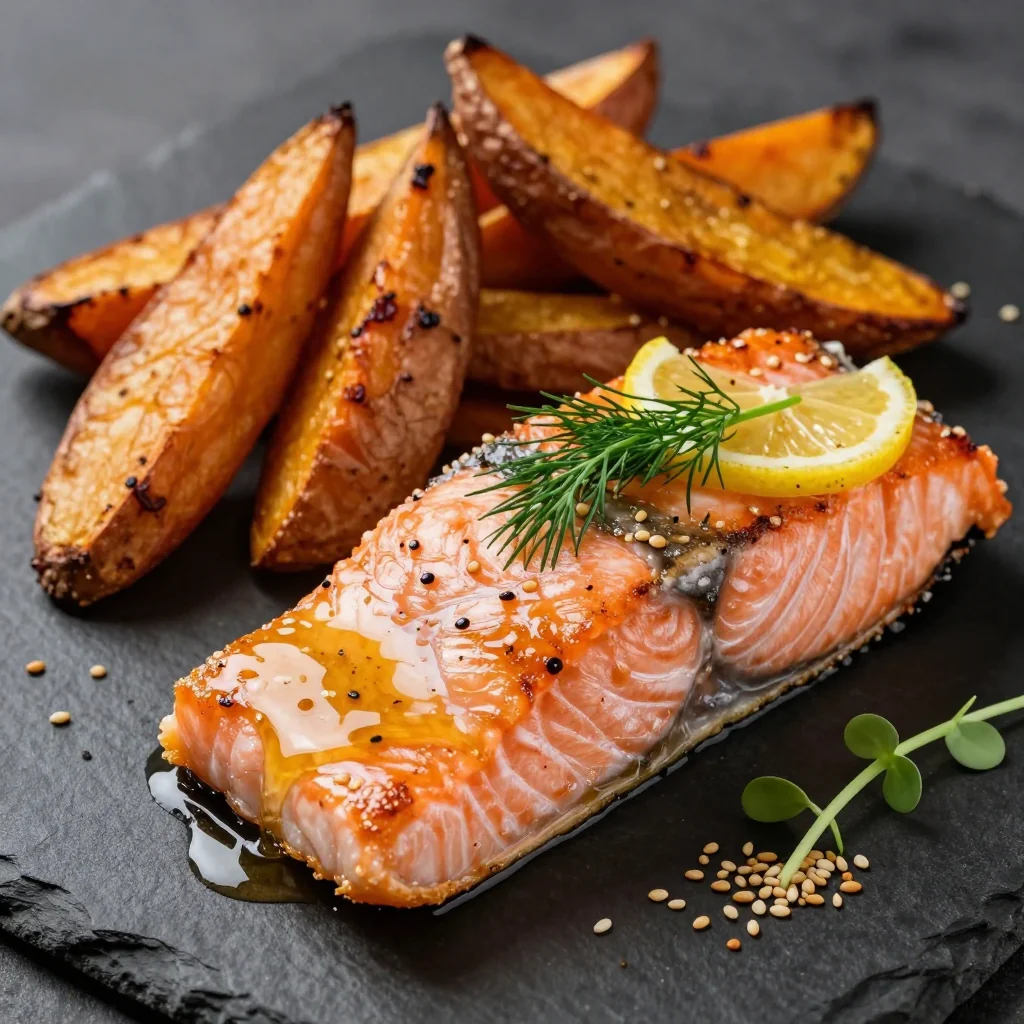
Healthy Baked Salmon with Roasted Sweet Potatoes
Ingredients
Instructions
- Preheat & season potatoes: Preheat oven to 425 °F. Toss sweet-potato cubes with 1 Tbsp oil, ½ tsp salt, ¼ tsp pepper, and smoked paprika. Spread on half of a parchment-lined sheet pan.
- Initial roast: Roast potatoes 15 minutes.
- Make glaze: Whisk maple syrup, mustard, lemon zest, lemon juice, and garlic.
- Prep salmon: Pat fillets dry, brush with remaining oil, season with remaining salt, pepper, and thyme.
- Combine & glaze: Push potatoes to edges; place salmon in center. Brush half of glaze over fillets.
- Finish roasting: Bake 9–11 min, broil last 1–2 min for crisp skin.
- Rest & serve: Tent salmon 3 min. Drizzle remaining glaze, sprinkle dill, serve with lemon.
Recipe Notes
Salmon is done at 135 °F for moist texture. Store leftovers in airtight containers up to 4 days; reheat gently at 275 °F.