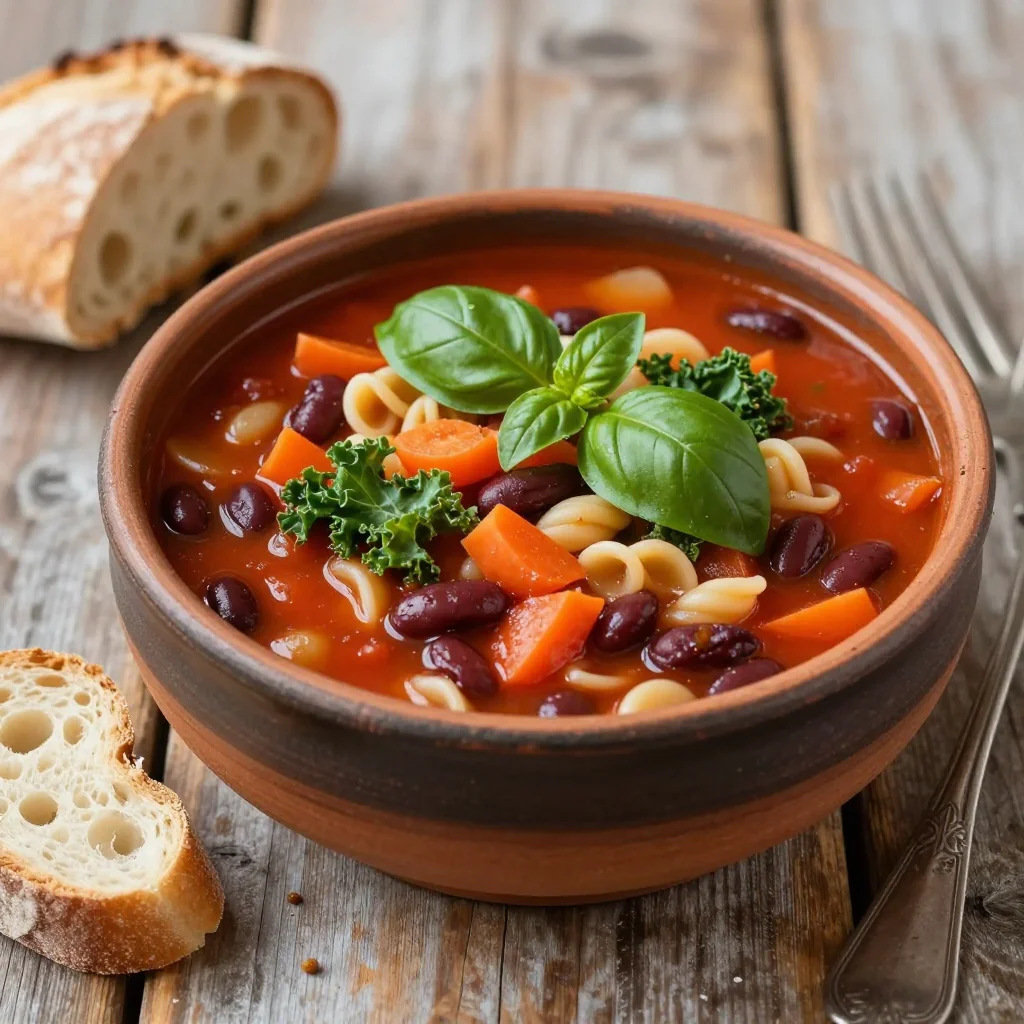
Love this? Pin it for later! 📌
There’s a moment every winter when the fridge looks bleak, the wallet feels thin, and the stomach still expects dinner. That Tuesday, two Januaries ago, I stared into a pantry that held nothing fancier than a dented can of cannellini beans and the last handful of bow-tie pasta from a bag my kids had been raiding for “craft supplies.” Thirty minutes later the house smelled like an Italian grandmother had moved in, and my skeptical husband—who believes soup is merely a beverage with obstacles—went back for thirds. Budget-Friendly Minestrone has been our safety-net supper ever since: the recipe that turns “almost nothing” into “more than enough,” feeds eight for the price of one café sandwich, and tastes even better when the forecast threatens snow and your only plan is to stay home in thick socks.
What follows is the exact blueprint I wish I’d had on that bare-shelf night: a long, leisurely walk through the cheapest, coziest pot of minestrone you can pull off without a special grocery run. We’ll talk smart substitutions, timing tricks, and the one step that keeps pasta from dissolving into sad, bloated ghosts. Grab the ugliest vegetables in the crisper and let’s make dinner that hugs you back.
Why This Recipe Works
- Pantry Staples Only: Every ingredient is shelf-stable or easily swapped for what you already have—no specialty shopping required.
- One-Pot Wonder: Minimal dishes, maximum flavor; the soup purées a cup of its own beans to create silky body without cream.
- Freeze-Friendly: Double the batch and freeze half; pasta is added later so it never turns to mush.
- Veg-Heavy & Kid-Approved: Finely diced vegetables disappear into the tomato-y broth; my toddler calls them “confetti.”
- Under $1 per serving: Costed in March 2024 at Midwest big-box prices; even with organic produce the total stayed under eight dollars for eight bowls.
- Week of Lunches: Flavors deepen overnight; pack into thermoses or microwave-safe jars for grab-and-go meals.
Ingredients You'll Need
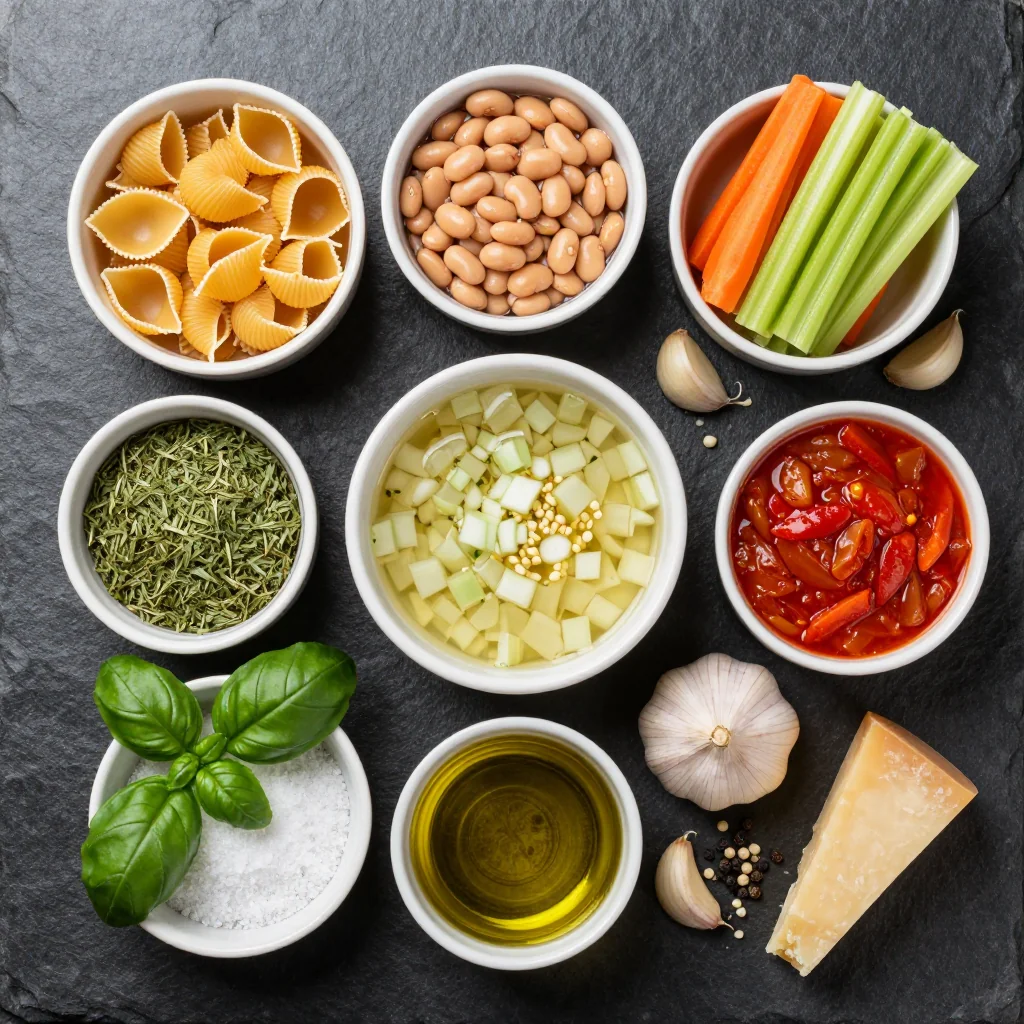
Think of the ingredient list as a gentle suggestion, not a contract. Classic minestrone was invented to use up garden odds and ends, so honor the spirit and your budget by subbing freely.
Olive Oil—2 tablespoons
Use the everyday stuff, not your $38 bottle. Any neutral oil works, but olive adds the faint peppery back-note that makes the soup taste Italian instead of vague.
Onion—1 medium, diced small
Yellow, white, or even a pack of discounted peeled pearl onions you’ve been meaning to use. If onion prices spike, replace with the white part of two leeks or a large shallot.
Carrots—2 medium, peeled & diced
Organic bags often cost the same as conventional loose carrots; grab the bag and stash extras in the crisper. No carrots? Parsnips, sweet potato, or even the crunchy stems from a bunch of kale add similar sweetness.
Celery—2 stalks
Leaves included; they taste like concentrated celery. If you only have celery that’s gone limp, trim the ends and stand it in ice water for 20 minutes to re-crisp.
Garlic—3 cloves, minced
Jarred is fine; 1 heaping teaspoon equals one clove. In a pinch, ½ teaspoon garlic powder blooms nicely when you sauté tomato paste.
Tomato Paste—2 tablespoons
Buy the cheap can, freeze the remainder in 1-tablespoon dollops on parchment, then bag for future recipes. Adds umami depth that tricks tasters into thinking the broth simmered for hours.
Italian Seasoning—1 teaspoon
A pre-blended jar usually contains oregano, basil, thyme, rosemary. Make your own: ½ tsp oregano, ¼ tsp each basil & thyme, pinch rosemary.
Crushed Red Pepper—¼ teaspoon, optional
Lifts the whole pot without making it spicy; skip for heat-sensitive kids.
Vegetable Broth—4 cups
Water plus 2 bouillon cubes is perfectly respectable. If you have half-used cartons of broth in the fridge, combine them; nobody will know.
Water—2 cups
Dilutes the broth so the pasta has room to release starch and thicken the soup without turning it into tomato pudding.
Canned Cannellini Beans—2 (15-oz) cans
Great Northern or navy beans cost less and taste identical. Rinse one can; leave the other undrained to add body. Buy low-sodium when possible so you control salt.
Canned Diced Tomatoes—1 (14.5-oz) can
Fire-roasted, seasoned, or plain—whatever is on sale. Petite-diced melt faster if you have textural skeptics at the table.
Zucchini—1 medium, diced
Out of season? Swap in frozen mixed vegetables, chopped green beans, or the last cup of leftover roasted vegetables lurking in a take-out container.
Small Pasta—1 cup dry
Ditalini is classic, but elbows, small shells, or broken spaghetti all work. Purchase during back-to-school sales; store brands average 89¢/lb.
Spinach—2 packed cups fresh or ½ cup frozen
Frozen spinach is cheaper, already chopped, and can be added straight from the freezer. Kale, escarole, or the outer cabbage leaves you usually toss all behave the same way.
Lemon Juice—1 tablespoon
Brightens the broth and balances the tomato. Bottled is fine; white wine vinegar or even pickle juice works in a pinch.
Salt & Pepper—to taste
Add at the end; broth and canned beans vary widely in sodium.
Parmesan Rind—optional but magical
Save rinds in a zip-bag in the freezer. They simmer into chewy umami bombs that elevate canned broth to slow-simmer depth. No rind? Stir in ¼ cup grated Parmesan at the end.
How to Make Budget Friendly Minestrone Soup with Beans and Pasta
Warm the Pot & Aromatics
Set a heavy 4-quart Dutch oven over medium heat. Add olive oil; when it shimmers, scatter in diced onion, carrot, and celery plus a pinch of salt. Sauté 5 minutes until vegetables sweat and edges turn translucent. Stir in garlic for 30 seconds—just until fragrant but not browned, or it turns bitter.
Caramelize the Tomato Paste
Push vegetables to the perimeter, creating a bare center. Plop in tomato paste and Italian seasoning (plus red-pepper flakes if using). Let it sizzle 2 minutes, stirring, until brick-red darkens to mahogany. This Maillard moment erases any tinny canned-tomato edge.
Deglaze & Build Broth
Pour in 1 cup broth; scrape browned bits. Add remaining broth, water, undrained can of beans, drained beans, diced tomatoes (with juice), and Parmesan rind. Bring to a lively simmer, then drop heat to low, cover partially, and cook 10 minutes so flavors mingle.
Blend a Ladle for Body
Optional but transformative: fish out ½ cup of beans plus a little broth and blitz with an immersion blender or mash thoroughly with a potato masher; return to pot. This natural purée thickens the soup without flour or cream and keeps it gluten-free and vegan.
Add Hard Vegetables & Pasta
Stir in zucchini (or substitute veg) and dried pasta. Simmer uncovered 8–10 minutes, stirring every minute or so. Pasta releases starch, naturally thickening the broth; if soup gets too tight, splash in ½ cup water. Taste and season conservatively with salt—remember Parmesan rind adds salinity.
Finish with Greens & Acidity
When pasta is al dente, fold in spinach and lemon juice. Spinach wilts in 30 seconds; frozen takes about 2 minutes. Fish out Parmesan rind (it will be chewy; discard or let the cheese-lover in your life gnaw it). Final-taste for salt and plenty of freshly ground black pepper.
Rest & Serve
Turn off heat, cover, and let stand 5 minutes. This brief nap allows pasta to absorb broth without overcooking and lets the flavors round the corners. Ladle into wide bowls, drizzle with olive oil, and shower with grated Parmesan if you’ve got it. Pass crusty bread and red-pepper flakes for custom heat.
Expert Tips
Salt at the End
Canned beans and broth vary in sodium; salting after simmering prevents over-seasoned, tongue-tingling soup.
Cool Before Freezing
Chill soup completely; frozen pasta turns to gravel. Freeze base, add freshly cooked pasta when reheating.
Pasta on the Side
Serving a crowd over several days? Cook pasta separately and ladle soup over it to avoid bloated noodles.
Stretch with Water
Soup thickens as it sits; thin with water or broth when reheating—taste and adjust seasonings again.
Parmesan Rind Vault
Keep a zip-bag of rinds in the freezer; they’re gold for soups, risottos, and bean pots. No rind? Stir in 2 Tbsp nutritional yeast.
Overnight Flavor Boost
Make soup through Step 4, refrigerate overnight, finish Steps 5–7 next day. The bean purée hydrates and the broth tastes slow-simmered.
Variations to Try
-
Meat-Lover’s: Brown 4 oz chopped bacon or pancetta in Step 1; proceed as written. Smoky richness eliminates need for Parmesan rind.
-
Gluten-Free: Replace pasta with ¾ cup quick-cook rice or 1 cup diced potatoes; simmer until tender.
-
Summer Garden: Swap zucchini for yellow squash, add 1 cup fresh corn kernels, finish with handful of torn basil.
-
Speedy Instant Pot: Sauté aromatics on normal setting, add liquids, tomatoes, beans, Parmesan rind. High pressure 4 minutes, quick release. Stir in pasta, use sauté function 6 minutes, add spinach.
-
Low-Carb Veg-Loaded: Omit pasta, double zucchini and spinach, add ½ small diced cabbage for bulk, simmer 10 minutes.
-
Chickpea & Rosemary: Substitute 2 cans chickpeas for cannellini; add 1 tsp chopped fresh rosemary plus strip of lemon zest for a brighter, Provencal vibe.
Storage Tips
Refrigerator: Cool soup completely, transfer to airtight containers, and refrigerate up to 4 days. Keep pasta slightly underdone if planning to reheat; add splash of water before warming on stovetop or microwave.
Freezer (Base Only): Prepare through Step 4, omitting pasta and spinach. Cool, ladle into quart zip-top bags, lay flat to freeze up to 3 months. Thaw overnight in fridge, bring to simmer, add pasta and greens per recipe.
Freezer (Complete Soup): If you must freeze finished soup, slightly undercook pasta. Freeze in single portions; pasta will soften further when reheated but won’t disintegrate. Use within 2 months for best texture.
Make-Ahead Lunches: Portion soup into 2-cup glass jars, leaving 1-inch headspace. Refrigerate up to 4 days or freeze. Top each portion with a pinch of grated Parmesan before sealing; it revives when reheated.
Frequently Asked Questions
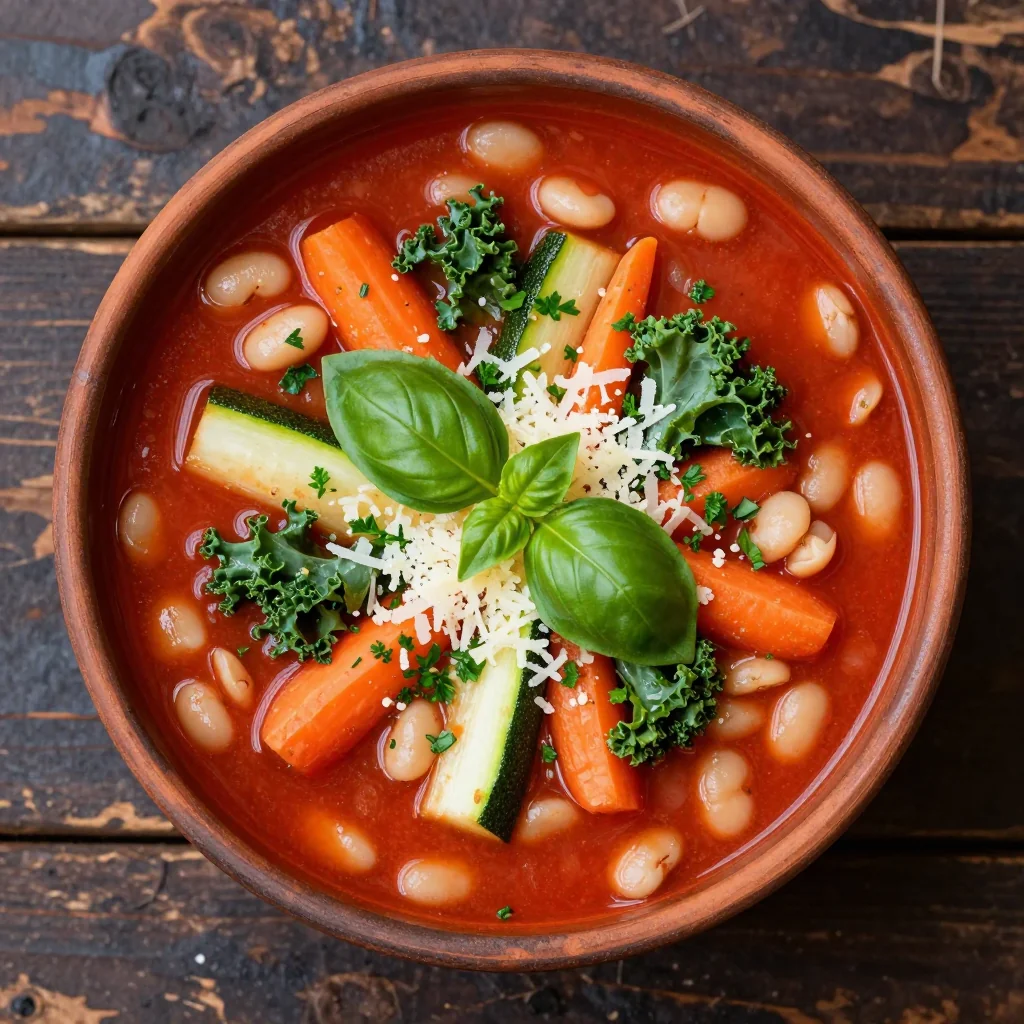
Budget Friendly Minestrone Soup with Beans and Pasta
Ingredients
Instructions
- Soften Aromatics: Heat olive oil in a 4-quart pot over medium heat. Add onion, carrot, celery; sauté 5 min. Stir in garlic 30 sec.
- Bloom Paste: Make a center well; add tomato paste & seasonings. Cook 2 min until darkened.
- Build Broth: Deglaze with 1 cup broth, scrape bits. Add rest of broth, water, 1 can undrained beans, 1 can rinsed beans, tomatoes, Parmesan rind. Simmer 10 min.
- Thicken: Blend ½ cup beans + broth until smooth; return to pot.
- Add Veg & Pasta: Stir in zucchini and pasta; simmer 8–10 min until pasta is al dente.
- Finish: Fold in spinach and lemon juice. Season with salt & pepper. Rest 5 min off heat; serve with Parmesan and crusty bread.
Recipe Notes
Pasta continues to absorb liquid as it sits. Store leftovers with an extra splash of water or broth and reheat gently.