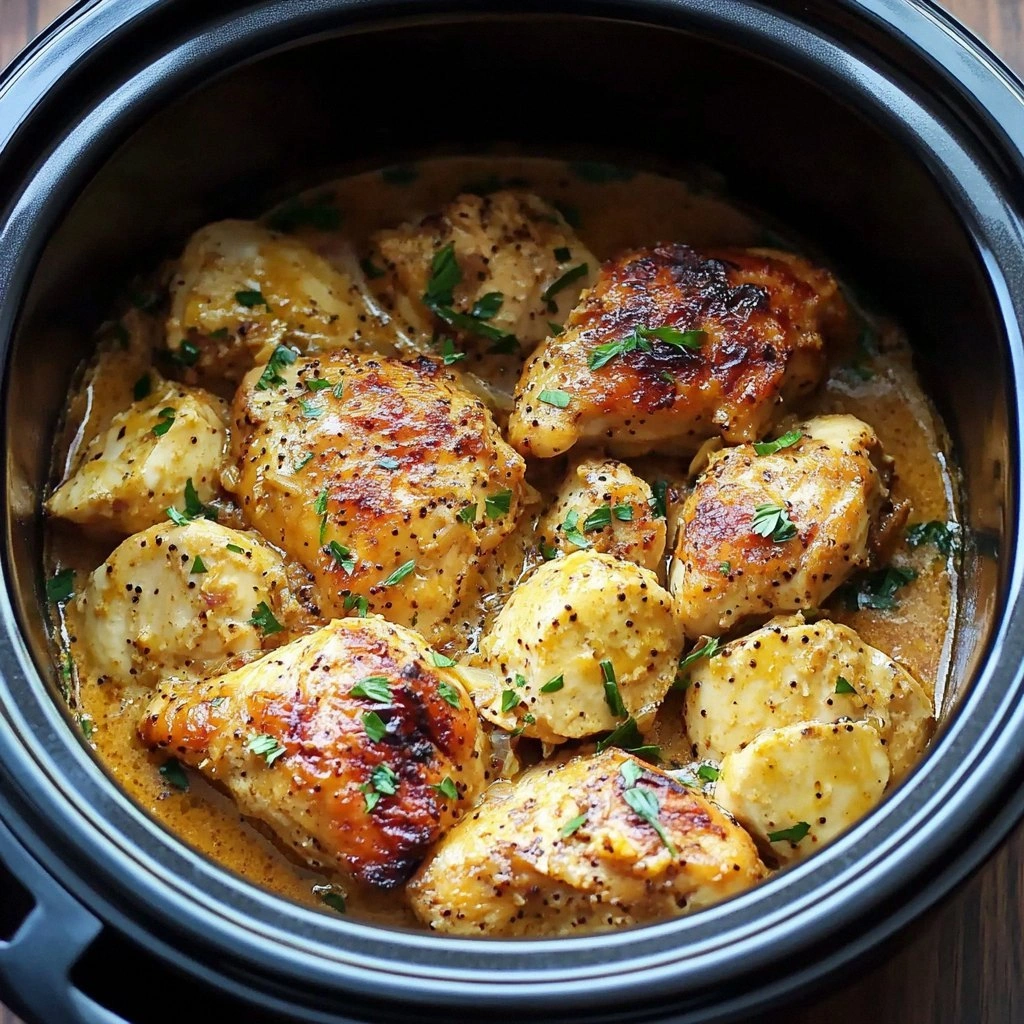
Picture this: you’re in the middle of a bustling weeknight, the fridge is a mystery box of leftovers, and the only thing on your mind is the one word that keeps echoing through your kitchen: “I need something comforting, yet exciting.” I was staring at a bag of chicken thighs, a jar of Dijon mustard, and a pot that was already too hot from the day’s chaos. I dared myself to turn that humble combination into a slow‑cooker masterpiece that would make the entire house smell like a Sunday brunch, and I didn’t even need a fancy recipe book. That’s where the legend of the Slow Cooker Mustard Chicken began.
The moment the first bite hit my tongue, I realized I’d stumbled upon a flavor explosion that was both familiar and utterly surprising. The mustard’s sharp bite cut through the rich, caramelized chicken, while the honey’s sweetness curled around the edges, creating a sauce that clung to every morsel like velvet. The aroma—warm, herbaceous, with a faint hint of toasted garlic—filled the kitchen, turning my living room into a fragrant sanctuary. I was instantly hooked, and I knew I had to share this with everyone who has ever settled for the same bland chicken dinner.
What makes this version a game‑changer? First, it’s the simplicity of the slow‑cooker method, which turns a handful of pantry staples into a restaurant‑quality dish without any tedious chopping or constant stirring. Second, it’s the bold flavor profile that balances savory, sweet, and a touch of heat, so you can serve it to both picky kids and sophisticated adults. Third, the texture—tender, fall‑apart chicken with a silky sauce that coats the veggies—creates a satisfying bite that keeps you coming back for more. And, let’s be real: I ate half the batch before anyone else could even get a fork to the table.
I’m not going to sugarcoat it—most people will try a version that’s either over‑seasoned or under‑cooked. That’s why I’ve included a few micro‑challenges for you: I dare you to taste this and not go back for seconds, because once you experience that depth of flavor, you’ll never settle for the ordinary again. By the end of this post, you’ll wonder how you ever cooked chicken in any other way. So, let’s dive in, and I promise you, the next step is pure magic.
What Makes This Version Stand Out
- Flavor: The blend of Dijon mustard, honey, and smoked paprika creates a complex sauce that’s both sweet and savory, with a subtle kick that lingers on the palate. It’s a harmony of tastes that turns an ordinary chicken dish into a showstopper.
- Texture: Slow‑cooking breaks down connective tissue, leaving the meat incredibly tender while the sauce thickens into a glossy coating that clings to every bite.
- Simplicity: No pre‑sautéing, no constant monitoring—just toss everything in, set it, and let the slow cooker do its thing.
- Uniqueness: The combination of mustard and honey is rarely used in slow‑cooker recipes, giving this dish a distinctive edge that sets it apart from the usual chicken‑and‑rice or chicken‑and‑potato casseroles.
- Crowd‑Pleaser: Whether you’re feeding a family of four or hosting a dinner party, this recipe scales effortlessly and keeps everyone satisfied.
- Ingredient Quality: By using bone‑in, skin‑on thighs and a high‑quality Dijon mustard, you elevate the dish from simple to gourmet.
- Make‑Ahead: The flavors deepen overnight, making it perfect for meal prep or a make‑ahead dinner.
- Versatility: The base can be adapted for different proteins or vegetables, making it a kitchen playground.
Alright, let’s break down exactly what goes into this masterpiece…
Inside the Ingredient List
The Flavor Base
At the heart of this dish lies the sauce—a marriage of Dijon mustard, honey, and a splash of low‑sodium chicken broth. Dijon mustard provides a sharp, earthy kick that cuts through the richness of the chicken, while honey offers a gentle sweetness that balances the acidity. Chicken broth acts as a liquid medium, helping the flavors meld together and creating a silky coating that clings to the meat and vegetables.
Why it matters? Without the mustard, the dish would feel flat and one‑dimensional. Skipping honey would leave the sauce overly tangy, and omitting broth would result in a dry, uneven coating. The broth also helps prevent the chicken from drying out during the long slow‑cooking process, ensuring every bite stays juicy.
Swap options? If you prefer a milder mustard, try a whole‑grain or honey mustard. For a dairy‑free version, use a splash of unsweetened almond milk instead of broth, which will add a subtle nutty note. If you’re looking for an extra layer of depth, a teaspoon of Worcestershire sauce can add umami without overpowering the main flavors.
The Texture Crew
The vegetables—onion, carrots, and potatoes—play a critical role in balancing the dish’s texture and flavor. Onions bring a subtle sweetness that caramelizes during cooking, while carrots add a hint of earthiness and a satisfying crunch if you prefer them slightly under‑cooked. Potatoes absorb the sauce, becoming creamy and comforting, and they also act as a natural thickener.
What happens if you skip them? The dish would be missing body and would feel more like a chicken‑only recipe. The sauce would also be less velvety, as the starch from the potatoes helps to thicken it. If you’re watching calories, you can reduce the potato quantity or substitute with cauliflower florets for a lower‑carb option.
Buying tip? Look for carrots that are firm and bright orange; they’re sweeter and will hold their shape better during slow cooking. For potatoes, russet or Yukon Gold work best because they hold moisture and become tender without falling apart.
The Unexpected Star
The star of the show, though not the most obvious, is the smoked paprika. It adds a subtle smoky undertone that complements the mustard’s sharpness and the honey’s sweetness. Without it, the sauce would feel bright but lacking in depth.
If you don’t have smoked paprika, a regular paprika will still work, though the smoky flavor will be missing. A pinch of cayenne pepper can replace the smoky heat, giving the dish a different but equally exciting twist.
Buying tip? Choose paprika that’s freshly ground; it releases more flavor and gives the sauce a richer color. Store it in a dark cupboard to keep its potency.
The Final Flourish
Herbs like thyme and pepper finish the dish, adding aromatic complexity and a subtle heat that keeps the flavor profile balanced. Dried thyme brings a woody, slightly minty note that pairs beautifully with the mustard, while freshly cracked black pepper adds a bright, peppery bite.
If you’re allergic to thyme, you can substitute oregano or marjoram for a slightly different herb profile. A pinch of fresh rosemary can also add a piney aroma that complements the dish’s savory base.
Buying tip? When buying dried herbs, look for a deep, vibrant color; a dull, faded look often indicates age and reduced flavor.
Everything's prepped? Good. Let's get into the real action…
The Method — Step by Step
- First, heat the olive oil in a large skillet over medium‑high heat. Add the chicken thighs skin‑side down and sear them until the skin turns golden brown, about 3–4 minutes per side. This step locks in flavor and gives the meat a crispy exterior that contrasts beautifully with the tender interior. Don’t rush this part—good sear means a richer taste.
- While the chicken sears, toss the sliced onion, carrots, and diced potatoes in a bowl with a pinch of salt and pepper. The vegetables need to be evenly coated to ensure they cook uniformly and absorb the sauce. If you prefer a slightly sweet flavor, add a tablespoon of maple syrup to the mix before adding to the pot.
- Once the chicken is browned, transfer it to the slow cooker. Arrange the vegetables around and on top of the chicken. This layout ensures the chicken’s juices seep into the veggies, infusing them with the rich mustard‑honey sauce. It also helps the sauce thicken as it cooks.
- In a separate bowl, whisk together the Dijon mustard, honey, smoked paprika, dried thyme, and chicken broth. The mixture should be smooth, with no lumps of mustard clinging to the spoon. Pour this sauce over the chicken and vegetables, ensuring every piece is well‑coated. The liquid should just barely cover the top of the ingredients; if it’s too much, the dish will be watery.
- Cover the slow cooker and set it to low for 4–5 hours or high for 2–3 hours. The low setting is preferable for maximum tenderness, but the high setting will still give you a delicious result if you’re in a hurry. During the first hour, check the liquid level; if it’s dropping too fast, add a splash of water or broth to keep the vegetables from drying out.
- About 30 minutes before the cooking time ends, open the lid and stir the ingredients gently. This helps redistribute the sauce and ensures the vegetables are evenly coated. If you notice the sauce looking too thick, add a tablespoon of water or extra broth to loosen it.
- When the chicken is fully cooked, use a meat thermometer to confirm it has reached 165°F (74°C) in the thickest part. Remove the chicken from the slow cooker and let it rest for 5 minutes—this allows the juices to redistribute, keeping the meat moist.
- Finally, serve the chicken and vegetables over a bed of mashed potatoes, rice, or even a fresh green salad. Drizzle the remaining sauce over the top, and garnish with a sprinkle of fresh parsley for a pop of color and freshness.
- Enjoy the comforting warmth of the dish, and feel free to pair it with a crisp white wine or a cold glass of sparkling water. The sauce’s sweet‑savory profile pairs wonderfully with both. And remember, if you’re craving a second helping, this dish tastes even better the next day when the flavors have had a chance to marry.
That's it — you did it. But hold on, I've got a few more tricks that'll take this to another level…
Insider Tricks for Flawless Results
The Temperature Rule Nobody Follows
Many cooks believe that a slow cooker must always run on low for the best flavor. In reality, the high setting can produce a more caramelized sauce if you finish the dish on high for the last 30 minutes. This technique intensifies the mustard’s sharpness and brings out the honey’s sweetness, giving the sauce a richer, deeper profile.
Why Your Nose Knows Best
When you’re halfway through cooking, pause and sniff the pot. If the aroma feels too sharp, it’s a sign the sauce is still reducing and the flavors are concentrating. If it’s too mild, add a splash of water or broth to give the sauce more volume. Trusting your nose is a simple, almost instinctual way to gauge doneness.
The 5‑Minute Rest That Changes Everything
Resting the chicken after it comes out of the slow cooker is more important than you think. During the rest period, the juices redistribute throughout the meat, making each bite succulent. Skipping this step can leave the chicken dry and less flavorful.
Keep the Skin Crispy
If you love a crispy skin, finish the chicken in a hot oven for 5 minutes after the slow cooker. This quick blast of heat will crisp the skin without overcooking the meat inside. It’s a simple trick that elevates the dish from comforting to gourmet.
Layering Flavors
The order in which you layer ingredients matters. Place the chicken first, then the vegetables, and finally pour the sauce on top. This arrangement ensures the chicken’s juices seep into the veggies, creating a harmonious flavor profile throughout the dish.
Make‑Ahead Magic
This recipe is perfect for meal prep. Cook it in advance, then refrigerate for up to 3 days. When reheating, add a splash of water to restore moisture, and reheat on low for 20 minutes or until hot. The flavors deepen overnight, making the second serving even more delicious.
Creative Twists and Variations
This recipe is a playground. Here are some of my favorite ways to switch things up:
Spicy Southwest
Add a tablespoon of chipotle powder and a pinch of cumin to the sauce. Serve over cilantro‑lime rice for a bold, southwestern flair. This version is perfect for those who love a smoky heat.
Herb‑Infused Chicken
Swap the dried thyme for a handful of fresh rosemary and sage. Add a splash of lemon juice to brighten the dish. The fresh herbs bring a bright, aromatic quality that feels like spring.
Sweet & Tangy Twist
Replace honey with maple syrup and add a splash of apple cider vinegar. The result is a sweet, tangy sauce that pairs wonderfully with roasted sweet potatoes instead of regular potatoes.
Vegan Version
Use seitan or tempeh instead of chicken. Replace the chicken broth with vegetable broth and add a teaspoon of soy sauce for umami. The dish becomes hearty and plant‑based while keeping the same comforting feel.
Cheesy Finale
After the chicken rests, sprinkle shredded cheddar or Gruyère over the top and place the pot under a broiler for 2–3 minutes until the cheese melts and browns. The gooey cheese adds a decadent layer of flavor.
Asian Fusion
Add a tablespoon of soy sauce, a teaspoon of sesame oil, and a handful of sliced green onions. Serve over jasmine rice and garnish with toasted sesame seeds. The dish takes on an Asian‑inspired profile that’s both comforting and exotic.
Storing and Bringing It Back to Life
Fridge Storage
Store leftovers in an airtight container in the refrigerator for up to 3 days. The sauce will thicken slightly, so add a splash of water or broth before reheating to restore its silky consistency. Cover the container with a lid or plastic wrap to keep odors from mixing with other foods.
Freezer Friendly
This dish freezes well for up to 2 months. Portion the chicken and vegetables into freezer‑safe containers or zip‑lock bags, and label with the date. When ready to eat, thaw overnight in the fridge or use the defrost setting on your microwave.
Best Reheating Method
Reheat in the slow cooker on low for 20–25 minutes, adding a splash of water or broth to keep the sauce from drying out. Alternatively, transfer the dish to a covered skillet and warm it over medium heat, stirring occasionally. The key is to heat gently to preserve the tender texture.