Love this? Pin it for later! 📌
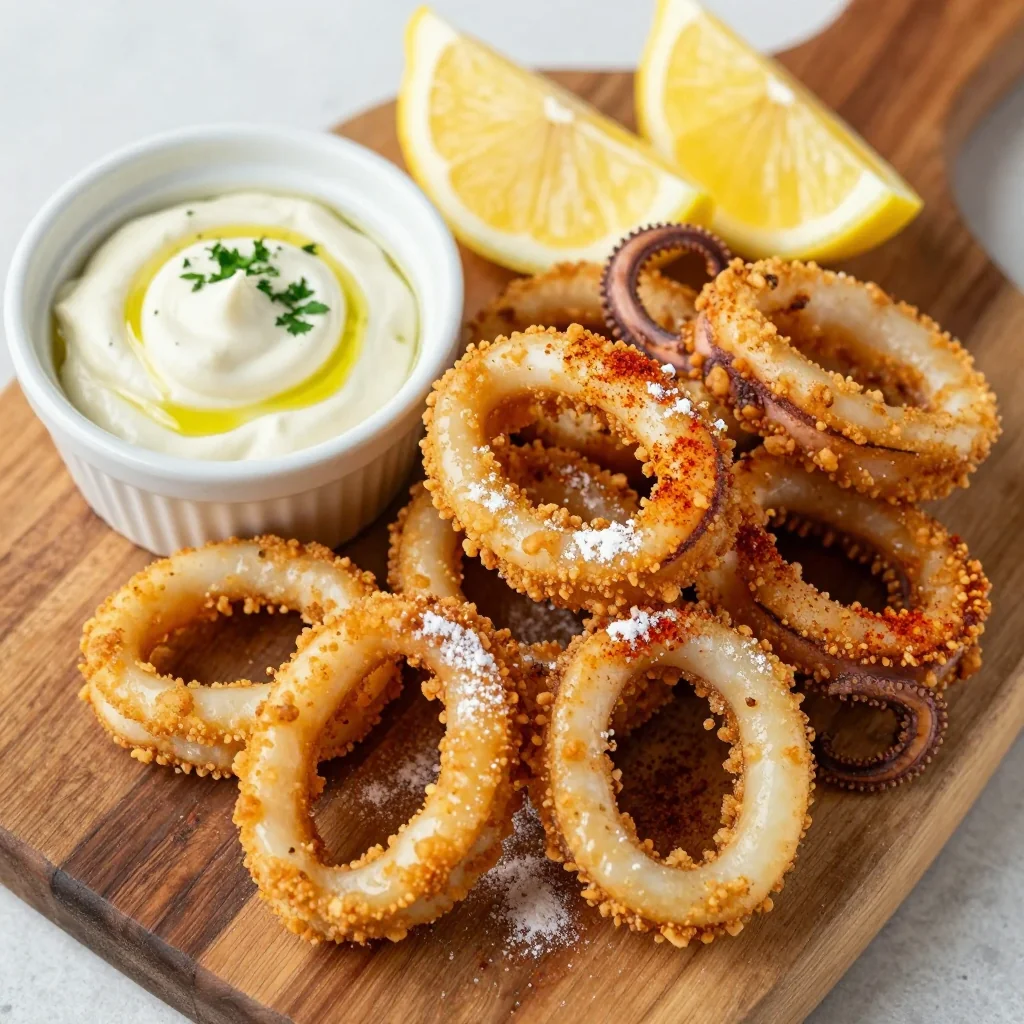
There’s a little coastal bistro two blocks from my grandmother’s bungalow in Naples, Florida, where the scent of lemon zest and hot oil drifts onto the patio every afternoon at four. The first time I tasted their fried calamari I was twelve—paper cone in hand, bare feet dusted with sand—and I remember thinking the rings looked like tiny snow tires. One bite and the crunch shattered through the afternoon humidity; the inside was silk-tender, almost sweet against the briny Gulf air. Years later, when I started developing recipes for this blog, that memory became my north star: I wanted a calamari that could transport me back to a wicker chair, a setting sun, and the sound of waves slapping the seawall. After two dozen tests (and one very smoky kitchen), I finally landed on a version that rivals the original. The coating stays shatter-crisp for a full twenty minutes—long enough to carry a platter out to the porch and watch the fireflies show up—while the garlic aioli borrows its mellow bite from slowly roasted garlic that collapses into a buttery paste. Serve this at your next game-night gathering, or pack it into a picnic basket with chilled rosé and watch it disappear faster than you can say “tentacles, please.”
Why This Recipe Works
- Double-dredge magic: A light cornstarch bath followed by seasoned flour creates micro-layers that fry up into glass-thin shards.
- Ice-cold batter shock: Placing the dredged rings back into the freezer for ten minutes sets the coating so it won’t fall off in the oil.
- Roasted-garlic aioli: Slowly roasting the garlic tames the raw bite and adds caramel depth you can’t get from the jarred stuff.
- Controlled fry temperature: Maintaining 360 °F/182 °C cooks the squid in 60 seconds flat—no rubber bands here.
- Fresh lemon finish: A quick squeeze just before serving brightens the crust and balances the richness of the aioli.
- Make-ahead friendly: The aioli keeps for five days and the squid cleans and stores easily for next-day frying.
Ingredients You'll Need
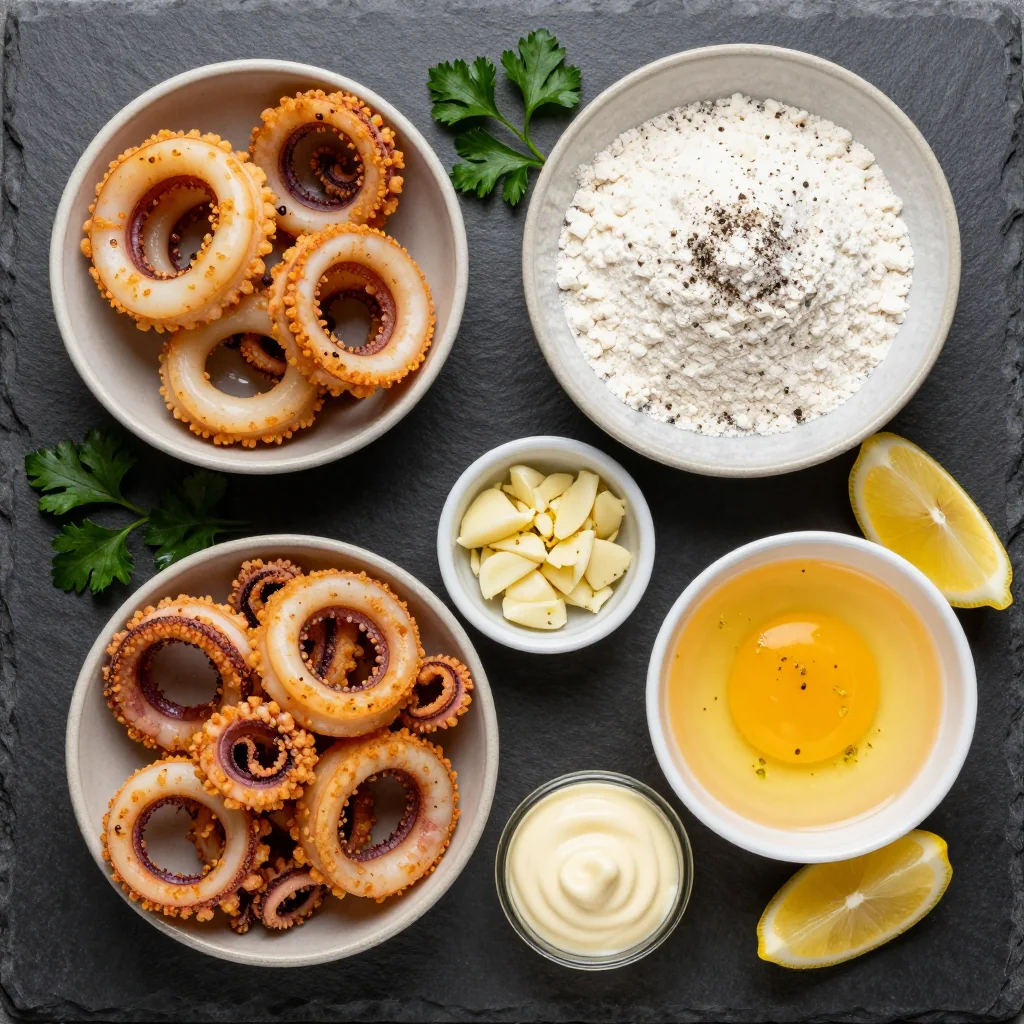
Great calamari starts at the fish counter. Look for tubes labeled “pre-cleaned” or “flash-frozen at sea.” If you can only find whole squid, ask your monger to remove the quill and ink sac—trust me, it saves you a purple mess at home. For the coating, I blend all-purpose flour with fine semolina; the semolina’s sandy edges mimic the crunch you get from Italian friggitorie. Cornstarch is the stealth ingredient here—it grabs onto moisture and puffs into a lacy shell. The aioli base is a neutral oil such as grapeseed or sunflower; olive oil turns bitter when whipped at high speed. Finally, roast an entire head of garlic the night before: slice off the top, drizzle with olive oil, wrap in foil, and bake at 325 °F/160 °C for 55 minutes. The cloves slide out like paste and keep for a week in the fridge.
How to Make Crispy Fried Calamari with a Garlic Aioli Dipping Sauce
Roast the garlic (if you haven’t already)
Preheat oven to 325 °F/160 °C. Trim the top quarter off a whole head of garlic to expose the cloves. Drizzle with 1 tsp olive oil, wrap tightly in foil, and bake 55 minutes until buttery soft. Cool, then squeeze out the paste. You’ll need 1 generous tablespoon for the aioli; reserve the rest for toast.
Whisk the aioli base
In a tall, narrow jar that just fits your immersion blender, combine 1 egg yolk, 1 Tbsp roasted garlic paste, 1 tsp Dijon mustard, 1 tsp fresh lemon juice, and ½ tsp kosher salt. Let the ingredients settle for 30 seconds so the yolk is at the bottom. Pour ¾ cup neutral oil on top. Insert the blender to the bottom, turn it on, and hold steady for 10 seconds until you see a thick emulsion forming. Slowly raise the blender to incorporate the remaining oil. Transfer to a jar, stir in 1 Tbsp finely chopped parsley, and refrigerate. Aioli thickens as it chills.
Prep the squid
Rinse 1 lb (450 g) cleaned calamari tubes under cold water. Pat very dry with paper towels—excess moisture is the enemy of crunch. Slice tubes into ½-inch (1.25 cm) rings; leave the tentacles whole if attached. Lay on a fresh towel, cover, and refrigerate while you set up the breading station.
Build the dredge parade
In one shallow bowl, whisk ½ cup cornstarch with 1 tsp kosher salt and ½ tsp black pepper. In a second bowl, combine ½ cup all-purpose flour, ½ cup fine semolina, 1 tsp smoked paprika, ½ tsp dried oregano, and ¼ tsp cayenne. Have a third empty plate ready for the coated rings.
Coat and chill
Working in batches, toss squid rings in cornstarch, shake off excess, then press into the flour-semolina mix until fully coated. Transfer to the empty plate. When all rings are breaded, slide the plate uncovered into the freezer for 10 minutes; this sets the crust and prevents blow-offs in the oil.
Heat the oil
Pour 2 inches (5 cm) of peanut or canola oil into a heavy pot. Clip on a thermometer and bring to 360 °F/182 °C over medium-high heat. Keep a rimmed baking sheet fitted with a wire rack nearby; line the rack with paper towels for easy cleanup.
Flash-fry in small batches
Carefully lower 6–8 rings into the oil. They should sizzle aggressively and float within 5 seconds. Fry 45–60 seconds until pale golden and crisp. Remove with a spider strainer, letting excess oil drip back into the pot, then transfer to the prepared rack. Repeat, allowing oil to return to 360 °F between batches.
Season and serve immediately
While the last batch drains, sprinkle everything with flaky sea salt and a shower of lemon zest. Pile onto a warm platter with the roasted-garlic aioli in a ramekin center. Garnish with parsley and lemon wedges. Serve hot—crunch waits for no one.
Expert Tips
Oil temperature is everything
If you don’t own a thermometer, drop a single breadcrumb into the oil; it should sizzle and turn light brown in 15 seconds. Too cool = soggy squid. Too hot = burnt coating.
Keep it cold
Return the breaded squid to the fridge or freezer if your oil isn’t ready yet. Cold protein + hot oil = maximum crunch.
Use a neutral oil
Peanut, canola, or sunflower have high smoke points and clean flavors. Save the extra-virgin olive oil for finishing dishes, not frying.
Don’t overcrowd
Frying too many rings drops the oil temperature, leading to greasy calamari. Small batches keep the crust delicate and blistered.
Add acid at the end
A final squeeze of lemon right before serving perks up the fried flavor without softening the crust.
Roast garlic ahead
Roasted garlic keeps for a week refrigerated. Make extra and stir into mashed potatoes or spread on crostini.
Variations to Try
- Spicy Calabrian: Swap cayenne for 1 tsp Calabrian-chili paste in the flour mix and add ½ tsp zest to the aioli.
- Coconut-Crusted: Replace semolina with unsweetened shredded coconut and serve with a pineapple-mint aioli.
- Gluten-Free: Use 1 cup rice flour + ¼ cup cornstarch for dredging; fry in fresh oil to avoid cross-contact.
- Air-Fryer Version: Spray coated rings generously with oil, arrange in a single layer, and cook at 390 °F/199 °C for 4 minutes per side.
- Herb-Infused Oil: Add a sprig of rosemary and a strip of lemon peel to the oil as it heats; remove before frying.
Storage Tips
Make-Ahead: Clean and slice squid up to 24 hours ahead; store in a zip-top bag nestled in ice in the coldest part of your fridge. Roast the garlic and whisk the aioli up to 5 days early; keep refrigerated.
Leftovers: Fried calamari is best within 20 minutes, but if you must store, cool completely, then refrigerate in a paper-towel-lined container for up to 2 days. Reheat on a wire rack set over a baking sheet in a 400 °F/200 °C oven for 4 minutes—never microwave, or you’ll have rubber bands.
Freezer: Freeze breaded, uncooked rings on a tray until solid, then transfer to a freezer bag for up to 1 month. Fry from frozen, adding 30 seconds to the cook time.
Frequently Asked Questions
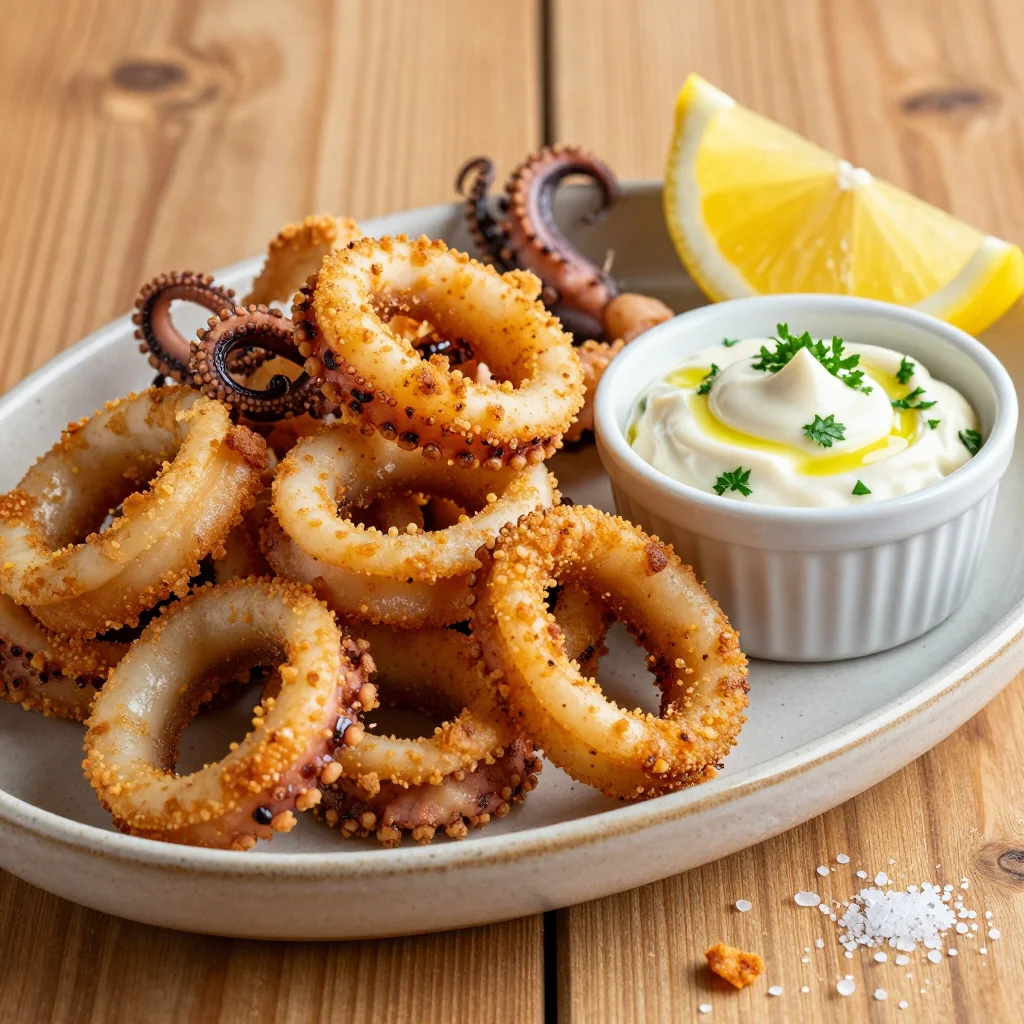
Crispy Fried Calamari with a Garlic Aioli Dipping Sauce
Ingredients
Instructions
- Roast garlic: Bake trimmed head at 325 °F for 55 min; squeeze out 1 Tbsp paste.
- Make aioli: Blend egg yolk, garlic, mustard, lemon, salt, then oil until thick; stir in parsley and chill.
- Prep squid: Slice tubes into ½-inch rings; pat completely dry.
- Dredge: Coat in cornstarch, then flour-semolina mix; freeze 10 min.
- Heat oil: Bring 2 inches oil to 360 °F in a heavy pot.
- Fry: Cook small batches 45–60 sec until golden; drain on paper towels.
- Serve: Season with sea salt and lemon zest; serve hot with aioli.
Recipe Notes
For the crunchiest crust, maintain oil temperature and fry in small batches. Leftovers reheat best in a 400 °F oven for 4 minutes.