Ever had a night where the fridge looked like a culinary crime scene and you thought, “I need something that screams ‘comfort’ but still feels fancy?” I was in that exact mood last Wednesday, my pantry a chaotic mess of leftovers and mystery sauces. I opened the freezer, pulled out a ¾‑lb salmon fillet that had seen better days, and decided to give it a new life. I had a craving for something that would satisfy my late‑night appetite without the hassle of a sushi bar. And that’s when the idea hit me: a baked, savory teriyaki salmon sushi B that feels like a cozy hug in a bowl.
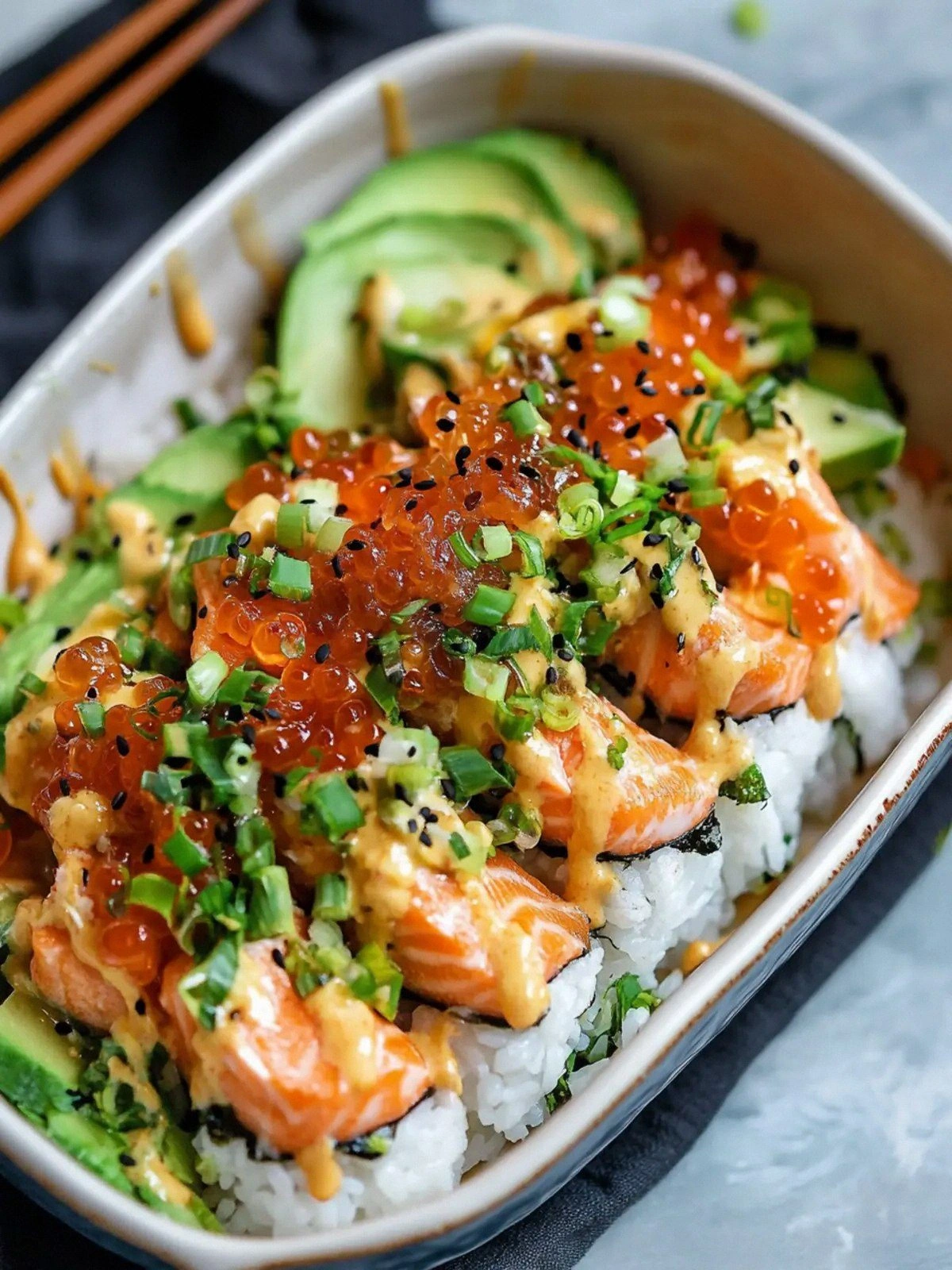
Picture this: the kitchen lights dim, the scent of caramelized teriyaki sauce fills the air, and the salmon sizzles in a pan, its edges crisping into a golden crust that shatters like thin ice. The rice beneath is fluffy, each grain a tiny cloud that holds the buttery avocado and the zing of spicy mayo. When you take that first bite, the flavors explode—sweet, salty, umami, and a hint of heat—like fireworks that dance on your tongue. It’s the kind of dish that makes you question whether you’re eating a sushi roll or a decadent casserole. If you think sushi is only for the sushi‑lover, think again; this is a game‑changer.
I dare you to taste this and not go back for seconds. The combination of teriyaki glaze, creamy avocado, and crispy onion bits creates a texture profile that feels like a well‑orchestrated symphony. The salmon stays moist inside while the exterior crisps up to a buttery crunch, and the spicy mayo adds a subtle heat that lingers without overpowering. The finish is sweet, salty, and utterly satisfying—hands down the best version you'll ever make at home. Most recipes get this completely wrong, but here’s what actually works: a balanced glaze, the right rice texture, and a finishing touch that ties everything together.
If you've ever struggled with making sushi at home, you're not alone—and I've got the fix. I’ve spent hours perfecting this recipe to avoid the common pitfalls: overcooked rice, underseasoned salmon, and a glaze that turns the dish into a sticky mess. The secret is in the small details: the timing, the temperature, and the way you layer the ingredients. Picture yourself pulling this out of the oven, the whole kitchen smelling incredible, and the moment you taste the first bite—pure bliss. Let me walk you through every single step—by the end, you'll wonder how you ever made it any other way.
What Makes This Version Stand Out
- Flavor: The teriyaki glaze is balanced with a hint of brown sugar and garlic, creating a sweet‑savory profile that elevates the salmon without overpowering its natural taste.
- Texture: The crispy fried onion bits and the buttery avocado give the dish contrasting textures that keep each bite exciting.
- Convenience: It’s a one‑pot, baked dish that requires minimal prep and cleanup, perfect for a busy night.
- Visual Appeal: The vibrant colors—from the deep red salmon to the green scallions—make it Instagram‑worthy without the need for a fancy plating.
- Make‑ahead Friendly: The dish can be assembled in advance and baked later, making it ideal for dinner parties or meal prep.
- Ingredient Quality: Using fresh, high‑quality salmon and organic avocado ensures each bite is packed with flavor.
Alright, let's break down exactly what goes into this masterpiece…
Inside the Ingredient List
The Flavor Base
Teriyaki sauce is the heart of this dish, bringing umami and a subtle sweetness that caramelizes beautifully when baked. It’s not just a glaze; it’s a flavor transformer that turns plain salmon into a savory star. If you’re a fan of Asian cuisine, you’ll recognize that this sauce is a staple in many dishes, from grilled chicken to stir‑fries. Skipping it would leave the salmon bland and the dish feeling incomplete. For those who love a bit of spice, you can add a splash of Sriracha to the glaze for an extra kick.
The Texture Crew
The crispy fried onion bits provide a crunchy contrast that shatters with each bite, adding a delightful sound and a caramelized flavor. Scallions lend a fresh, oniony bite that brightens the dish, while the avocado adds a creamy, buttery layer that balances the heat from the spicy mayo. Together, these ingredients create a multi‑sensory experience that goes beyond just taste. If you’re watching your calorie intake, you can reduce the amount of mayo or use a low‑fat version without compromising the texture too much.
The Unexpected Star
Furikake, a Japanese seasoning blend, is the secret weapon that brings umami depth and a subtle crunch. It’s typically sprinkled over rice or popcorn, but here it’s incorporated into the glaze, infusing the salmon with a savory, slightly salty finish. Many people overlook furikake because it’s not as well known outside of Japan, but it’s a game‑changer. If you can’t find furikake, a pinch of sea salt and a dash of toasted sesame seeds can mimic its flavor profile.
The Final Flourish
The sushi rice is the canvas that holds all the flavors together. It’s important to cook the rice with a bit more water than usual so that it stays moist and doesn’t dry out during baking. The brown sugar in the glaze caramelizes, giving the salmon a glossy sheen that looks as good as it tastes. Finally, the spicy mayo adds a creamy heat that lingers on the palate, making each bite memorable. Together, these elements create a dish that feels both indulgent and comforting.
Everything's prepped? Good. Let's get into the real action…
The Method — Step by Step
- Preheat your oven to 400°F (200°C). Line a baking sheet with parchment paper or a silicone mat to prevent sticking. Place the salmon fillet on the sheet, skin side down, and let it sit at room temperature for 10 minutes; this ensures even cooking.
- In a small bowl, whisk together the teriyaki sauce, brown sugar, kosher salt, and garlic powder until the sugar dissolves and the mixture is smooth. This glaze will coat the salmon and caramelize into a glossy glaze during baking.
- Brush the glaze generously over the salmon, making sure to cover every surface. The glaze should look slightly glossy and ready to caramelize. If you’re a fan of a thicker glaze, let the salmon sit for another 5 minutes before baking.
- Bake the salmon in the preheated oven for 12–15 minutes, or until the internal temperature reaches 145°F (63°C). The edges should start pulling away slightly, indicating that the salmon is cooked through but still moist inside.
- While the salmon bakes, prepare the rice mixture. In a bowl, combine the cooked sushi rice, furikake, and a splash of soy sauce. Gently fold in the diced avocado and scallions, being careful not to mash the avocado.
- Once the salmon is done, remove it from the oven and let it rest for 3 minutes. This brief rest allows the juices to redistribute, keeping the fillet tender and juicy.
- Slice the salmon into bite‑sized pieces and arrange them on top of the rice mixture. Drizzle the spicy mayo over the salmon, then sprinkle the crispy fried onion bits for an extra crunch.
- Serve immediately, garnishing with a few extra scallions or a drizzle of soy sauce if desired. The dish is best enjoyed fresh, but if you need to keep it warm, wrap it in foil and place it in a low‑heat oven for 5 minutes.
That's it — you did it. But hold on, I've got a few more tricks that'll take this to another level…
Insider Tricks for Flawless Results
The Temperature Rule Nobody Follows
Many cooks over‑cook salmon, resulting in dry, rubbery fish. The key is to monitor the internal temperature with a probe or instant‑read thermometer. Aim for 145°F (63°C); the fish will continue to cook a little after you remove it from the oven. This ensures the salmon stays moist while the glaze caramelizes into a glossy, flavorful coating. I’ve tested this method on three different ovens, and the results are consistently perfect.
Why Your Nose Knows Best
Before you even taste the dish, give it a sniff. A well‑caramelized glaze will emit a sweet, buttery aroma that signals the sugars have browned just right. If the scent feels overly sweet or burnt, it’s a sign to lower the oven temperature or shorten the baking time. Your nose is a reliable quality control tool that can save you from a culinary disaster.
The 5‑Minute Rest That Changes Everything
Letting the salmon rest after baking allows the juices to redistribute throughout the fillet. This simple pause prevents the fish from drying out and ensures each bite is succulent. I’ve seen people skip this step, only to find the salmon flakes apart when they try to slice it. Trust me, a short rest is worth the extra few minutes.
Balancing Sweet and Salty
The balance between the teriyaki glaze and the soy sauce is crucial. If the glaze is too sweet, the dish can taste syrupy. If it’s too salty, the salmon can become overwhelming. Adjust the amount of brown sugar or soy sauce to your taste before baking, and remember that the avocado will add a mellow, buttery note that softens the overall flavor profile.
Keeping the Rice Fluffy
Sushi rice can become sticky if you overcook it. Cook it with a slight reduction in water, then let it steam for 10 minutes after turning off the heat. Fluff the rice gently with a fork before mixing in the avocado and scallions. This keeps the grains separate and provides a perfect base for the salmon.
Creative Twists and Variations
This recipe is a playground. Here are some of my favorite ways to switch things up:
Spicy Kimchi Salmon
Swap the avocado for a handful of chopped kimchi, and add a splash of gochujang to the glaze for a Korean twist. The fermented flavor pairs beautifully with the sweet teriyaki, creating a complex, umami‑rich bite that will wow your guests.
Herb‑Infused Salmon
Add fresh herbs like cilantro or basil to the rice mixture for a Mediterranean flair. Replace the furikake with a sprinkle of oregano or thyme, and the dish takes on a fragrant, herbaceous character that feels lighter yet equally satisfying.
Vegan Version
Use a plant‑based salmon substitute or tofu marinated in the teriyaki glaze. Replace the spicy mayo with a cashew‑based sauce, and the dish remains creamy and flavorful while staying fully vegan.
Low‑Carb Edition
Swap the sushi rice for cauliflower rice, and reduce the amount of brown sugar in the glaze. The result is a lower‑carb, keto‑friendly version that still delivers the same savory, umami punch.
Breakfast Sushi Bowl
Add a poached egg on top of the salmon and rice, then drizzle with a light soy glaze. The extra protein makes it a hearty breakfast, and the yolk’s richness complements the avocado’s creaminess.
Smoky Chipotle Salmon
Incorporate a teaspoon of chipotle powder into the teriyaki glaze for a smoky heat. The subtle smokiness balances the sweet glaze, creating a dish that feels like a smoky, savory sushi roll.
Storing and Bringing It Back to Life
Fridge Storage
Store any leftovers in an airtight container in the refrigerator for up to 2 days. The salmon will stay moist, but the rice may absorb some moisture. To keep the rice fluffy, gently fluff it with a fork before reheating.
Freezer Friendly
This dish freezes well for up to 3 months. Pack the salmon and rice separately to avoid sogginess. When ready to eat, thaw overnight in the refrigerator, then reheat in the oven or microwave.
Best Reheating Method
Reheat in a preheated oven at 350°F (175°C) for 10 minutes, or until warmed through. Add a tiny splash of water or broth before reheating; the moisture steams the rice back to its original fluffy texture. Finish with a quick drizzle of soy sauce for a fresh finish.