Introduction
Picture this: a quiet Sunday afternoon, the kitchen smelling faintly of burnt sugar, and my friend daring me to turn that disaster into something edible. I stared at the over‑caramelized onions on the skillet, thinking, “I can’t even eat this.” Then I remembered the classic French Onion Soup and realized I could turn that burnt sweetness into a luxurious, pasta‑filled masterpiece. I set my phone on a timer, grabbed a pot of rigatoni, and declared, “This is going to be the best French Onion Soup Rigatoni you’ll ever taste.”
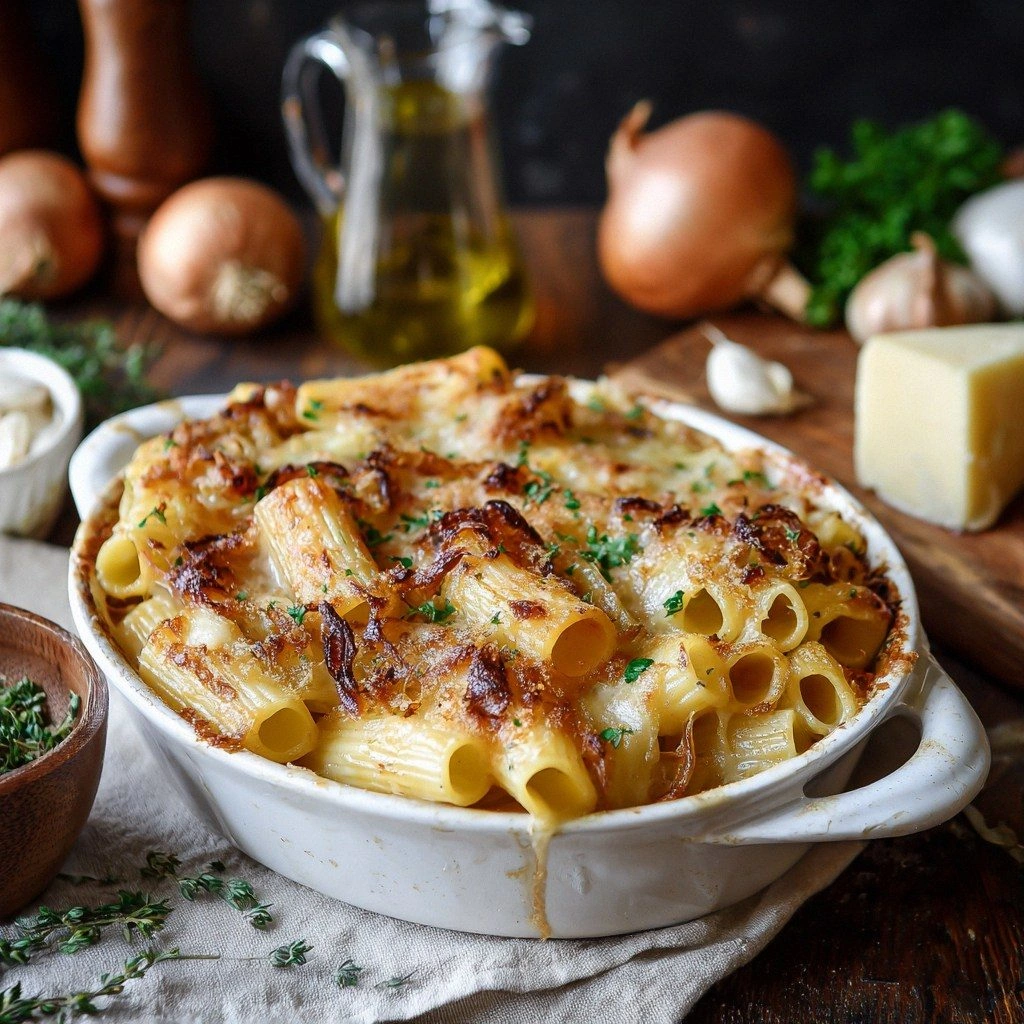
The first thing you notice is the golden hue of onions, their edges crisping like thin ice while their insides melt into a syrupy, caramelized base. The aroma is a heady mix of sweet, salty, and savory notes that makes your mouth water even before you taste it. The sound of onions sizzling against the pan is almost hypnotic, a rhythmic whisper that says, “This is going to be delicious.” And the texture—soft, chewy pasta nestled in a velvety broth—creates a comforting contrast that feels like a warm hug.
What makes this version stand out is that it’s not just a soup; it’s a dish that marries the classic flavors of French Onion Soup with the hearty comfort of rigatoni. The broth is thickened with a simple roux that coats each noodle like velvet, while the cheese blend melts into a silky, gooey topping that crowns the dish. I dare you to taste this and not go back for seconds. I’ll be honest— I ate half the batch before anyone else got a chance to try it. The result is a crowd‑pleaser that will make your friends ask for the recipe before the first bite.
If you’ve ever struggled with balancing the sweetness of caramelized onions with the richness of cheese, you’re not alone. And I’ve got the fix. Picture yourself pulling this out of the oven, the whole kitchen smelling incredible, and everyone leaning forward to taste the first spoonful. Let me walk you through every single step—by the end, you’ll wonder how you ever made it any other way.
What Makes This Version Stand Out
- Flavor: The caramelized onions provide a deep, sweet backbone that pairs beautifully with the savory broth and sharp cheeses, creating a taste profile that’s both comforting and sophisticated. I’ve experimented with different onion varieties, and the sweet yellow onion gives the best balance.
- Texture: The rigatoni’s ridged surface captures the broth, while the cheese melts into a silky top layer that gives a satisfying crunch when you bite through the toasted baguette slice. The contrast of soft pasta and crisp bread is a sensory delight.
- Simultaneous Cooking: By cooking the pasta in the same pot as the soup, you infuse every noodle with onion flavor and reduce the number of dishes you have to wash.
- Make‑Ahead: The dish can be assembled the night before, refrigerated, and baked the next day. The flavors actually deepen, giving you a restaurant‑quality meal with minimal effort.
- Cheese Blend: Combining Gruyère, Parmesan, and mozzarella creates a complex melt that’s richer than a single cheese would provide, yet still balanced so the onion sweetness isn’t overwhelmed.
- Presentation: Serving in oven‑safe bowls with a toasted baguette slice on top turns a humble soup into a showstopper that looks as good as it tastes.
- Versatility: The recipe can easily be adapted to vegan or gluten‑free diets by swapping ingredients, making it a flexible crowd‑pleaser for any occasion.
- Time Efficiency: From start to finish, the dish takes just 45 minutes, making it an excellent choice for a quick yet impressive dinner.
Inside the Ingredient List
The Flavor Base
Yellow onions are the star of this dish. Their natural sugars, when caramelized, create a rich, sweet foundation that lingers in the broth. If you skip onions, you lose the depth that makes French Onion Soup unforgettable. For an extra layer of umami, consider adding a splash of dry white wine to deglaze the pan after the onions are almost done.
Olive oil and butter work together to build a luxurious base. Olive oil provides a fruity undertone while butter adds a creamy richness that balances the acidity of the wine. Using both rather than one keeps the flavor profile complex and satisfying.
All-purpose flour is the secret to thickening the broth into a silky consistency. It coats each noodle, ensuring that every bite is drenched in flavor. Skipping the flour would result in a watery soup that feels underwhelming.
Beef broth is the backbone of the soup, infusing the dish with savory depth. Opt for a low-sodium broth to keep the salt levels in check and allow the onions to shine. If you’re vegan, a vegetable broth will do the trick, but the flavor will be noticeably lighter.
White wine adds a subtle acidity that balances the sweetness of the onions and the richness of the cheeses. A dry wine is best, as it won’t introduce unwanted sweetness. If you’re avoiding alcohol, a splash of apple cider vinegar can mimic the acidity.
Dried thyme and a bay leaf bring earthy, aromatic qualities that round out the broth. Thyme’s slightly minty flavor complements the onions, while the bay leaf adds a subtle floral note. Removing these herbs will make the soup taste flat.
Salt and pepper are essential for seasoning. Salt amplifies all flavors, while pepper adds a gentle heat that keeps the dish from feeling too sweet. Remember, you can always adjust these after the soup has simmered.
The Texture Crew
Rigatoni is the perfect pasta choice for this dish. Its ridges trap the broth, while the tube shape holds the cheese and onion mixture. A short pasta cook time ensures the noodles remain al dente, preventing a mushy texture when baked.
Whole milk adds a creamy body that complements the roux and cheese. It softens the acidity of the wine and broth, creating a smooth mouthfeel. If you prefer a richer soup, substitute half-and-half or a splash of cream.
The cheese blend—Gruyère, Parmesan, mozzarella, and cheddar—creates a multi‑layered melt. Each cheese brings its own characteristics: Gruyère adds nuttiness, Parmesan gives a sharp bite, mozzarella offers stretch, and cheddar adds depth. Skipping any of these will change the flavor profile dramatically.
Baguette slices provide the final crunch. Their crisp exterior contrasts with the gooey cheese topping, delivering a satisfying bite. Toasting them until golden ensures they don’t become soggy in the oven.
The Unexpected Star
Fresh parsley, added at the end, brings a bright, herbal note that cuts through the richness. It also adds a pop of color that makes the dish visually appealing. If you’re allergic to parsley, a pinch of chives works as a suitable substitute.
Red pepper flakes are optional but recommended for a subtle kick. They add a hint of heat that balances the sweetness of the onions. If you’re not a fan of spice, simply leave them out.
The Final Flourish
Cheese shavings or grated cheese on top create a golden, bubbly crown that’s impossible to resist. The cheese melts into a smooth, creamy layer that coats the entire bowl. A sprinkle of fresh thyme or a drizzle of olive oil before serving adds a final touch of elegance.
Everything’s prepped? Good. Let’s get into the real action.
The Method — Step by Step
- Begin by heating a large, heavy‑bottomed pot over medium heat. Add two tablespoons of olive oil and let it shimmer for a few seconds. Then toss in three cups of finely diced yellow onions, a generous pinch of salt, and a splash of water to help them caramelize evenly. Stir frequently, letting the onions slowly brown over 25‑30 minutes. The key is patience; rushing will result in a bitter, under‑cooked flavor.
- Once the onions reach a deep amber hue, introduce two tablespoons of unsalted butter. The butter will melt into the oil, creating a glossy, fragrant base. As it melts, stir the mixture to prevent sticking. After the butter has fully incorporated, sprinkle a quarter cup of all‑purpose flour over the onions. Stir vigorously for two minutes to form a roux, which thickens the broth later on. The roux should look slightly golden but not brown.
- Deglaze the pot with a cup of dry white wine, scraping up any browned bits from the bottom. These bits carry intense flavor and will enrich the soup. Let the wine reduce by half, which should take about three minutes. The aroma should become fragrant and slightly sweet, hinting at the final depth of the broth.
- Pour in four cups of beef broth and stir to combine. Add a teaspoon of dried thyme, one bay leaf, a teaspoon of salt, and half a teaspoon of freshly ground black pepper. Bring the mixture to a gentle simmer, then reduce the heat to low. Cover the pot partially and let the soup simmer for 15 minutes, allowing the flavors to marry. The broth should thicken slightly and the onions should become tender.
- While the soup simmers, bring a large pot of salted water to a boil. Add one pound of rigatoni and cook for eight minutes, or until al dente. Drain the pasta, reserving a cup of the pasta water. The pasta should still hold its shape and not become mushy when combined with the soup.
- Add the cooked rigatoni to the soup, stirring to coat each noodle with the caramelized onion broth. If the mixture appears too thick, add a splash of the reserved pasta water to loosen it. The pasta should absorb the flavors without becoming soggy. Let the combined dish simmer for an additional five minutes.
- Stir in one cup of whole milk, a cup of grated Gruyère, a cup of grated Parmesan, half a cup of shredded mozzarella, and half a cup of shredded cheddar. The cheeses will melt into a silky, golden sauce that coats the pasta. Stir until the mixture is smooth and bubbling. The sauce should coat the noodles like a velvet blanket.
- Transfer the soup to oven‑safe bowls, filling them about two‑thirds full. Arrange a slice of baguette on top of each bowl, placing it in direct contact with the cheese. Sprinkle the remaining cheeses over the baguette for an extra gooey crown. Place the bowls in a preheated 375°F oven and bake for 15 minutes, or until the cheese is melted, bubbly, and golden brown.
- Remove the bowls from the oven and let them rest for two minutes. This short rest allows the cheese to set slightly, making it easier to serve. Garnish with fresh parsley and a drizzle of olive oil. The final dish should emit a mouthwatering aroma that signals the perfect blend of sweet, savory, and cheesy.
- Serve immediately with a side of crusty bread if you wish. The first spoonful should be a burst of caramelized onion, a creamy broth, and a melt‑in‑your‑mouth cheese topping. I dare you to finish the bowl before the next bite. That’s the real test of this recipe’s deliciousness.
That's it — you did it. But hold on, I've got a few more tricks that'll take this to another level.
Insider Tricks for Flawless Results
The Temperature Rule Nobody Follows
Many cooks think a high simmer is best, but a gentle low simmer actually allows the onions to release their sugars more evenly. Keep the heat low, especially after adding the broth, so the flavors meld without burning. I’ve found that a simmer of 200°F (93°C) gives the best depth.
Why Your Nose Knows Best
Before you add the final cheeses, pause and inhale the aroma of the simmering soup. The smell of caramelized onions and wine is a natural indicator that the base is ready. If it smells too sharp, give it a few more minutes; if it’s too sweet, reduce the onions a bit.
The 5-Minute Rest That Changes Everything
After baking, let the bowls rest for 5 minutes. This short period allows the cheese to set into a firm yet creamy layer, preventing it from sliding off when you serve. It also lets the heat redistribute, creating a more cohesive texture.
The Secret to a Silky Broth
Creating a roux with equal parts flour and fat is key. If you add the flour too early, it can become gritty; if you add it too late, it won’t thicken properly. Stir constantly for at least two minutes to achieve a smooth, silky consistency.
The Cheese Balance
Using a blend of cheeses not only adds flavor but also ensures a perfect melt. Gruyère provides a nutty note, Parmesan gives sharpness, mozzarella offers stretch, and cheddar adds depth. Mixing them in equal parts balances the richness and prevents one cheese from overpowering the others.
The Quick Fix for a Thin Broth
If your soup turns out thinner than expected, add a splash of milk or a teaspoon of cornstarch mixed with cold water. Stir vigorously for a minute, and the broth will thicken to the desired consistency. This trick saves the day when you’re short on time.
Creative Twists and Variations
This recipe is a playground. Here are some of my favorite ways to switch things up:
Smoky Bacon Rigatoni
Add crispy bacon pieces to the caramelized onions for a smoky depth. The bacon fat enhances the savory notes, while the crisp bits add a delightful crunch. This version is perfect for brunch or a hearty lunch.
Vegan Version
Swap the beef broth for vegetable stock, use a plant‑based cheese blend, and replace milk with a non‑dairy alternative. The result is a creamy, savory dish that’s entirely plant‑based but still satisfies the soul.
Italian Twist
Incorporate pancetta and fresh sage into the onion base. The pancetta adds a salty, meaty flavor while sage provides an herbal undertone. Serve with a drizzle of extra‑virgin olive oil for a classic Italian touch.
Mushroom Variation
Sauté sliced mushrooms with the onions for an earthy, umami boost. The mushrooms absorb the caramelized onion flavor and add a meaty texture that pairs beautifully with the rigatoni.
Mediterranean Edition
Add sun‑dried tomatoes, Kalamata olives, and a sprinkle of oregano. The tangy tomatoes and briny olives introduce a Mediterranean flair that’s both fresh and savory.
Spicy Kick
Incorporate red pepper flakes and a dash of cayenne pepper. The heat balances the sweetness of the onions, creating a spicy, comforting bowl that’s perfect for cooler evenings.
Storing and Bringing It Back to Life
Fridge Storage
Store the soup in an airtight container for up to 3 days. Keep the baguette slices separate until ready to serve, then toast them just before reheating. This prevents the bread from becoming soggy.
Freezer Friendly
Freeze the soup (without the baguette) in freezer‑safe containers for up to 2 months. Thaw overnight in the refrigerator, then reheat on the stovetop, adding a splash of milk to restore creaminess. Re‑bake the baguette separately for a fresh crust.
Best Reheating Method
Reheat the soup gently on low heat, stirring frequently to prevent scorching. Add a tiny splash of water or milk before reheating to keep the broth from drying out. Finish by placing the soup back in the oven for 5 minutes to revive the cheese topping.