Love this? Pin it for later! 📌
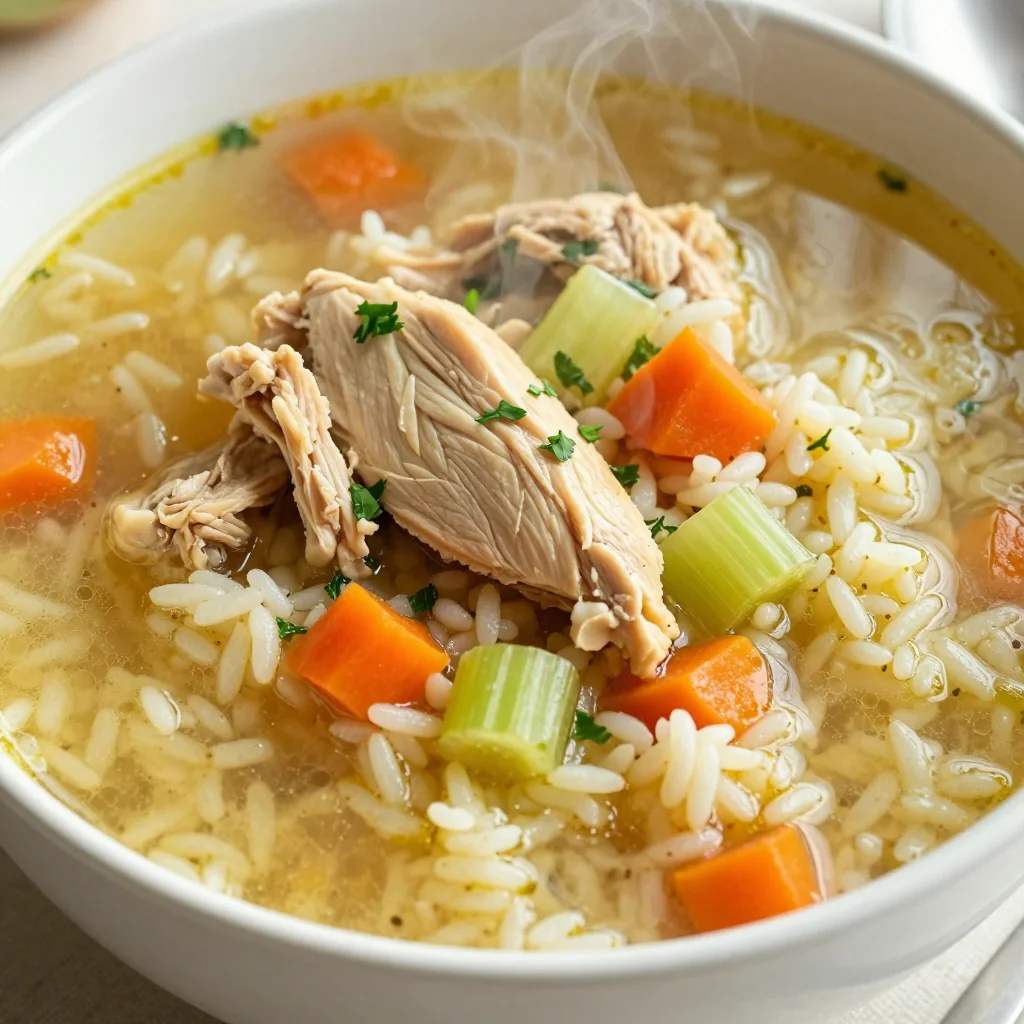
When the sniffles hit or the thermometer climbs, nothing wraps you in comfort quite like a steaming bowl of homemade chicken and rice soup. After fifteen years of recipe-testing, I can promise you this: the best sick-day soup isn’t the fanciest—it’s the one that asks for pantry staples, simmers while you nap, and tastes like someone who loves you stirred the pot. My neighbor Mrs. Kwan taught me that when she shuffled across the driveway with a quilt-covered stockpot after my daughter’s first flu. One spoonful of her golden broth—ginger-fragrant, pepper-bright, and thick with tender rice—made my chest feel lighter. I’ve tweaked her blueprint ever since, shaving steps for fever-foggy brains and swapping in ingredients that are kind to queasy tummies. The result is a one-pot wonder that takes ten minutes of active work, freezes beautifully in lunch-box portions, and somehow tastes even better when you’re camped on the couch in a hoodie three sizes too big. Whether you’re nursing yourself back to health, feeding a houseful of sneaky school germs, or simply craving the culinary equivalent of a weighted blanket, this emerald-accented hug in a bowl has your back.
Why This Recipe Works
- One-pot minimalism: Everything—from searing the chicken to simmering the rice—happens in a single Dutch oven, saving dishes and energy.
- Gentle ginger & turmeric: Fresh ginger soothes nausea while turmeric lends anti-inflammatory power and a sun-kissed hue.
- Par-boiled rice trick: Using rinsed par-boiled rice keeps grains distinct and prevents the dreaded “porridge bloom” on day two.
- Freezer-flex: Freeze portions flat in zip bags; they thaw directly in a saucepan with a splash of water and taste freshly made.
- Low-effort, high-comfort: Active prep is under ten minutes—perfect when standing feels like a sport.
- Child-approved mellow flavor: Mild aromatics keep it kid-friendly; hot sauce on the side keeps grown-ups happy.
Ingredients You'll Need
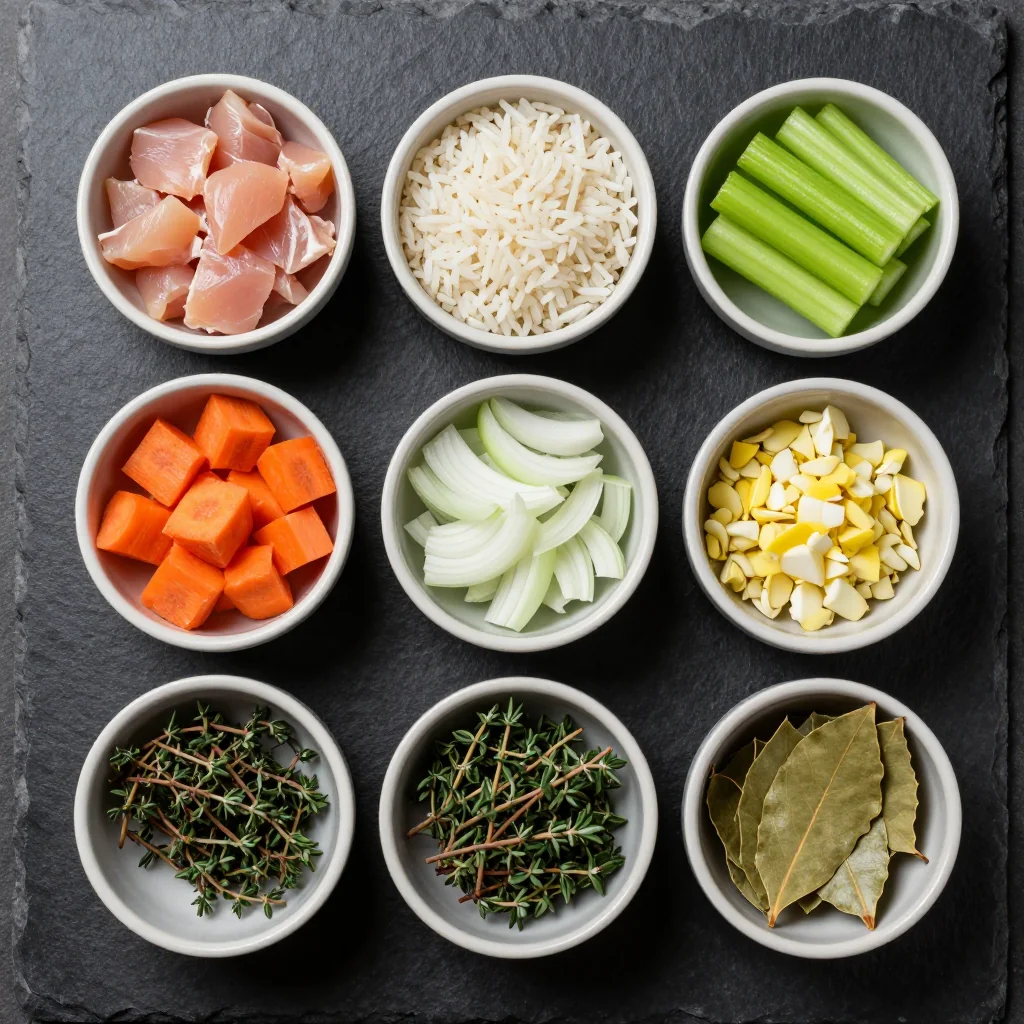
Great sick-day cooking starts with the grocery cart. Because appetites are fragile, choose the freshest produce you can muster; limp celery or sour onions will announce themselves loudly in such a simple broth.
Chicken thighs: Bone-in, skin-on thighs give the soup body and richness, but if trimming fat feels overwhelming, boneless skinless thighs (about 1¼ lb) are fine. Swap in leftover roast chicken—add it only in the last five minutes so it stays juicy.
Par-boiled rice: Sometimes labeled “converted,” this rice has been partially cooked then dried, so it holds its shape even if you reheat the soup three times. In a pinch, long-grain white rice works; reduce simmering time to 12 minutes and expect softer grains.
Aromatics: One small onion, two carrots, and two celery ribs create the classic “mirepoix” backbone. Peel the carrots if their skins look dry; otherwise, a good scrub preserves nutrients.
Fresh ginger: Look for taut, glossy skin with no wrinkles. If ginger has sprouted green nubs, snap one off—aromatic oils concentrate there. Store unused ginger frozen; it grates beautifully without thawing.
Garlic: One fat clove is plenty; more can overwhelm delicate stomachs. Green garlic shoots taste bitter, so remove them.
Low-sodium chicken stock: Homemade is gold, but let’s be honest—when you’re sick, carton is queen. Buy low-sodium so you control salt as taste buds fluctuate.
Fresh herbs: Parsley stems simmer with the broth; leaves finish the soup. No parsley? Use dill or chives for a different but still bright profile.
Turmeric: A ½-teaspoon gives gentle earthiness and that sunrise color. Add a pinch of black pepper; piperine boosts curcumin absorption.
Lemon: Zest goes into the pot for oils; juice is stirred in off-heat for a perk-you-up pop. Meyer lemons are softer on sore throats.
Olive oil & butter: A teaspoon of butter rounds edges, but skip it if dairy is a trigger. Use any neutral oil you have.
How to Make Easy Chicken and Rice Soup for Sick Days
Warm the pot & bloom the aromatics
Set a 4½-quart Dutch oven over medium-low heat. Add 1 Tbsp olive oil and 1 tsp butter. When the butter foams, scatter 1 cup diced onion, 1 cup diced carrot, and ¾ cup diced celery plus a pinch of salt. Sweat 5 minutes, stirring occasionally, until vegetables look glossy and the onion is translucent but not brown. Lower heat if you see color developing; browned bits can taste bitter to sensitive palates.
Add ginger, garlic, & lemon zest
Stir in 1 Tbsp grated fresh ginger, 1 minced garlic clove, ½ tsp turmeric, and the zest of ½ lemon. Cook 60 seconds—just long enough for the raw edge to cook off and the spices to bloom. Your kitchen will suddenly smell like a spa; breathe it in—aromatherapy is part of the cure.
Sear the chicken
Push veggies to the perimeter; add another drizzle of oil if pot looks dry. Lay 1½ lb bone-in skin-on chicken thighs skin-side down. Increase heat to medium. Sear 3 minutes—you’re not cooking through, just building fond (those caramelized specks equal flavor). Flip and sear 2 minutes more. If you’re using cooked leftover chicken, skip this step and add it later.
Deglaze with stock
Pour in 6 cups low-sodium chicken stock, scraping the pot’s bottom with a wooden spoon to release every browned bit. Add 2 parsley stems, 1 bay leaf, and ½ tsp kosher salt. Bring to a gentle simmer; avoid a rolling boil, which can turn meat rubbery.
Simmer until chicken is tender
Cover, reduce heat to low, and simmer 20 minutes. Check that the liquid lazily bubbles; if it’s perking too energetically, crack the lid. You’re aiming for meat that sighs off the bone when prodded with a fork.
Add rice & finish cooking
Lift out chicken onto a plate to cool slightly. Stir in ¾ cup rinsed par-boiled rice. Return to a gentle simmer, cover, and cook 12 minutes, stirring once halfway to prevent sticking.
Shred the chicken
While rice cooks, discard skin and bones; shred meat into bite-size strands. Kids often prefer tiny pieces; bigger hunks feel hearty for adults. Return chicken to the pot only for the final 2 minutes so it stays moist.
Season & brighten
Fish out bay leaf and parsley stems. Stir in juice of ½ lemon and a small handful chopped parsley leaves. Taste: add more salt, pepper, or a splash of water if too concentrated. For peppery heat without chilies, add ¼ tsp white pepper—gentler on sore throats.
Serve & soothe
Ladle into deep bowls. Drizzle with extra virgin olive oil for healthy fats that help absorb vitamins. Offer chili flakes or a squirt of Sriracha at the table for those who can handle the heat. Slip into pajamas, wrap fingers around warm ceramic, and let every spoonful do its healing work.
Expert Tips
Temperature matters
Keep the soup below a rolling boil once rice is in; aggressive heat bursts grains and clouds the broth.
Skim for clarity
Foam occasionally surfaces during the first simmer; skim it off with a spoon for a clearer, prettier broth.
Cool quickly
Divide leftovers into shallow containers so the soup cools fast and spends minimal time in the bacteria “danger zone.”
Color boost
Add a handful of frozen peas or baby spinach during the last minute for vibrant color and an extra vitamin pop.
Salt later
Taste after the lemon goes in; acid can make saltiness bloom, so you may need less than you think.
Reheat gently
Microwave at 70% power, stirring halfway; high heat can turn rice gummy and chicken stringy.
Variations to Try
-
Creamy version: Stir in ⅓ cup half-and-half during the final minute for a velvety, chowder-style twist that soothes scratchy throats.
-
Asian-inspired: Swap lemon for lime, add a bruised lemongrass stalk, and finish with a dash of fish sauce and cilantro.
-
Wild rice & turkey: Use leftover Thanksgiving turkey and substitute wild rice; simmer 35–40 minutes until the rice splits and curls.
-
Veggie boost: Fold in 1 cup cauliflower rice during the last 4 minutes for extra nutrients without carb load.
-
Low-carb noodle swap: Replace rice with broken-up spaghetti or orzo if that’s what your pantry offers; cook time stays the same.
-
Spicy recovery: Add 1 sliced bird’s-eye chili with the aromatics; capsaicin can help clear sinuses (but keep tissues nearby!).
Storage Tips
Refrigerator: Cool completely, transfer to airtight containers, and refrigerate up to 4 days. Keep rice slightly undercooked if you plan to reheat multiple times; it will finish cooking as the soup is warmed.
Freezer: Ladle soup into quart-size freezer bags, squeeze out excess air, label, and freeze flat up to 3 months. Thaw overnight in the fridge or plop the frozen block straight into a saucepan with ½ cup water, cover, and reheat over low, stirring often.
Make-ahead components: Cook the chicken and broth base up to 2 days ahead; store separately from rice. Combine and heat with freshly cooked or reheated rice for optimum texture.
Double-batch wisdom: Sick households run on empty. A double batch barely takes extra time and ensures you’ll have mug-ready nourishment for midnight coughing fits.
Frequently Asked Questions
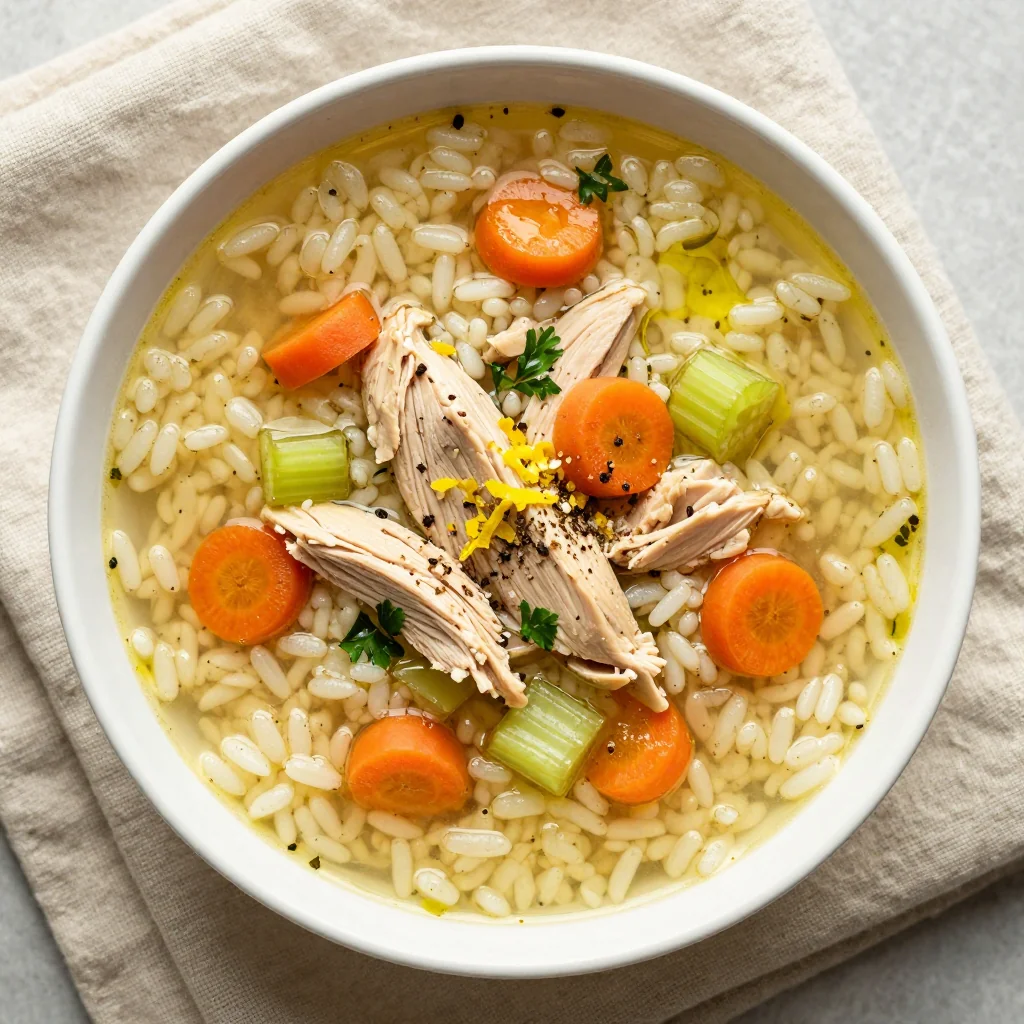
Easy Chicken and Rice Soup for Sick Days
Ingredients
Instructions
- Sauté aromatics: Warm olive oil and butter in a Dutch oven over medium-low. Add onion, carrot, celery, and a pinch of salt; sweat 5 minutes until translucent.
- Bloom spices: Stir in ginger, garlic, turmeric, and lemon zest; cook 60 seconds.
- Quick-sear chicken: Increase heat to medium, add chicken skin-side down, sear 3 minutes, flip and sear 2 minutes more.
- Simmer: Pour in stock, add parsley stems and bay leaf. Bring to a gentle simmer, cover, and cook 20 minutes.
- Add rice: Remove chicken, stir in rice, cover, and simmer 12 minutes.
- Shred & finish: Discard skin and bones; shred meat. Return chicken to pot for 2 minutes. Stir in lemon juice and parsley leaves; season to taste.
- Serve: Ladle into bowls, drizzle with olive oil, and feel better with every spoonful.
Recipe Notes
Par-boiled rice keeps its shape even after reheating. For strict low-sodium diets, replace half the stock with water and adjust salt at the table.