Love this? Pin it for later! 📌
There’s something about the combination of pork, apples, and sage that feels like autumn wrapped in a warm hug. The first time I served this Baked Pork Tenderloin with Apple and Sage was at a small Sunday gathering when the leaves had just begun to turn gold. I remember pulling the roasting pan from the oven, the scent of caramelized apples and woodsy sage drifting through the kitchen, and watching my guests’ eyes light up before they even took a bite. One forkful in, my neighbor declared it “the Sunday roast of dreams,” and I’ve been making it on repeat ever since.
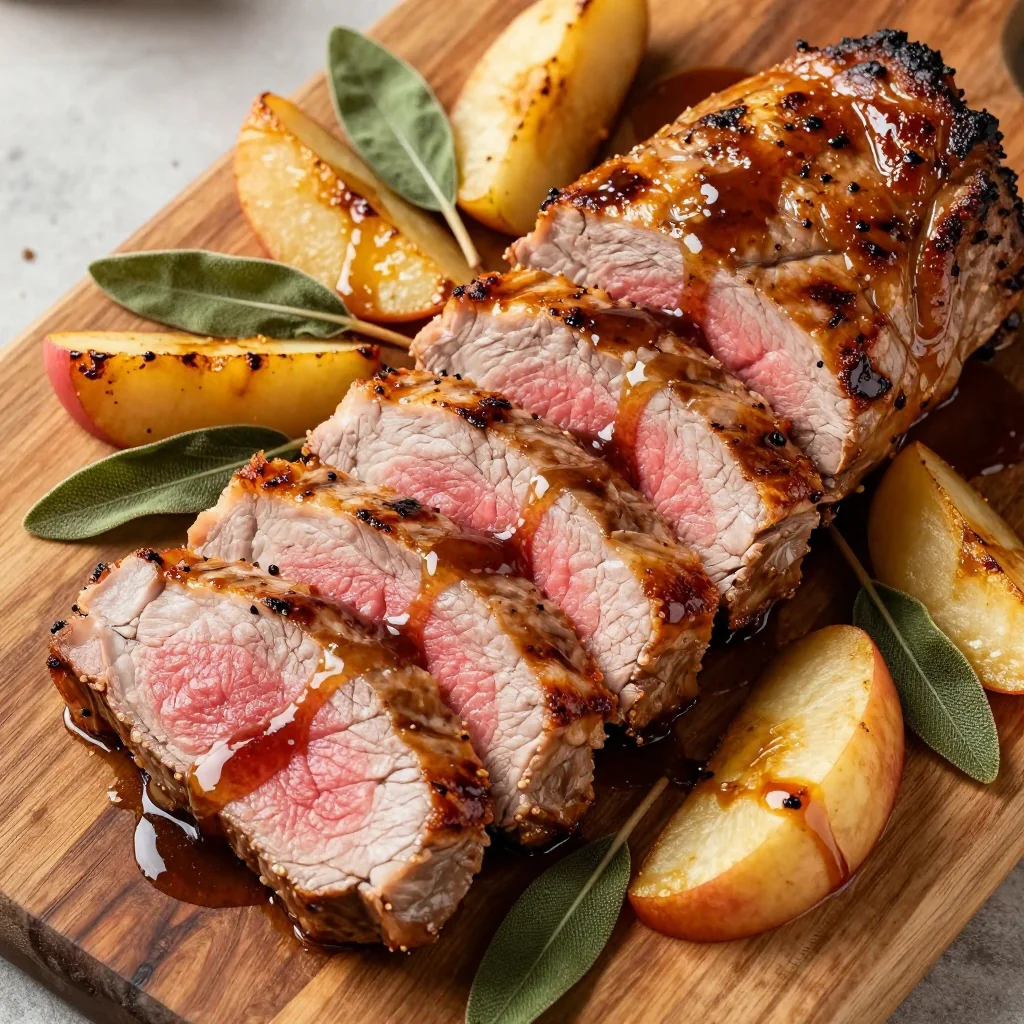
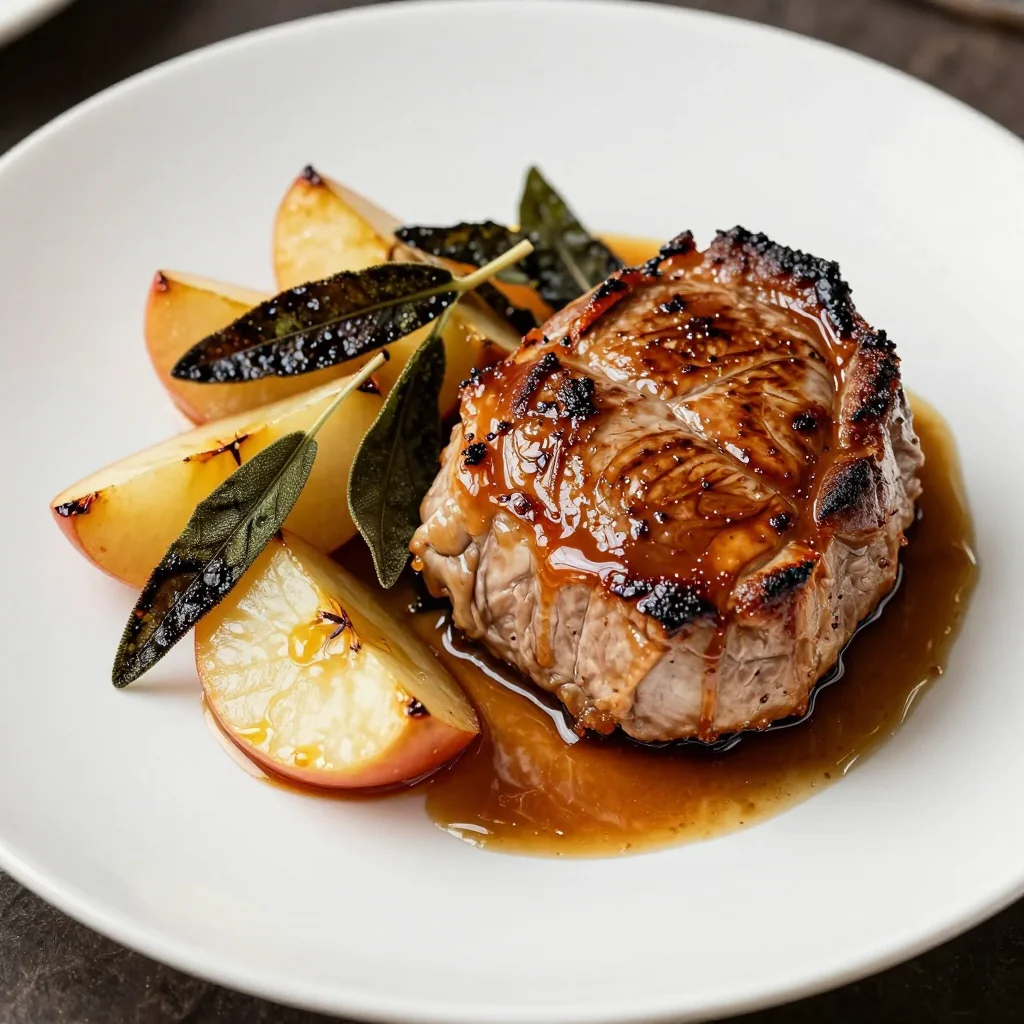
What makes this recipe so special is its effortless elegance. Pork tenderloin—naturally lean and quick-cooking—gets crowned with a sweet-savory apple-sage stuffing, then roasted until blush-pink and juicy. A glossy cider-mustard glaze lacquers the outside, giving you the shiny, photo-ready finish you thought only happened in magazines. Whether you’re hosting a harvest dinner, planning a holiday centerpiece, or simply craving comfort food that won’t weigh you down, this dish delivers restaurant-level flavor with minimal fuss.
Why This Recipe Works
- One-pan wonder: stuffing, glaze, and pork roast together on a single sheet, so cleanup is a breeze.
- Fast and fool-proof: tenderloin cooks in under 30 minutes; built-in thermometer guides prevent over-cooking.
- Flavor layering: fresh sage in the stuffing, dried sage in the rub, and sage-infused glaze for depth at every bite.
- naturally gluten-free: no bread fillers—apples, onions, and herbs keep it light and celiac-friendly.
- Make-ahead friendly: stuff and tie the roast up to 24 hrs ahead; simply pop in the oven when guests arrive.
- Stunning presentation: cross-section reveals a pinwheel of tender pork spiraled around ruby apple ribbons.
- Healthy yet satisfying: under 300 calories per serving, with 30 g of protein and plenty of fiber-rich apples.
Ingredients You'll Need
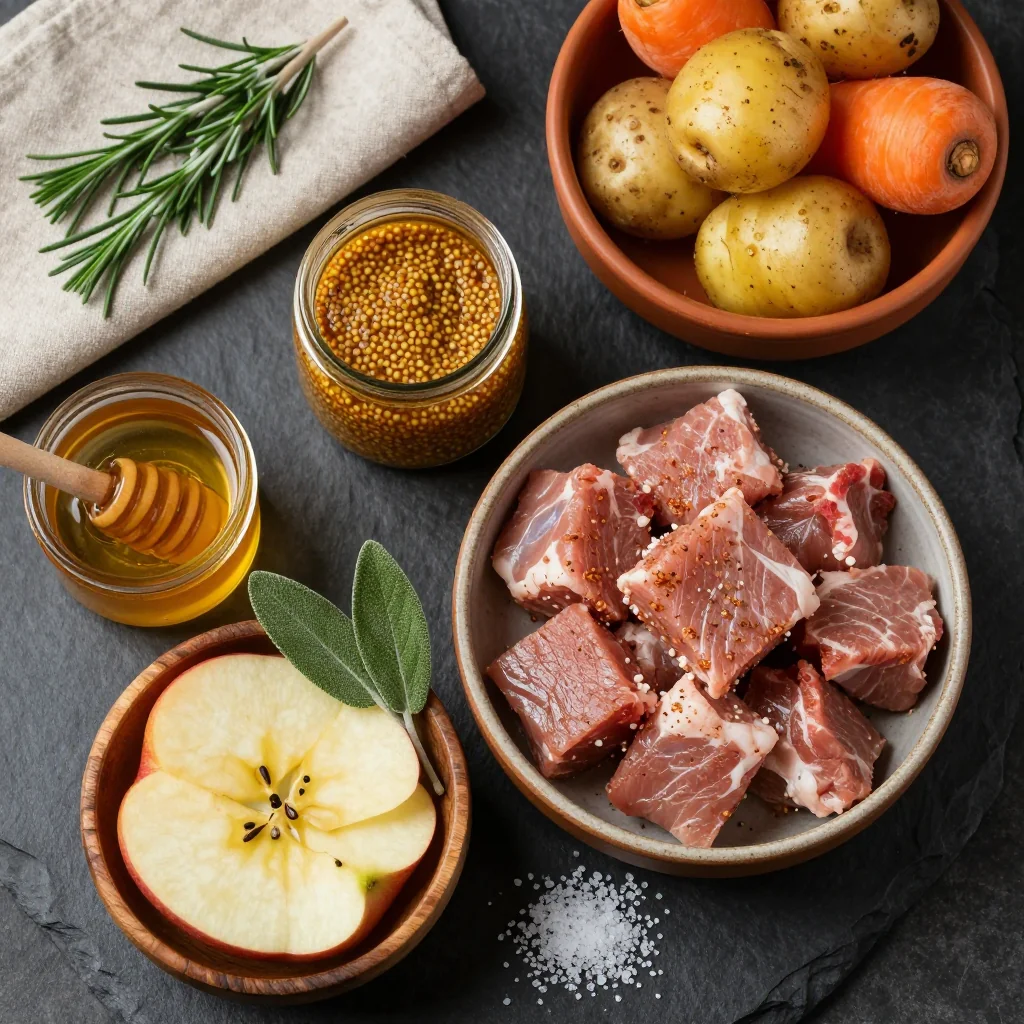
Pork tenderloin – Look for a 1¼–1½ lb (about 550–700 g) center-cut tenderloin that’s rosy, not pale, with minimal surface liquid. If your store sells them in two-packs, freeze the second one for stir-fry night. Avoid pre-marinated versions so you control the salt and seasoning.
Apples – Choose firm, slightly tart varieties like Honeycrisp, Braeburn, or Pink Lady. They hold their shape during roasting and offer a sweet-tangy pop against the savory pork. Peel only if you prefer; skins add color and nutrients.
Fresh sage – The star herb. Look for velvet-fuzzy, vibrant green leaves; avoid black spots or wilted stems. If your garden is still producing, harvest in the morning when oils are most concentrated. Swap: 1 tsp dried sage per 1 Tbsp fresh, but fresh is worth it.
Shallot & garlic – A finely minced shallot melts into the stuffing lending gentle sweetness; garlic gives backbone. In a pinch, substitute ¼ cup yellow onion for the shallot.
Unsalted butter & olive oil – Butter sautés the stuffing, olive oil ensures the pork sears and browns without burning. Using both equals flavor plus high-smoke protection.
Dijon & whole-grain mustard – Whisked into the glaze, they provide gentle heat and tangy complexity. Use all Dijon if that’s what you have; whole-grain adds pops of texture.
Apple cider & apple-cider vinegar – Cider reduces to a glossy syrup, while a splash of vinegar brightens the glaze so it doesn’t feel cloying. No cider? Unfiltered apple juice works—just reduce the brown sugar by half.
Light brown sugar – Balances mustard and vinegar. Coconut sugar is a 1:1 substitute with subtle caramel notes.
Kosher salt & freshly ground black pepper – Season every layer: stuffing, sear, and final glaze. I use Diamond Crystal; if using Morton, reduce volume by 25 %.
Optional finishing flare: a drizzle of pure maple syrup or a pat of cold butter swirled into the glaze for extra gloss.
How to Make Baked Pork Tenderloin with Apple and Sage
Butterfly & pound the pork
Pat the tenderloin dry. Using a sharp knife held horizontally, slice down the length, stopping ½ inch from the opposite edge. Open like a book. Cover with plastic wrap and gently pound to an even ½-inch thickness with a meat mallet or heavy skillet. This creates surface area for the stuffing and ensures even cooking.
Sauté the apple-sage stuffing
Melt 1 Tbsp butter with 1 tsp olive oil in a skillet over medium heat. Add minced shallot; cook 2 minutes until translucent. Stir in diced apples, minced garlic, chopped sage, ¼ tsp salt, and a pinch of pepper. Sauté 3–4 minutes until apples just soften but still hold shape. Remove from heat; cool slightly.
Season & fill
Rub the opened pork with 1 tsp kosher salt, ½ tsp pepper, and ½ tsp dried sage. Spread the apple mixture evenly over surface, leaving a ½-inch border. Starting from a long edge, roll snugly into a log. Secure at 1-inch intervals with kitchen twine. Let rest 10 minutes to set shape.
Sear for flavor
Heat 1 Tbsp olive oil in an oven-safe skillet over medium-high. Add the roast; brown 2–3 minutes per side until golden. Transfer to a plate. Deglaze pan with ¼ cup apple cider, scraping browned bits; pour these flavor-packed juices over the pork.
Roast to perfection
Preheat oven to 425 °F (220 °C). Place pork seam-side down on a parchment-lined rimmed sheet. Insert an oven-safe probe thermometer into the center. Roast 18–22 minutes, until thickest part registers 140 °F (60 °C). Remove; tent loosely with foil. Carry-over heat will bring it to a safe 145 °F.
Make the glossy glaze
While pork rests, whisk together ½ cup apple cider, 1 Tbsp brown sugar, 1 Tbsp Dijon, 1 tsp whole-grain mustard, 1 tsp apple-cider vinegar, and a pinch of salt. Pour into skillet; simmer 4–5 minutes until reduced by half and syrupy. Swirl in 1 tsp cold butter for sheen.
Glaze & slice
Remove twine. Brush roast generously with glaze. Using a sharp carving knife, slice into ½-inch rounds. Arrange on platter, drizzle with remaining glaze, and garnish with fresh sage leaves for color.
Serve & enjoy
Pair with roasted Brussels sprouts and maple-mashed sweet potatoes for a full autumn plate. Leftover pork makes incredible sandwiches with arugula and a swipe of apple butter.
Expert Tips
Use a Probe Thermometer
Over-cooking is the #1 cause of dry pork. A digital probe lets you pull the roast exactly at 140 °F for blushing juiciness.
Rest, Don’t Rush
Ten minutes of foil-tented rest redistributes juices. Cut too early and they puddle on the board, not in the meat.
Twine Alternatives
No kitchen twine? Slide two strips of folded foil under the roll, cross over top, and twist to tighten. Remove easily after roasting.
Cider Reduction
Reduce the glaze until it coats the back of a spoon; too thin and it’ll run off slices, too thick and it’ll read like jam.
Chill for Clean Cuts
Refrigerate the glazed roast 15 minutes before slicing; the surface firms, giving you deli-perfect circles.
Garnish Last Minute
Fresh sage turns black under heat. Sprinkle just before serving or flash-fry leaves in butter for 5 seconds for crispy flair.
Variations to Try
-
Pear & Rosemary: Swap apples for firm pears and sage for fresh rosemary. Add a pinch of ground cardamom to the glaze.
-
Smoky Bacon Boost: Lay 4 strips of thin bacon on the pork before rolling; the fat bastes the meat and amps smokiness.
-
Asian-Inflected: Sub rice vinegar for cider vinegar, add 1 tsp soy sauce and ½ tsp five-spice to glaze; garnish with scallions.
-
Butternut Spiral: Replace apples with thin ribbons of butternut squash and add ¼ tsp nutmeg; perfect winter twist.
-
Spicy Kick: Whisk ½ tsp chipotle powder into the glaze for a smoky-sweet heat that contrasts the fruit.
-
Low-Sugar: Omit brown sugar and rely on natural apple sweetness; use monk-fruit sweetener if necessary.
Storage Tips
Refrigerate: Cool slices completely, then store in an airtight container up to 4 days. Keep leftover glaze separate so pork doesn’t weep.
Freeze: Wrap individual slices in parchment, then foil; place in a zip-top bag. Freeze up to 2 months. Thaw overnight in fridge; reheat gently with a splash of cider in a covered skillet at 300 °F until just warmed.
Make-ahead: Assemble the stuffed roast through Step 3; cover tightly and refrigerate up to 24 hrs. Let stand at room temp 30 minutes before searing to promote even cooking.
Meal-prep: Slice chilled pork for salads, grain bowls, or sandwiches. Cold leftovers are delicious with a smear of cranberry chutney.
Frequently Asked Questions
Baked Pork Tenderloin with Apple and Sage
Ingredients
Instructions
- Butterfly & pound: Slice tenderloin lengthwise, open like a book, cover with plastic, pound to ½-inch thickness.
- Make stuffing: Sauté shallot in butter/oil 2 min; add apples, garlic, fresh sage, pinch salt; cook 3–4 min until just softened. Cool.
- Fill & roll: Season opened pork with salt, pepper, dried sage. Spread apple mixture; roll tightly, secure with twine at 1-inch intervals.
- Sear: Heat 1 Tbsp oil in oven-safe skillet; brown roast on all sides, 2–3 min per side. Deglaze with ¼ cup cider.
- Roast: Transfer to 425 °F oven; roast 18–22 min until internal temp reaches 140 °F. Tent with foil 10 min.
- Glaze: Simmer remaining cider, brown sugar, mustards, vinegar, pinch salt 4–5 min until syrupy; swirl in cold butter.
- Serve: Remove twine, brush with glaze, slice, drizzle remaining glaze, garnish with sage leaves.
Recipe Notes
For ultra-crispy edges, broil the glazed roast 1–2 minutes before slicing. Keep a close eye—the sugar can burn quickly.