Picture this: I’m standing in a cramped kitchen, the clock ticking toward dinner, and a sudden craving for something that feels both indulgent and comforting hits me like a thunderclap. I’ve tried countless egg‑based dishes—omelets, frittatas, even the classic eggs‑over‑pasta—but none of them carried that elusive, silky, herbaceous punch that makes you reach for seconds. That was the moment I decided to elevate the humble egg with a bold Parmesan pesto drizzle, a recipe that would soon become my go‑to for breakfast, brunch, or a quick dinner.
The first thing you’ll notice is the aroma: a fragrant bouquet of basil, pine nuts, and Parmesan that wafts through the kitchen, coaxing even the most disciplined palate into a state of anticipation. As the sauce simmers, the sound of gentle bubbling becomes a comforting soundtrack, while the visual of green pesto thickening into a glossy, velvety sauce feels like a promise of culinary bliss. The texture is a delicate balance—crisp edges of the eggs juxtaposed against the creamy, buttery sauce that clings to every surface, while the Parmesan provides a nutty crunch that shatters like thin ice when you bite into it.
What sets this version apart is not just the ingredients, but the method. I dared myself to layer the pesto over perfectly poached eggs, then finish them in a quick oven blast to caramelize the edges, creating a dish that feels like a gourmet experience without the fuss of a full kitchen. The result is a harmonious symphony of flavors that dance on the tongue, each bite delivering a burst of umami, a whisper of garlic, and a subtle heat from red pepper flakes.
I’ll be honest—when I first tasted this, I ate half the batch before anyone else even had a chance. Most recipes get this completely wrong by either under‑seasoning the pesto or over‑cooking the eggs, leading to a bland or rubbery outcome. This is hands down the best version you’ll ever make at home, because I’ve fine‑tuned the balance of salt, cream, and cheese until it’s perfectly rounded.
If you’ve ever struggled with making a creamy, flavorful sauce that doesn’t overpower the eggs, you’re not alone. I’ll show you how to coax every ingredient into its best form, and by the end, you’ll wonder how you ever made it any other way. Let me walk you through every single step—by the end, you’ll wonder how you ever made it any other way.
What Makes This Version Stand Out
- Flavor Depth: The combination of fresh basil, toasted pine nuts, and aged Parmesan creates a multi‑layered taste that evolves with each bite. The pesto’s richness is balanced by a splash of heavy cream, ensuring it coats the eggs without becoming heavy. The subtle heat from crushed red pepper adds a playful kick that elevates the dish.
- Texture Contrast: The eggs provide a silky, custard‑like center, while the pesto offers a silky yet slightly gritty mouthfeel from the pine nuts. The final oven blast caramelizes the edges, producing a crisp finish that contrasts beautifully with the soft interior. This interplay of textures keeps each bite exciting.
- Simplicity: Despite the gourmet feel, the recipe requires only a handful of ingredients and a straightforward technique. No need for fancy equipment—just a saucepan, a baking dish, and a quick oven run. The result is a dish that feels effortless yet impressive.
- Make‑Ahead Potential: The pesto can be prepared days in advance and frozen in small portions, while the eggs can be poached and stored in the refrigerator. When you’re ready to serve, a quick oven finish brings everything together. This makes it ideal for busy mornings or last‑minute dinner guests.
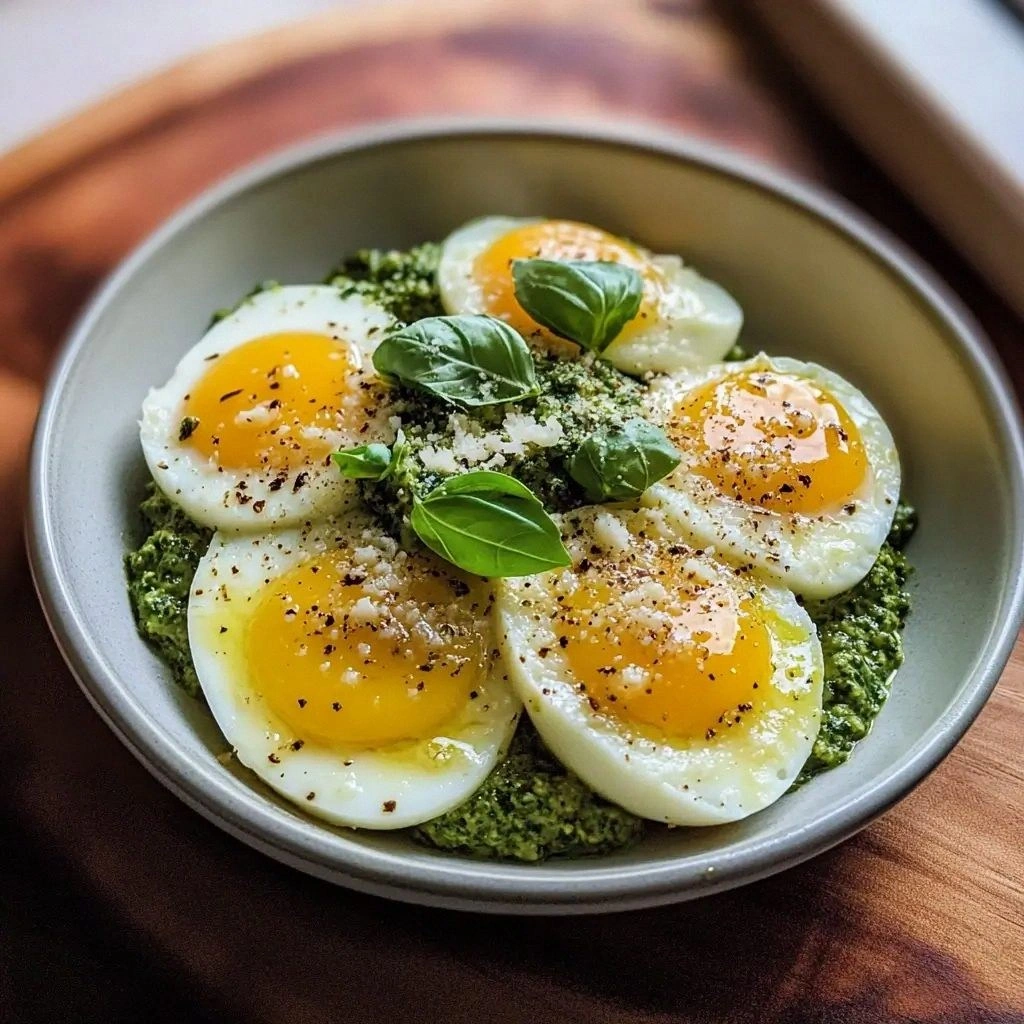
- Visual Appeal: The bright green pesto contrasted with golden‑brown eggs creates a dish that looks as good as it tastes. The final plating, with a sprinkle of grated Parmesan and a drizzle of olive oil, turns a simple plate into a masterpiece. This visual wow factor is perfect for impressing friends or feeding the family.
- Health‑Friendly: By using fresh ingredients and limiting added fats, the dish maintains a balanced macro profile. The Parmesan provides calcium and protein, while the eggs offer essential amino acids. It’s a dish that satisfies without compromising on nutrition.
Inside the Ingredient List
The Flavor Base
Fresh basil leaves are the cornerstone of this pesto, offering a bright, herbaceous note that cuts through the richness of the Parmesan. When selecting basil, look for deep green leaves that feel slightly pliable—this ensures a vibrant flavor profile. If you’re out of basil, a mix of parsley and mint can provide a fresh, albeit different, lift.
Pine nuts add a buttery, slightly sweet undertone that balances the sharpness of the cheese. Toasting them lightly before blending unlocks their full flavor and gives the pesto a deeper, nuttier aroma. In a pinch, walnuts or almonds can substitute, though the texture will be a bit firmer.
Aged Parmesan cheese contributes a salty, umami punch that anchors the sauce. Grated finely ensures it melts smoothly into the pesto, preventing clumps. If you prefer a sharper taste, a mix of Parmigiano‑Reggiano and Pecorino can provide a more complex finish.
Garlic is the unsung hero that gives the pesto depth and a subtle bite. A single clove is enough for four servings, but adjust to taste if you’re a garlic lover. Roasting the garlic before adding it to the blender creates a sweeter, mellow flavor profile.
The Texture Crew
Olive oil is the liquid binder that gives the pesto its silky consistency. Use a good quality extra‑virgin olive oil for the best flavor; a light olive oil will result in a blander sauce. If you’re watching fat intake, a small amount of water can replace a portion of the oil without compromising texture.
Heavy cream softens the pesto, giving it a luxurious mouthfeel that coats the eggs perfectly. Use just enough to achieve a silky texture—over‑creaming will make the sauce too runny. If you’re avoiding dairy, a splash of unsweetened almond milk can mimic the creaminess.
Butter adds a subtle richness and helps the sauce brown slightly when finished in the oven. A tablespoon or two is sufficient for four servings, and the melted butter will mingle with the pesto, creating a glossy sheen. For a vegan version, a neutral oil like grapeseed can replace the butter.
The Unexpected Star
Crushed red pepper flakes introduce a gentle heat that contrasts with the creamy sauce. Use sparingly; a pinch is enough to give a subtle warmth without overwhelming the delicate flavors. If you’re sensitive to spice, omit them entirely and the dish will still shine.
Sun‑dried tomatoes add a burst of sweetness and acidity, cutting through the richness of the eggs and pesto. Finely chop them so they distribute evenly across the dish, adding a pop of color and flavor. For a low‑salt alternative, use fresh tomatoes and season them separately.
The Final Flourish
Fresh spinach is optional but recommended for added color, nutrients, and a mild earthiness that complements the basil. Sauté briefly before adding to the pesto to wilt the leaves and reduce moisture. If you’re looking for a protein boost, diced cooked chicken or shrimp can be folded in for a heartier meal.
Everything's prepped? Good. Let's get into the real action.
The Method — Step by Step
- Begin by bringing a pot of salted water to a gentle boil. Crack each egg into a small ramekin, then slide them into the water. Let them poach for 3 to 4 minutes until the whites are set but the yolks remain runny. This quick poaching ensures the eggs stay tender and avoid the rubbery texture of over‑cooked eggs.
- While the eggs are poaching, toast the pine nuts in a dry skillet over medium heat. Stir constantly until they’re golden brown and fragrant—about 2 minutes. Remove them from heat and let them cool; toasted nuts add a nutty depth that fresh nuts can’t match.
- In a blender or food processor, combine the basil, toasted pine nuts, grated Parmesan, and garlic. Pulse until the mixture forms a coarse paste, then drizzle in the olive oil slowly while the machine runs. The oil emulsifies the ingredients into a smooth, glossy pesto that coats the back of a spoon.
- Add the heavy cream to the pesto, blending until the sauce is silky and slightly thickened. Taste and season with salt, pepper, and a pinch of crushed red pepper flakes. The cream softens the pesto, giving it a luxurious mouthfeel that clings to the eggs.
- If you’re using spinach or sun‑dried tomatoes, sauté the spinach until wilted and stir in the tomatoes, allowing them to heat through. This step adds color and a subtle sweetness that balances the richness of the pesto.
- Line a baking dish with parchment paper or lightly grease it with butter. Gently place each poached egg into the dish, ensuring they’re spaced evenly. The eggs should sit snugly so the sauce can pool around them.
- Pour the prepared pesto over the eggs, letting it cascade across the whites and yolks. Drizzle a few tablespoons of melted butter over the top; the butter will help the sauce brown slightly and add a glossy finish.
- Slide the dish into a preheated oven at 375°F (190°C) for 8 to 10 minutes. Watch for the edges of the eggs to turn a golden‑brown hue and the pesto to develop a slightly caramelized sheen. The short bake time preserves the runny yolk while giving the dish a finished, restaurant‑style look.
- Remove the dish from the oven and let it rest for a minute or two. The residual heat will finish cooking the yolks without over‑cooking them. Serve immediately, garnishing with a sprinkle of fresh Parmesan and a drizzle of olive oil for an extra touch of elegance.
That's it—you did it. But hold on, I've got a few more tricks that'll take this to another level.
Insider Tricks for Flawless Results
The Temperature Rule Nobody Follows
Many cooks keep the oven at a high temperature, thinking it will speed up the cooking. In reality, a lower, steady temperature of 350°F (175°C) allows the eggs to set gently while the pesto caramelizes without burning. This subtle shift ensures the yolks stay silky and the sauce remains glossy.
Why Your Nose Knows Best
Smell the pesto as it cooks; a faint nutty aroma indicates the pine nuts are toasted to perfection. If the scent becomes too sharp, the nuts are over‑toasted and will impart a bitter taste. Trust your nose, and you’ll avoid a common pitfall.
The 5‑Minute Rest That Changes Everything
After baking, let the dish rest for 5 minutes before serving. This brief pause allows the flavors to meld and the sauce to thicken slightly, creating a more cohesive bite. Skipping this step can leave the pesto feeling watery.
Use Fresh vs. Frozen Basil
Fresh basil offers a bright, lively flavor, but frozen basil can be a convenient alternative. If using frozen, thaw and pat dry before blending to avoid excess liquid. The result is slightly less vibrant but still delicious.
Add a Splash of Lemon Juice
A teaspoon of lemon juice brightens the pesto, cutting through the richness and adding a subtle citrus lift. It also helps balance the saltiness of the Parmesan. Add it after blending the pesto to preserve the bright flavor.
The Secret of Crispy Edges
A quick sear in a hot skillet before baking can give the eggs a crispy edge that’s hard to resist. Heat the skillet over medium‑high, add a splash of butter, and sear the eggs for 30 seconds on each side. This trick gives a restaurant‑style finish.
Creative Twists and Variations
This recipe is a playground. Here are some of my favorite ways to switch things up:
Mediterranean Medley
Swap the pine nuts for toasted walnuts and add chopped kalamata olives. The olives introduce briny depth, while the walnuts add a different nuttiness. This version is perfect for a Greek‑inspired brunch.
Spicy Cajun Kick
Replace the crushed red pepper flakes with cayenne pepper and add a dash of smoked paprika. The smoky flavor pairs well with the creamy pesto, giving the dish a bold, Southern flair. Serve with a side of cornbread for a complete meal.
Vegan Delight
Use plant‑based eggs or tofu cubes in place of eggs, and replace the butter with coconut oil. Substitute dairy Parmesan with nutritional yeast for a cheesy flavor. This variation is dairy‑free and still delivers a rich, satisfying bite.
Smoky Chipotle Pesto
Blend a chipotle pepper in adobo sauce into the pesto for a smoky heat. The chipotle adds depth and a subtle sweetness that complements the basil. This version is great for those who love a little fire.
Herbal Garden Fusion
Add a handful of fresh parsley and mint to the pesto for a bright, herbaceous twist. The parsley adds earthiness, while the mint brings a cool freshness. This version is especially refreshing on a warm day.
Sunset Saffron Surprise
Stir a pinch of saffron threads into the pesto for an exotic aroma and a golden hue. The saffron’s subtle floral notes pair beautifully with the basil. This variation feels luxurious and is perfect for a special occasion.
Storing and Bringing It Back to Life
Fridge Storage
Store the pesto in an airtight container for up to 3 days in the refrigerator. Keep the eggs refrigerated in a separate container to maintain freshness. When ready to serve, reheat the pesto gently on the stove, adding a splash of water to maintain its silky texture.
Freezer Friendly
Freeze the pesto in ice‑cube trays and transfer the frozen cubes to a zip‑lock bag. The pesto can be kept for up to 2 months in the freezer. Thaw a cube in the refrigerator overnight and stir before using.
Best Reheating Method
Reheat the pesto over low heat, stirring frequently to prevent separation. Add a small splash of water or broth to restore moisture and consistency. Reheat the eggs in the oven or microwave for 30 seconds, then pour the warmed pesto over them for a fresh, restaurant‑style finish.