Love this? Pin it for later! 📌
Why This Recipe Works
- One pot, one skillet, one happy cook: Boil the pasta while the sauce builds in a single pan—minimal dishes, maximum flavor.
- Brine is the backbone: The salty olive brine and tangy artichoke liquid season the sauce so you barely need extra salt.
- Customizable by design: Swap in sun-dried tomatoes, capers, or a tin of tuna; the template never fails.
- Ready faster than delivery: 20 minutes from “what’s for dinner?” to bowl-on-couch.
- Vegan by default, optional cheese bliss: Nutritional yeast or a snow of parm both work.
- Leftovers reheat like a dream: Add a splash of water, microwave 60 seconds, tastes fresh again.
- Budget-friendly brilliance: Canned produce keeps costs low without sacrificing flavor.
Ingredients You'll Need
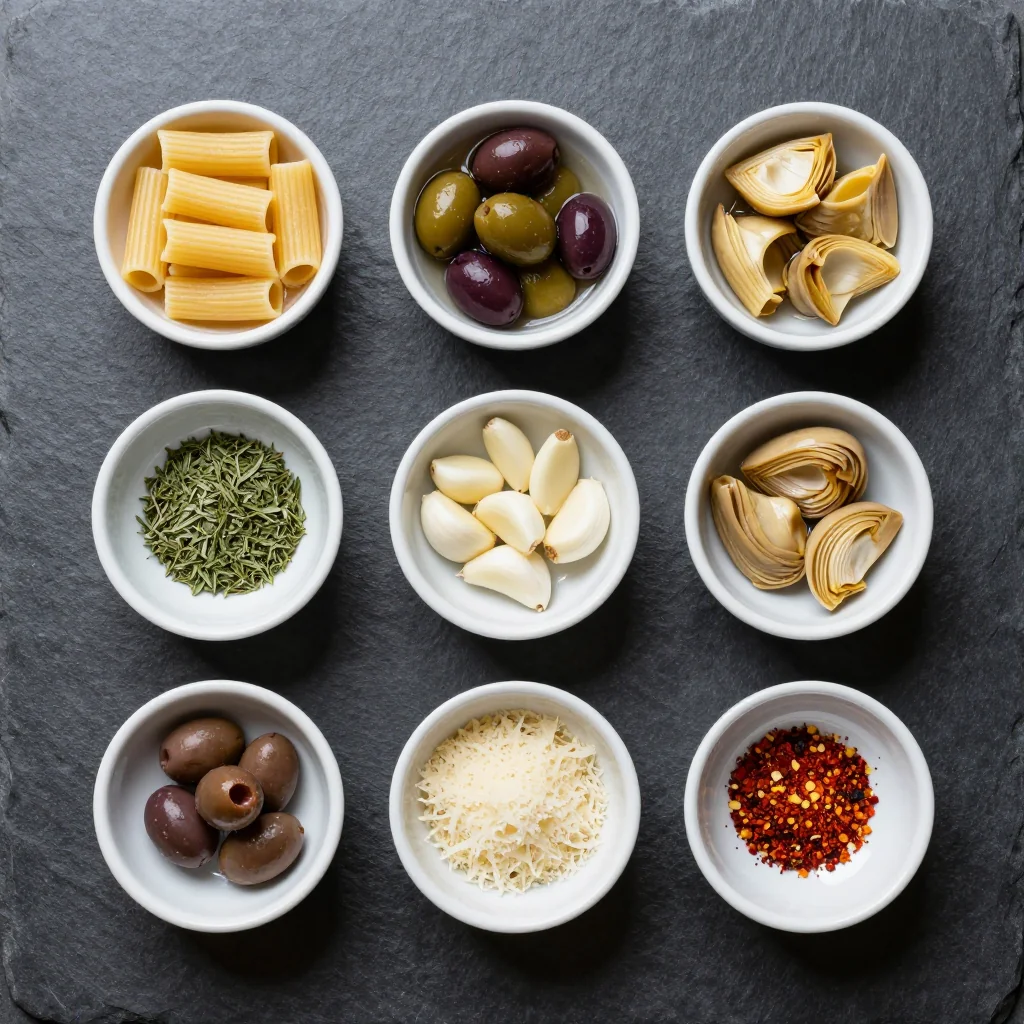
Pasta: I reach for linguine or spaghetti because the long strands grab the chunky sauce, but any shape—penne, fusilli, even small shells—works. Whole-wheat or legume-based pasta adds fiber; gluten-free rice pasta is lovely too. Whatever you choose, pull it 1 minute shy of al dente so it can finish cooking in the sauce.
Extra-virgin olive oil: This is one of those recipes where olive oil is a flavor, not just fat. Use the good stuff—fruity, peppery, green-gold. If you only have neutral oil, add a pinch of dried oregano to fake the Mediterranean vibe.
Garlic: Three fat cloves, sliced whisper-thin so they dissolve into the oil. In a pinch, ½ teaspoon garlic powder can stand in, but fresh gives that mellow sweetness.
Crushed red-pepper flakes: Just ¼ teaspoon for a gentle hum. Double if you like the kind of heat that makes your nose tingle.
Canned artichoke hearts: Buy them packed in water, not oil (we control the oil). Quartered hearts save prep, but whole ones torn by hand look rustically chic. Rinse quickly to remove surface salt, then pat dry so they sear instead of steam.
Pitted olives: A mix of kalamata and green olives gives color contrast; if you only have black, still delicious. Taste the olives first—some brands are salt bombs; if so, soak in water 5 minutes, then drain.
Capers (optional but recommended): Their pop of floral tartness is like culinary confetti. If you hate capers, a squeeze of lemon at the end gives similar brightness.
Reserved pasta water: Liquid gold. The starch thickens the sauce and helps it cling. I ladle out a cup before draining, just in case.
Fresh parsley or basil: A handful of greenery wakes everything up. In winter, thinly sliced scallion tops or even celery leaves do the trick.
Finishing cheese: Nutritional yeast for vegans, pecorino for sharp bite, or creamy burrata if you’re feeling fancy. Omit entirely and it’s still lush.
How to Make Pantry Pasta With Canned Olives And Artichokes
Start the pasta water
Fill a large pot with 4 quarts of water, salt it until it tastes like the sea (about 1 tablespoon kosher salt), and bring to a boil over high heat. Covering the pot shaves two minutes off the wait; I set my kettle to boil simultaneously for speed.
Prep your pantry stars
While the water heats, open the olives and artichokes. Drain the artichokes in a colander, rinse under cool water, then press gently between paper towels to remove excess moisture—this prevents oil splatter later. If your olives are whole, smash them with the flat side of a knife and pop out the pits (or buy them pitted and save 3 minutes).
Build the flavor base
In a large skillet, heat 3 tablespoons olive oil over medium. When the oil shimmers like a mirage, scatter in the sliced garlic and red-pepper flakes. Swirl constantly 45–60 seconds—just until the garlic turns the palest gold. Do not let it brown; bitter garlic is the fastest way to ruin a pantry triumph.
Sear the artichokes
Add artichoke hearts cut-side down. Increase heat to medium-high and resist the urge to move them for 2 full minutes; you want caramelized edges that taste like roasted nutty artichoke jerky. Flip once, another 90 seconds, then scoot them to the perimeter of the pan.
Cook the pasta
By now your water should be roaring. Add 12 oz pasta and stir for 10 seconds to prevent sticking. Check package timing, then set a timer for 1 minute less than the lowest number (usually 8–9 minutes for spaghetti).
Marry olives and capers
Toss olives and capers into the center of the skillet. Let them sizzle 30 seconds so the brine evaporates and leaves behind concentrated flavor. You’ll smell the olives turn fruity rather than just salty.
Create the emulsion
Ladle out 1 cup starchy pasta water, then drain pasta. Lower skillet heat to medium-low. Add pasta straight into the skillet, followed by ½ cup pasta water. Toss vigorously with tongs 30 seconds; the water and oil will transform into glossy sauce that coats every strand. Add more water a tablespoon at a time until you reach silky consistency.
Finish with flair
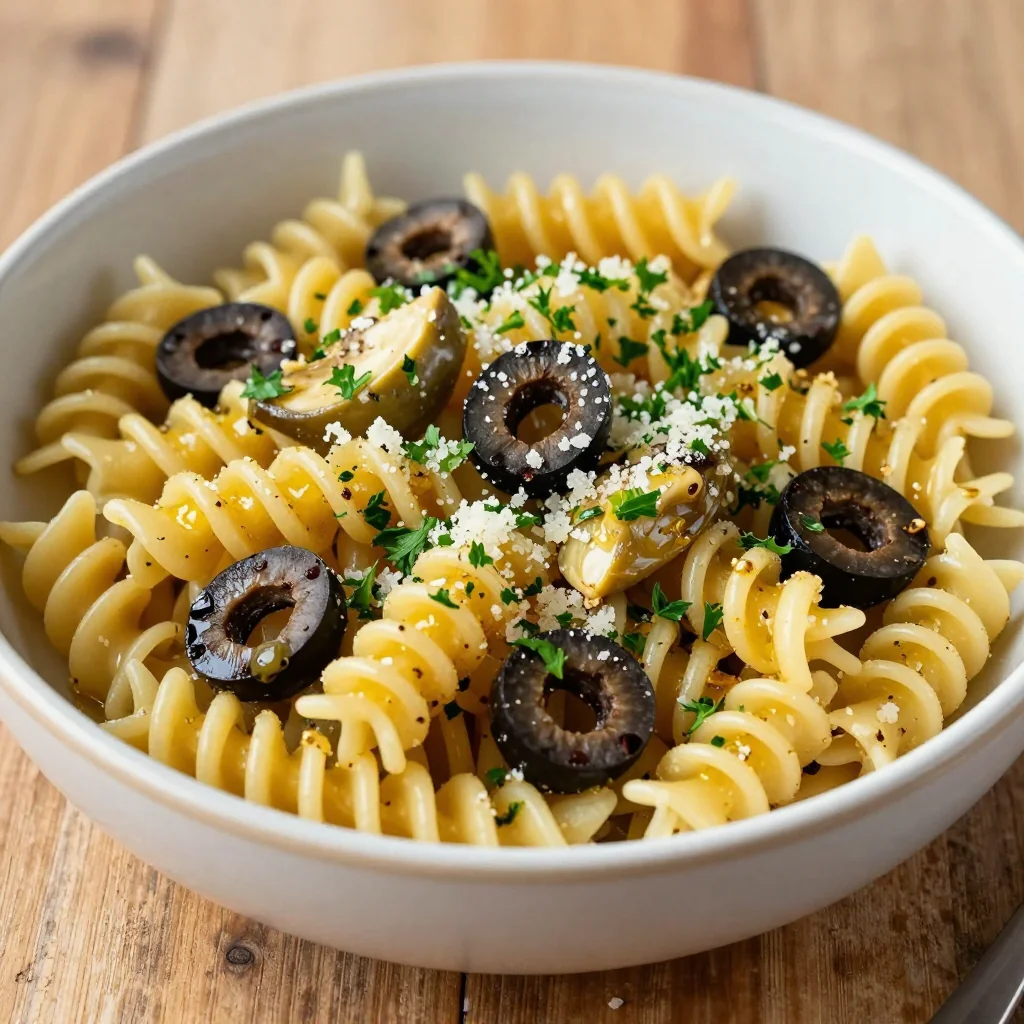
Off the heat, fold in chopped parsley and 1 tablespoon extra-virgin olive oil for sheen. Taste; add black pepper or a pinch more salt only if needed (olives usually suffice). Serve immediately in warm bowls, topping with cheese or nutritional yeast, plus an extra drizzle of oil that pools like liquid sunshine.
Expert Tips
Save the olive brine
If your olives come with 2 tablespoons of brine, pour it into the skillet in Step 6 instead of salt water; it layers flavor like a secret ingredient.
Make it midnight-proof
Keep a jar of minced roasted garlic in the fridge. It skips slicing and caramelizes faster—perfect for 1 a.m. pasta cravings.
Scale without stress
Doubling? Use a wider pan, not deeper, so evaporation stays the same and your sauce still emulsifies.
Freeze olive mix
Chop leftover olives, capers, and garlic, mix with olive oil, freeze in ice-cube trays. Drop a cube into future sauces for instant flavor.
Color pop
Add a pinch of turmeric to the oil for golden hue that makes Instagram think you used saffron.
Toast your pepper flakes
Let them sizzle 15 seconds longer in Step 3; toasting blooms their fruity notes and tames raw heat.
Variations to Try
-
Sun-dried tomato & almond: Swap olives for chopped oil-packed sun-dried tomatoes and add a tablespoon of toasted sliced almonds for crunch.
-
Tuna puttanesca style: Stir in one 5-oz can of oil-packed tuna (drained) in Step 7; add a handful of chopped fresh oregano and a squeeze of lemon.
-
Creamy vegan: Blend ¼ cup soaked cashews with ½ cup pasta water and stir into the skillet at the end for a silky, dairy-free cream sauce.
-
Lemony spring version: Replace red-pepper flakes with lemon zest, add a handful of frozen peas in Step 6, and finish with mint instead of parsley.
Storage Tips
Refrigerate: Cool leftovers completely, transfer to airtight container, refrigerate up to 4 days. The flavors meld beautifully; it’s arguably better the second day.
Reheat: Microwave—add 1 tablespoon water per cup of pasta, cover loosely, heat 60–90 seconds, stir halfway. Stovetop—warm in a non-stick skillet with a splash of water over medium-low, tossing until hot and glossy.
Freeze: Portion into freezer-safe zip bags, press out air, freeze flat up to 2 months. Thaw overnight in fridge, then reheat as above. Texture stays surprisingly firm because of the oil coating.
Meal-prep shortcut: Make a double batch of the olive-artichoke mix (through Step 6) and freeze in half-cup portions. When pasta cravings hit, boil noodles and toss with the pre-made mix for 5-minute dinner.
Frequently Asked Questions

Pantry Pasta With Canned Olives And Artichokes
Ingredients
Instructions
- Salt the water: Bring 4 quarts of water to a boil, salt generously.
- Prep pantry goods: Drain and pat artichokes dry; halve olives if needed.
- Sauté aromatics: Heat olive oil in a large skillet over medium. Add garlic and pepper flakes; swirl 45 seconds.
- Sear artichokes: Increase heat to medium-high. Add artichokes cut-side down; cook 2 minutes without moving.
- Cook pasta: Boil pasta 1 minute shy of al dente; reserve 1 cup pasta water, then drain.
- Combine: Add olives and capers to skillet; sauté 30 seconds. Toss in pasta and ½ cup pasta water until glossy.
- Finish: Off heat, stir in parsley and a final drizzle of oil. Serve hot with optional cheese.
Recipe Notes
For extra protein, stir in one can of drained chickpeas during Step 6. Leftovers reheat beautifully with a splash of water.