Love this? Pin it for later! 📌
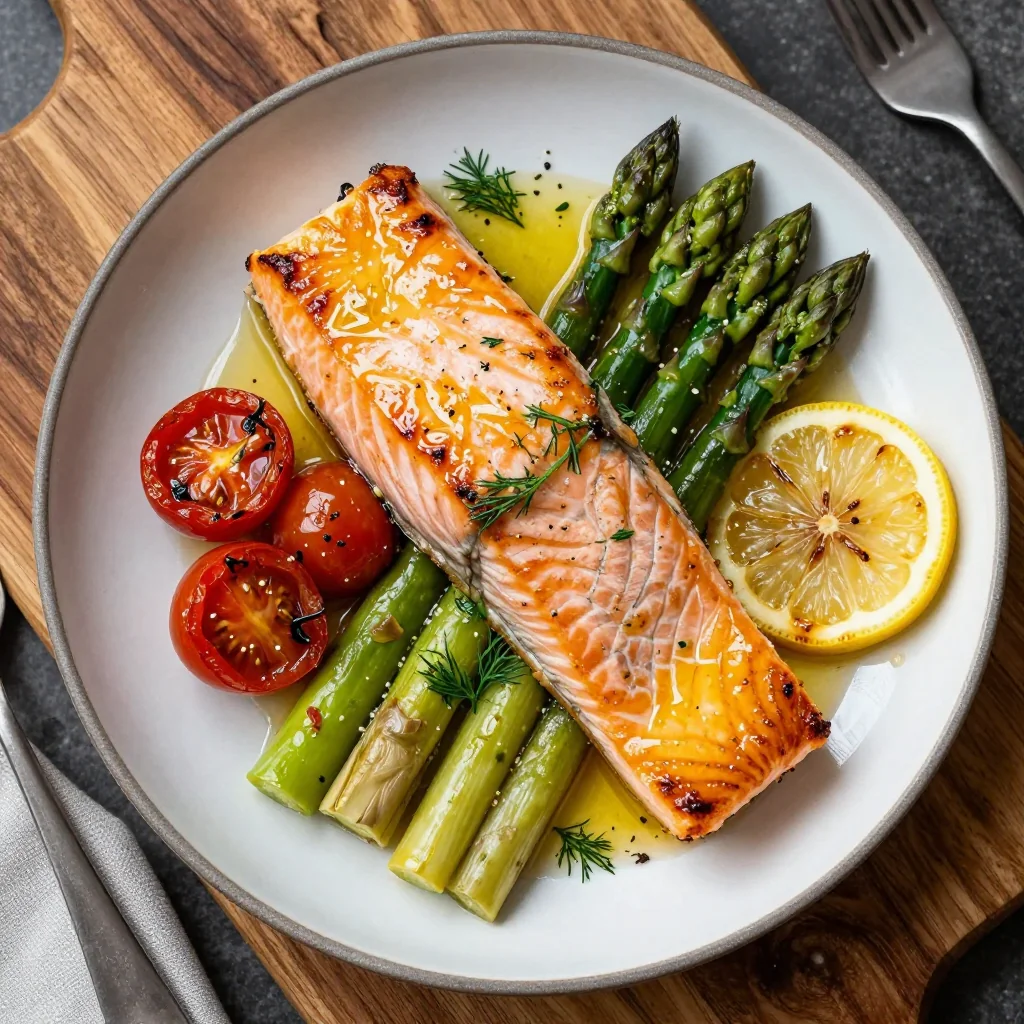
There’s a moment—usually around 5:47 p.m.—when the after-school chaos peaks, the dog is barking at absolutely nothing, and someone is already asking what’s for dessert before dinner has even started. On nights like these, I reach for this One-Pan Lemon Herb Salmon. It has rescued more Tuesdays than I can count, turning a potential drive-through detour into a 25-minute victory lap that leaves the whole crew cheering. The first time I made it, my then-seven-year-old took a bite, closed her eyes dramatically, and declared, “Mom, this tastes like sunshine.” That was three years ago, and the recipe has lived on a faded sticky note on the side of our fridge ever since—splattered, smudged, and utterly beloved.
What makes this dish so special? Everything—salmon, baby potatoes, crisp-tender asparagus, and an impossibly fragrant lemon-herb oil—cooks together on a single parchment-lined sheet pan. Translation: zero fancy technique, almost no dishes, and a nutrient-packed meal that feels restaurant-caliber yet costs less than a delivery pizza. Whether you’re hustling between baseball practice and piano lessons, or you simply want a fool-proof way to get more heart-healthy omega-3s onto plates without complaints, this recipe is about to become your weeknight superhero.
Why This Recipe Works
- One pan, zero fuss: Everything cooks together—no par-boiling, no extra skillets, no mountain of dishes.
- Speedy 25-minute dinner: The oven does the heavy lifting while you help with homework or finally fold that laundry.
- Balanced nutrition: Protein-rich salmon, high-fiber potatoes, and antioxidant-packed asparagus hit every food group.
- Customizable veggies: Swap in broccoli, green beans, or zucchini—whatever’s lurking in the crisper drawer.
- Kid-approved flavor: Lemon brightens without being “too tangy,” and herbs add depth without spice.
- Meal-prep friendly: Leftovers reheat beautifully on a salad or tucked into a wrap for tomorrow’s lunch.
Ingredients You'll Need
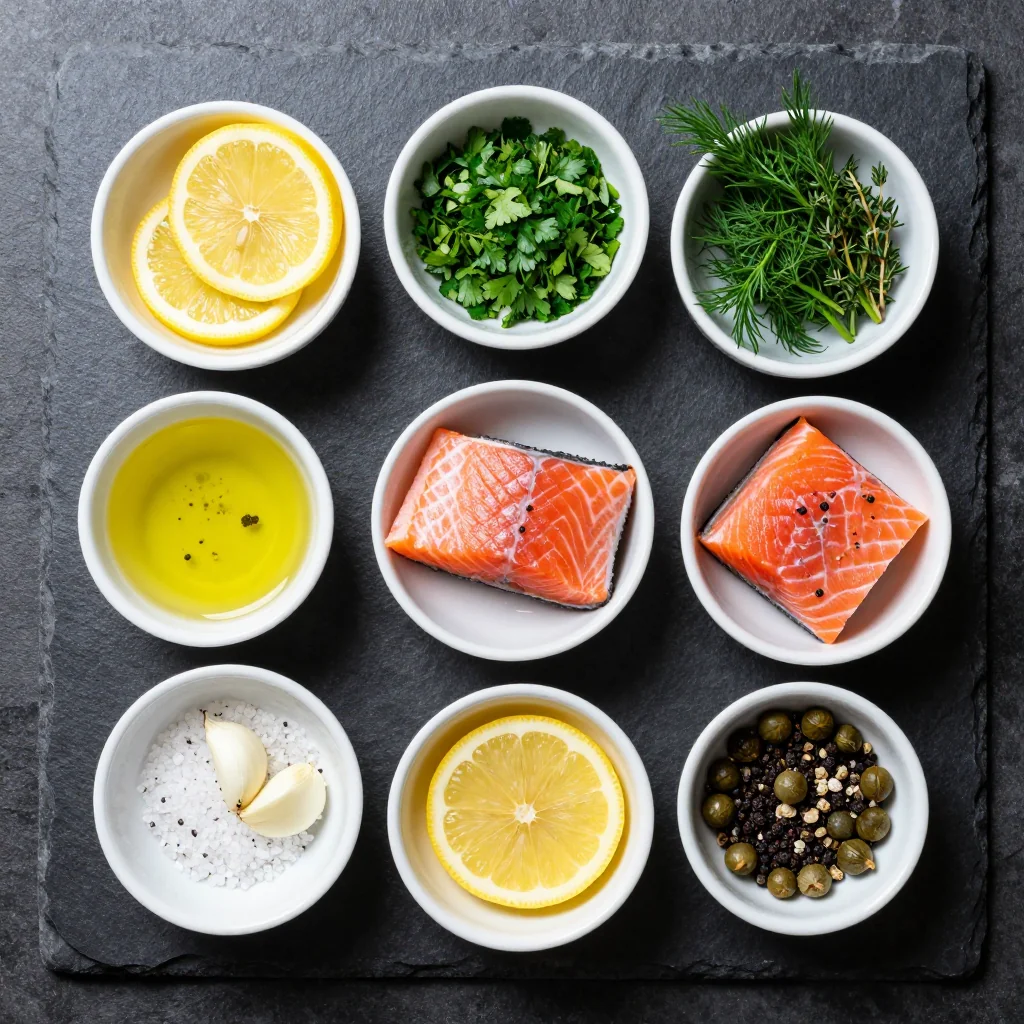
Great recipes start with great ingredients. Let’s break down the all-stars so you know exactly what to look for at the market:
- Salmon fillets (1–1.25 lb total): Choose center-cut pieces that are even in thickness so they roast uniformly. Fresh is fantastic, but individually flash-frozen fillets—thawed overnight in the fridge—work beautifully and are often more budget-friendly. Wild-caught Coho or King salmon boast the richest flavor, while responsibly farm-raised Atlantic keeps costs down.
- Baby potatoes (1.5 lb): Their thin skins soften quickly, eliminating peeling. Look for a medley of reds, golds, and purples for color pop. If only larger potatoes are available, cut them into ¾-inch chunks.
- Asparagus (1 bunch): Stalks should snap crisply; tips should be tight, not mushy. Pencil-thin ones cook in the same time as the salmon—no prep beyond trimming the woody ends.
- Lemon (1 large): Zest before juicing—about 1 tsp zest and 2 Tbsp juice. Organic lemons ensure pesticide-free zest.
- Extra-virgin olive oil (3 Tbsp): A fruity, fresh oil carries flavors and prevents sticking. Avocado oil is a high-heat alternative.
- Garlic (2 cloves): Freshly minced beats pre-chopped for punchy aroma. Substitute ½ tsp garlic powder in a pinch.
- Fresh dill (2 Tbsp): Feathery and bright; parsley or basil can sub if dill isn’t your favorite.
- Kosher salt & freshly ground black pepper: The only seasoning you truly need. I like pepper coarser here for texture.
Optional but lovely: a pinch of smoked paprika for subtle warmth, or a handful of cherry tomatoes tossed on the pan for jammy bursts of sweetness.
How to Make One-Pan Lemon Herb Salmon for Busy Family Nights
Preheat & Prep Pan
Position rack in center of oven; heat to 425 °F (220 °C). Line a rimmed 11×17-inch sheet pan with parchment for near-instant cleanup. Lightly brush or spray the parchment with oil to prevent sticking.
Make Lemon-Herb Oil
In a small bowl whisk olive oil, lemon zest, lemon juice, minced garlic, dill, ¾ tsp salt, and ½ tsp pepper. The mixture will look glossy and smell like summer in the Mediterranean.
Season Potatoes
Halve baby potatoes and tumble them onto one third of the pan. Drizzle with half of the lemon-herb oil; toss to coat. Spread potatoes cut-side down for maximum caramelization. Slide pan into oven for 10 minutes—this head-start ensures potatoes finish tender at the same moment the salmon hits perfect medium.
Prep Salmon
Pat fillets very dry with paper towels—moisture is the enemy of browning. Brush tops with some of the remaining oil and season lightly with salt and pepper. Let stand at room temp while potatoes roast; this promotes even cooking.
Add Asparagus & Salmon
Remove pan; scoot potatoes to one side. Place asparagus in center; drizzle with a spoonful of oil and a pinch of salt. Nestle salmon, skin-side down, on the opposite third. Everything should fit snugly but not overlap.
Roast to Perfection
Return pan to oven and roast 12–14 minutes more. Salmon is done when it flakes easily and reaches 125 °F for medium (my family’s sweet spot) or 130 °F for medium-well. Asparagus should be bright green with lightly blistered tips; potatoes will be creamy inside and golden where they kiss the pan.
Finish & Serve
Drizzle any remaining lemon-herb oil over the hot salmon. Sprinkle with extra dill and lemon wedges for squeezing. Bring the pan straight to the table and let everyone build plates family-style.
Optional Pan Sauce
For restaurant vibes, whisk ¼ cup white wine or broth into the hot pan juices on the stovetop over medium heat for 1 minute, scraping up browned bits. Pour over plated portions.
Expert Tips
Even Thickness
If some fillets are thinner, fold the skinny tail end underneath to create a uniform slab. This prevents overcooked edges.
Dry = Crispy
A quick pat with paper towels before seasoning removes surface moisture, promoting that gorgeous light crust on salmon skin.
Check Early
Ovens vary; start peeking at 10 minutes if your fillets are under 1 inch thick. Salmon keeps cooking from residual heat, so err on the side of slightly under.
Save the Oil
Leftover lemon-herb oil? Whisk it with a splash of vinegar for instant salad dressing tomorrow.
Overnight Flavor Boost
Marinate salmon in the oil mixture up to 24 hours ahead; the acid tenderizes and intensifies flavor without turning the fish mushy.
Color Cue
Look for the flesh to turn from translucent orange to opaque coral. When flakes separate but still look moist, you’re golden.
Variations to Try
- Mediterranean: Swap dill for oregano; fold in olives and cherry tomatoes; finish with feta crumbles.
- Asian-Fusion: Replace olive oil with toasted sesame oil; add 1 tsp soy sauce and 1 tsp honey; garnish with sesame seeds and scallions.
- Spicy Cajun: Season salmon with 1 tsp Cajun seasoning and a pinch of cayenne; add sliced bell pepper alongside asparagus.
- Low-Carb/Veg-Heavy: Trade potatoes for cauliflower florets; reduce first roast to 7 minutes.
- Maple-Mustard: Whisk 1 Tbsp whole-grain mustard and 1 Tbsp maple syrup into the oil for sweet-savory glaze.
Storage Tips
Refrigerator: Cool leftovers within 2 hours; store in airtight container up to 3 days. Keep components separate when possible to preserve textures.
Freezer: Freeze cooked salmon fillets (without veggies) up to 2 months. Wrap tightly in parchment, then foil; thaw overnight in fridge.
Reheating: Warm gently at 275 °F for 8–10 minutes or microwave at 50 % power in 30-second bursts until just warmed through to prevent rubbery fish.
Make-Ahead: Chop potatoes and asparagus; whisk oil up to 3 days ahead. Store separately; assemble just before roasting.
Frequently Asked Questions
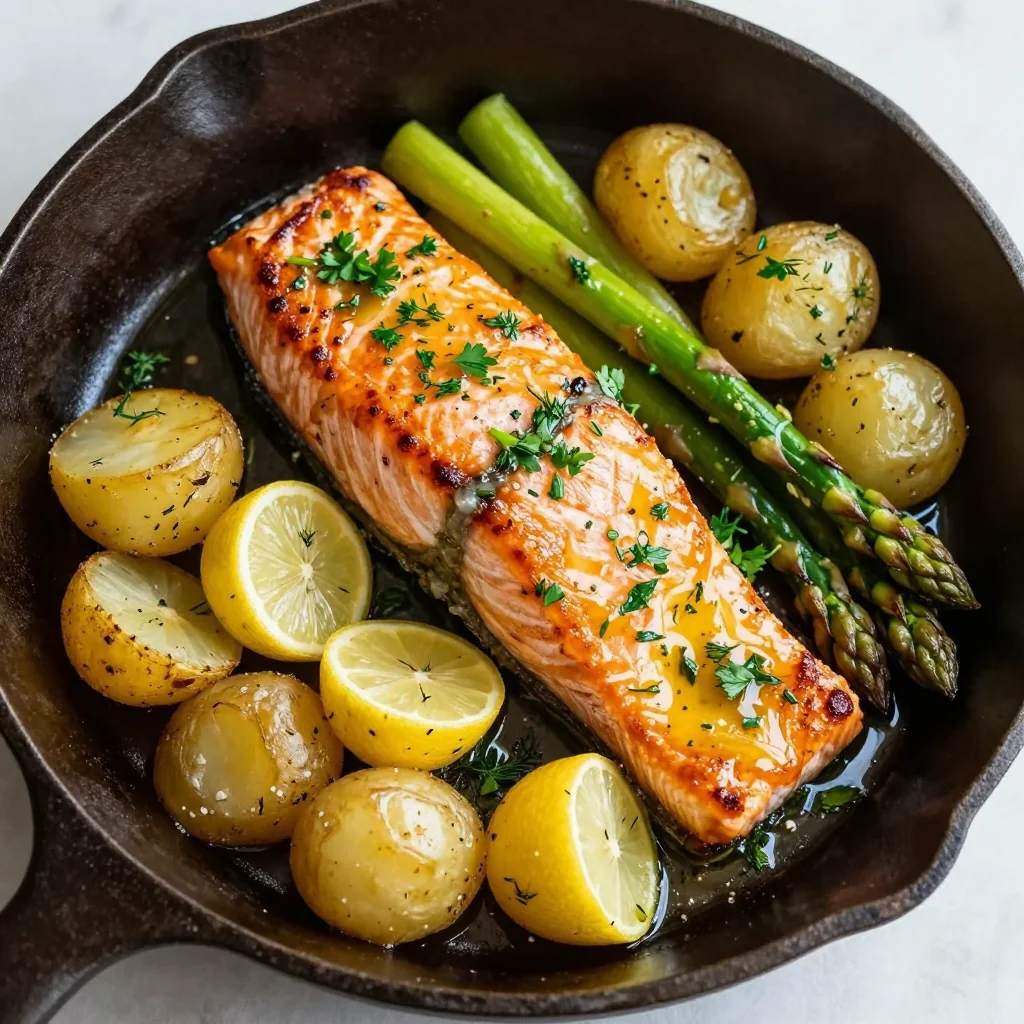
One-Pan Lemon Herb Salmon for Busy Family Nights
Ingredients
Instructions
- Preheat: Heat oven to 425 °F. Line sheet pan with parchment.
- Make oil: Whisk olive oil, lemon zest, juice, garlic, dill, salt & pepper.
- Season potatoes: Toss potatoes with half the oil; roast 10 min.
- Add remaining: Add asparagus & salmon; brush with remaining oil.
- Roast: Return to oven 12–14 min until salmon flakes and veggies are tender.
- Serve: Drizzle any pan juices over top; add lemon wedges.
Recipe Notes
Start potatoes cut-side down for crispy edges. Check salmon at 10 min if fillets are thin. Leftovers keep 3 days refrigerated.