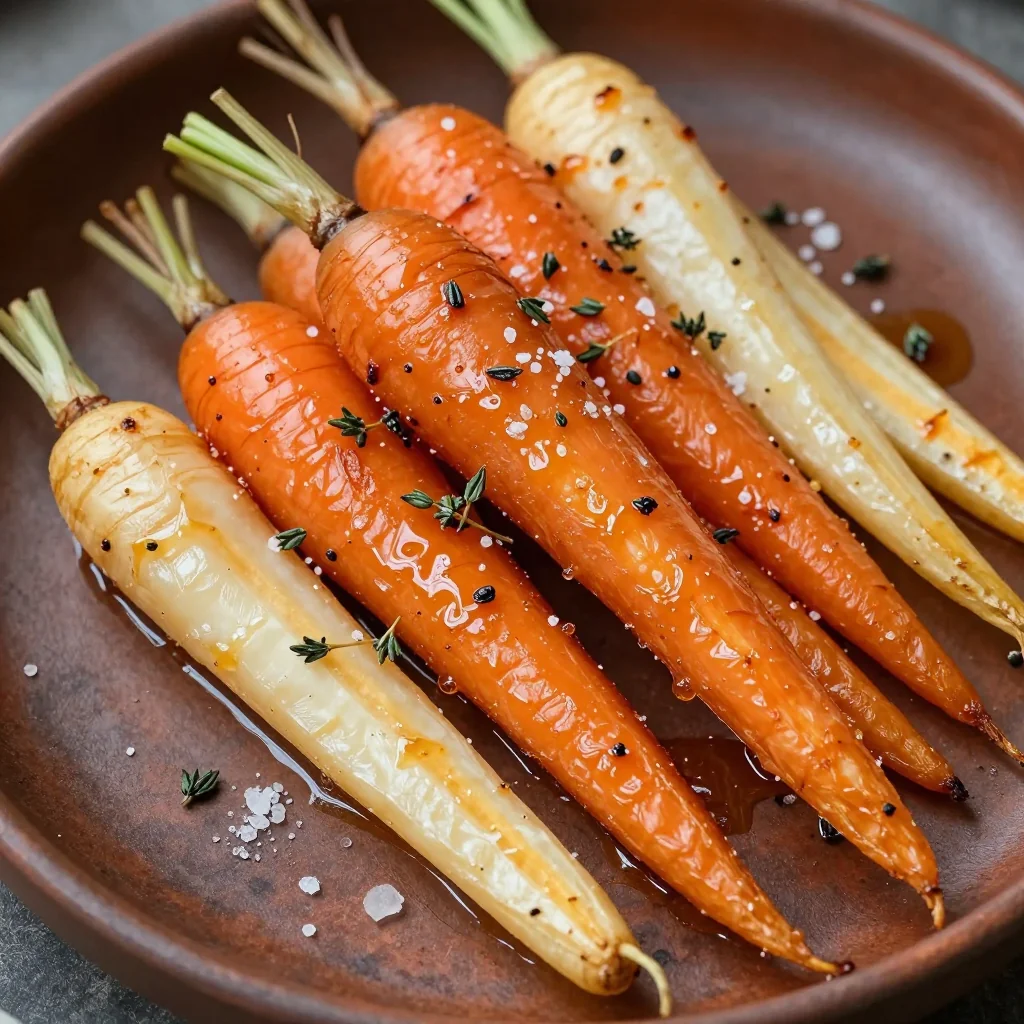
Love this? Pin it for later! 📌
Maple-Glazed Roasted Carrots & Parsnips: The Cozy Winter Side That Steals the Show
There’s a moment, right around the third week of January, when the holiday sparkle has dimmed, the market is down to roots and citrus, and dinner needs a hero that doesn’t require a turkey or a stand mixer. That’s when I reach for a parchment-lined sheet pan, a bottle of dark maple syrup, and the knobby carrots and parsnips that have been waiting patiently in the crisper. What emerges half an hour later is pure winter comfort: burnished, candy-sweet edges, a whisper of smoky paprika, and the kind of caramelized aroma that makes the neighbors ask, “What are you baking?”
I first served these maple-glazed beauties at a fireside Friendsgiving in Vermont. The evening was flannel-and-fuzzy-socks cold, the main course was a humble roast chicken, and the table was set with mismatched thrift-store plates. I’d planned on a grain salad, but the host’s oven was already crowded, so I sliced up the roots, whisked together a quick glaze, and slid the pan onto the bottom rack while the bird rested. By the time we poured the second glass of Cabernet, the vegetables had turned glossy and lacquered, their tips crisped like the edges of a marshmallow. They disappeared faster than the pumpkin pie. Since then, this dish has become my secret weapon for every chilly occasion: weeknight suppers with roasted salmon, vegetarian holiday tables, and even Easter brunch alongside a ham. It’s forgiving, dazzlingly colorful, and—best part—entirely hands-off while you finish the rest of dinner.
Why This Recipe Works
- Two-Temperature Roast: A hot 425 °F start jump-starts caramelization, then we drop to 375 °F so the maple doesn’t scorch.
- Pre-Heat Sheet Pan: A blazing-hot tray sears the bottoms instantly, preventing soggy sticks.
- Staggered Glaze: We brush on maple halfway through, so sugars reduce to a shiny shell without blackening.
- Balanced Sweetness: Apple-cider vinegar and a pinch of cayenne keep the candy vibe in check.
- Uniform Batons: Cutting both vegetables into ½-inch matchsticks guarantees even roasting and elegant presentation.
- Fresh Herb Finish: A shower of chopped thyme and parsley lifts the dish from sticky to sophisticated.
Ingredients You’ll Need
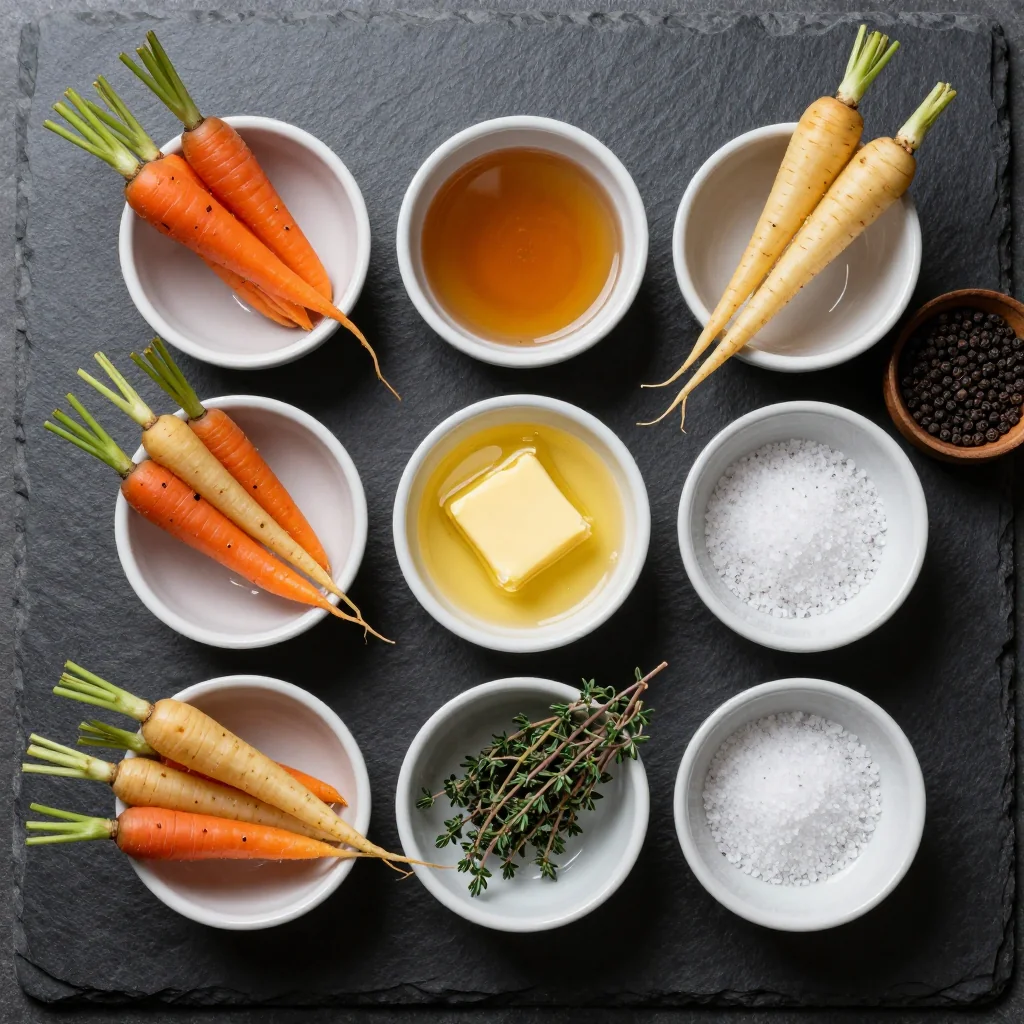
Before we talk technique, let’s talk produce. The success of this dish hinges on vegetables that are heavy for their size, firm, and free of soft spots. Carrots should snap cleanly; parsnips should smell faintly of hazelnuts. If you can find bunches with the tops still attached, even better—those frilly greens are a tell-tale sign of freshness. Once home, remove the tops (they draw moisture from the roots) and store vegetables loose in the crisper for up to two weeks.
Carrots: I like a mix of orange and rainbow for visual pop. Standard grocery carrots work, but farmers’ market bunches are sweeter. Peel only if the skins are thick; otherwise, a good scrub is plenty.
Parsnips: Choose small to medium specimens—giant ones have woody cores that need gouging out. If the center feels spongy, quarter the parsnip lengthwise and slice out the core before cutting into batons.
Dark Maple Syrup: Grade A “Dark Color, Robust Taste” (formerly Grade B) has deeper caramel notes that won’t bake out. In a pinch, use amber, but avoid pancake syrup; it’s mostly corn syrup and will burn.
Extra-Virgin Olive Oil: A fruity, peppery oil complements the sweet roots. Avocado oil is a neutral swap if you prefer.
Apple-Cider Vinegar: Adds malic brightness that white vinegar can’t replicate. Lemon juice works, but you’ll lose the autumnal nuance.
Smoked Paprika: Just ¼ teaspoon lends subtle campfire perfume without turning the dish into barbecue.
Fresh Thyme: Woody stems hold up to high heat; we’ll strip the leaves and sprinkle them in two stages for layered flavor.
Flat-Leaf Parsley: Adds a grassy finish. If you hate parsley, try chives or tarragon.
How to Make Maple-Glazed Roasted Carrots & Parsnips
Heat the Sheet Pan
Place a rimmed 13×18-inch sheet pan on the center rack and preheat oven to 425 °F (220 °C). A screaming-hot surface jump-starts caramelization and prevents sticking, eliminating the need for parchment or silicone mats.
Prep the Vegetables
While the oven heats, peel 1½ pounds carrots and 1½ pounds parsnips. Slice both on the bias into ½-inch-thick batons, roughly the size of skinny fries. Uniformity matters: thin tips will shrivel and burn, while fat chunks stay fibrous. Place cut vegetables in a large mixing bowl.
Season Generously
Drizzle with 3 tablespoons olive oil, 1½ teaspoons kosher salt, ½ teaspoon freshly ground black pepper, and ¼ teaspoon smoked paprika. Toss until every baton is glistening. The oil acts as a heat conductor; under-oiled vegetables steam instead of roast.
First Roast
Carefully remove the hot pan, scatter vegetables in a single layer—hearing the sizzle is key—and roast 15 minutes. Do not flip yet; undisturbed contact forms golden crusts.
Make the Glaze
While the vegetables roast, whisk together ¼ cup dark maple syrup, 1 tablespoon apple-cider vinegar, 1 tablespoon olive oil, and a pinch of cayenne. The glaze should ribbon off the spoon; if it’s thicker than honey, warm 5 seconds in the microwave.
Brush & Reduce Temperature
Remove pan, flip vegetables with a thin metal spatula, and brush generously with half the glaze. Reduce oven to 375 °F (190 °C) and roast another 10 minutes. Lower heat prevents maple sugars from burning while still allowing deeper caramelization.
Final Glaze & Thyme
Brush with remaining glaze, sprinkle with 1 tablespoon fresh thyme leaves, and roast a final 5–7 minutes, until edges are dark and sticky. The vegetables should be tender when pierced but still hold their shape.
Rest & Finish
Let rest 5 minutes on the pan; glaze will set to a shiny shell. Transfer to a warm platter, scatter with chopped parsley, and serve hot or room temperature.
Expert Tips
Preheat Like a Pro
Give the sheet pan a full 10 minutes in the oven. If you’re short on time, pop it in while you peel the vegetables.
Sharpen Your Knife
A dull blade crushes the vegetables’ cells, causing them to leach moisture and steam instead of roast.
Don’t Crowd the Pan
Overcrowding drops the pan temperature and causes mushy veg. Use two pans if necessary, rotating racks halfway.
Make-Ahead Magic
Roast the vegetables up to step 6, cool, and refrigerate up to 3 days. Reheat at 400 °F for 8 minutes, then brush with final glaze.
Sweetness Dial
If you prefer savory, swap maple for pomegranate molasses and add a squeeze of orange for complexity.
Double Batch Trick
Roast extras, cool completely, and freeze in a single layer. Once solid, transfer to a zip bag for up to 2 months.
Variations to Try
- Orange-Cardamom: Swap cider vinegar for orange juice and add ¼ teaspoon ground cardamom to the glaze.
- Harissa Heat: Whisk 1 teaspoon harissa paste into the maple glaze and finish with toasted sesame seeds.
- Balsamic-Herb: Replace maple with balsamic glaze and add chopped rosemary and sage.
- Asian-Inspired: Use 2 tablespoons miso + 2 tablespoons honey instead of maple; finish with furikake and scallions.
- Root Medley: Add beet batons or wedges of delicata squash, but keep them on a separate half of the pan to prevent color bleeding.
Storage Tips
Refrigerator: Cool completely, transfer to an airtight container, and refrigerate up to 5 days. Reheat in a 400 °F oven for 6–8 minutes or in a skillet over medium heat with a splash of water to loosen the glaze.
Freezer: Spread cooled vegetables on a parchment-lined sheet pan, freeze until solid, then store in a freezer-safe bag up to 2 months. Reheat directly from frozen at 425 °F for 12–15 minutes, adding a fresh brush of maple for shine.
Make-Ahead for Entertaining: Roast up to 24 hours ahead. Store uncovered in the fridge (this keeps them from steaming). Reheat at 400 °F for 10 minutes just before serving.
Frequently Asked Questions
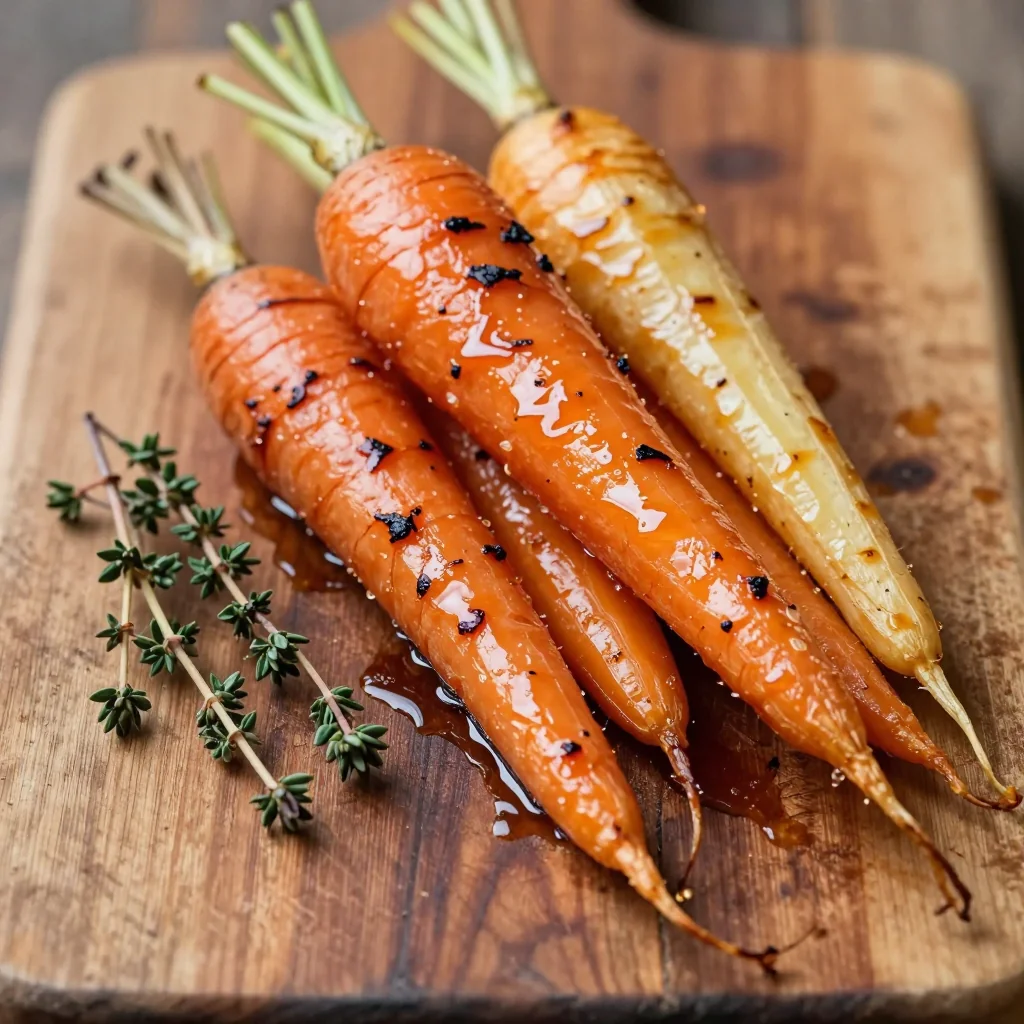
Maple-Glazed Roasted Carrots & Parsnips
Ingredients
Instructions
- Preheat pan: Place sheet pan in oven and preheat to 425 °F (220 °C).
- Season vegetables: In a bowl toss carrots and parsnips with 2 tablespoons oil, salt, pepper, and smoked paprika.
- First roast: Spread vegetables on hot pan; roast 15 minutes.
- Make glaze: Whisk maple syrup, vinegar, remaining 1 tablespoon oil, and cayenne.
- Brush & reduce: Flip vegetables, brush with half the glaze, reduce oven to 375 °F (190 °C), roast 10 minutes.
- Final glaze: Brush with remaining glaze, sprinkle thyme, roast 5–7 minutes more until sticky and browned.
- Finish: Let rest 5 minutes, transfer to platter, top with parsley, serve hot or room temperature.
Recipe Notes
Cut vegetables uniformly for even cooking. If parsnips are large, remove the woody core for tender results.