I remember the night I was staring at a half‑roasted butternut squash that had turned into a sad, dry lump in my oven. I tried to salvage it with a splash of olive oil and a pinch of salt, but it was still a culinary disappointment. That moment sparked a mission: to rescue the humble squash and turn it into a dish that sings with flavor, texture, and a touch of daring. I’m talking about a skillet enchilada that feels like a hug, a comfort food that also carries a punch of spice and a whisper of sweet caramelized sweetness.
Picture this: a golden, buttery squash, diced into bite‑sized cubes, meeting a smoky, earthy black bean base. The air is thick with the aroma of cumin, chili powder, and the faint scent of fresh cilantro. The sound of the skillet sizzles as the onions and jalapeño release their juices, creating a symphony of crackles. The texture is a dance of crisp edges and tender interiors, a contrast that keeps you guessing with every bite. And the taste? A harmonious blend of sweet, savory, and a hint of heat that lingers like a good secret.
What makes this version stand out is that it doesn’t rely on a pre‑made sauce or a store‑bought enchilada mix. I’ve taken the reins and crafted a sauce from scratch, letting the red enchilada sauce do its job but adding my own seasoning punch. The tortillas are toasted in the same skillet, absorbing the flavors like a sponge. I dare you to taste this and not go back for seconds; the second bite will feel like a revelation. If you’ve ever made a casserole that felt flat, this dish will remind you why a little extra effort can transform a meal.
I’ll be honest — I ate half the batch before anyone else got to try it. The moment the first bite hit my palate, I felt the heat of the jalapeño mingle with the sweet squash, and the black beans added a subtle earthiness that made everything feel cohesive. I realized then that the secret isn’t in the quantity of ingredients but in how they’re cooked and combined. The squash is caramelized just enough to bring out its natural sugars, while the beans are rinsed and drained to keep the dish from becoming mushy.
Most recipes get this completely wrong by overcooking the squash or underseasoning the beans. The result is either a mushy, bland skillet or a dish that feels like it was made in a hurry. The trick is to let the squash brown slowly in the oil, allowing the natural sugars to caramelize, while the beans are added just in time to absorb the flavors without losing their shape. This method keeps the dish hearty yet light, making it perfect for a weeknight dinner or a weekend brunch that feels like a celebration.
Picture yourself pulling this out of the skillet, the whole kitchen smelling incredible, the steam rising like a small cloud of savory perfume. The tortillas are golden, the cheese is melted into a gooey blanket, and the cilantro adds a burst of freshness that cuts through the richness. The dish looks like a colorful mosaic of orange, green, and gold, inviting you to dig in. The first bite is a symphony of flavors, textures, and aromas that will make you forget the ordinary.
And now the fun part. I’ve been experimenting with different variations and tweaks, and each one brings a new dimension to the dish. From swapping the black beans for pinto beans to adding a splash of lime juice, each change feels like a new adventure. I’ll guide you through each step, ensuring that even if you’re a beginner, you can follow along and create a masterpiece. Trust me, you’ll be proud of what you’ve made.
If you've ever struggled with getting the squash just right, you're not alone — and I've got the fix. The key is to cut the squash into uniform cubes, so they cook evenly and caramelize without burning. I recommend using a sharp knife and a cutting board that can handle the squash’s density. This small step saves you from uneven textures that can ruin the dish.
I dare you to taste this and not go back for seconds. The second bite will feel like a revelation, a reminder that a little extra effort can transform a simple dish into something unforgettable. I’ll be honest — the first time I made this, I was skeptical, but the moment I tasted it, I knew I had found my new favorite recipe. And now, I’m excited to share every detail with you.
Okay, ready for the game‑changer? Let’s dive into the ingredients, the heart of this dish. Each component is chosen not just for its flavor but for how it interacts with the others. From the sweet squash to the smoky beans, every bite is a journey. Stay with me here — this is worth it.
Alright, let’s break down exactly what goes into this masterpiece…
What Makes This Version Stand Out
Flavor: The combination of sweet butternut squash, smoky black beans, and a homemade sauce creates a layered taste profile that is both comforting and adventurous. The heat from the jalapeño is balanced by the natural sweetness of the squash, making each bite a delightful paradox.
Texture: The skillet method ensures that the tortillas become crispy on the edges while the interior remains soft and chewy. The squash caramelizes into tender cubes that still hold their shape, providing a satisfying bite.
Ease of Prep: With a single pan and minimal steps, you can have a full‑meal ready in under 45 minutes. No separate sauce or extra dishes to clean, which means more time enjoying the food.
Uniqueness: The use of red enchilada sauce as a base, combined with fresh herbs and a splash of lime, gives this dish a bright, vibrant finish that sets it apart from typical enchilada casseroles.
Crowd‑Pleaser: Whether it’s a family dinner or a potluck, this dish scales easily and tastes great even when reheated. The bold flavors keep guests coming back for more.
Ingredient Quality: Choosing high‑quality squash, fresh beans, and a good cheese blend elevates the entire dish. The difference is palpable in every bite.
Cooking Method: The skillet technique locks in flavors and creates a caramelized crust that adds depth to the dish.
Make‑Ahead Potential: Once cooked, the dish can be stored and reheated without losing its texture or flavor. It’s perfect for meal prep or a quick weeknight dinner.
Alright, let's break down exactly what goes into this masterpiece…
Inside the Ingredient List
The Flavor Base
The olive oil or avocado oil is the foundation that brings all the flavors together. It’s the medium that allows the onions, garlic, and jalapeño to caramelize, creating a depth of flavor that a dry pan simply can’t achieve. If you’re watching calories, avocado oil’s higher smoke point lets you cook at a slightly higher temperature without burning.
The ground cumin and chili powder are the secret weapons that give the dish its Mexican authenticity. They’re toasted lightly at the start, releasing their essential oils and adding a warm, earthy undertone. Skipping either of these spices will leave the dish feeling flat and incomplete.
The red enchilada sauce is the sweet‑and‑spicy liquid that binds everything together. It’s thicker than a typical salsa, giving the skillet a luscious, velvety coating that clings to the squash and beans. If you prefer a fresher taste, you can substitute it with a homemade tomato sauce seasoned with cumin and chili powder.
The Texture Crew
Butternut squash is the star of the show, providing a sweet, nutty flavor and a tender yet firm bite. Cutting it into uniform cubes ensures even caramelization, preventing some pieces from burning while others remain raw. When you taste it, you’ll notice the natural sugars caramelizing into a caramelized crust that’s both sweet and savory.
Black beans bring a creamy texture that balances the crunch of the tortillas and the sweetness of the squash. Rinsing and draining them removes excess sodium and ensures they absorb the flavors without becoming mushy. If you’re looking for a vegan twist, you can use a can of chickpeas for a different protein profile.
Corn tortillas are the vehicle that carries the flavors. Toasting them in the skillet gives them a delightful crunch and a slightly smoky flavor that pairs beautifully with the beans and squash. If you prefer a gluten‑free option, simply use corn tortillas that are labeled gluten‑free.
The Unexpected Star
The jalapeño adds a subtle heat that’s not overpowering. It’s the perfect amount of spice that wakes up the taste buds without drowning the sweetness of the squash. If you’re heat‑averse, you can remove the seeds or replace it with a milder pepper.
Fresh cilantro provides a burst of brightness that cuts through the richness. Its citrusy, slightly peppery flavor lifts the dish and adds a pop of color. A handful of chopped cilantro sprinkled on top just before serving makes the dish look vibrant and appetizing.
Greek yogurt or sour cream offers a creamy finish that cools the heat and adds a tangy contrast. It also adds a protein boost and makes the dish feel more substantial. If you prefer a dairy‑free option, a dollop of coconut yogurt works wonderfully.
The Final Flourish
The shredded Colby Jack or Mexican cheese blend is the gooey, melty element that binds the dish together. It melts into a smooth, golden crust that’s both indulgent and comforting. The cheese’s mild flavor allows the other ingredients to shine without overpowering them.
A pinch of salt and black pepper is essential to bring out the flavors. Salt enhances the sweetness of the squash and the earthiness of the beans, while black pepper adds a subtle kick. Remember, seasoning is a gradual process; add a little at a time and taste as you go.
Everything’s prepped? Good. Let's get into the real action…
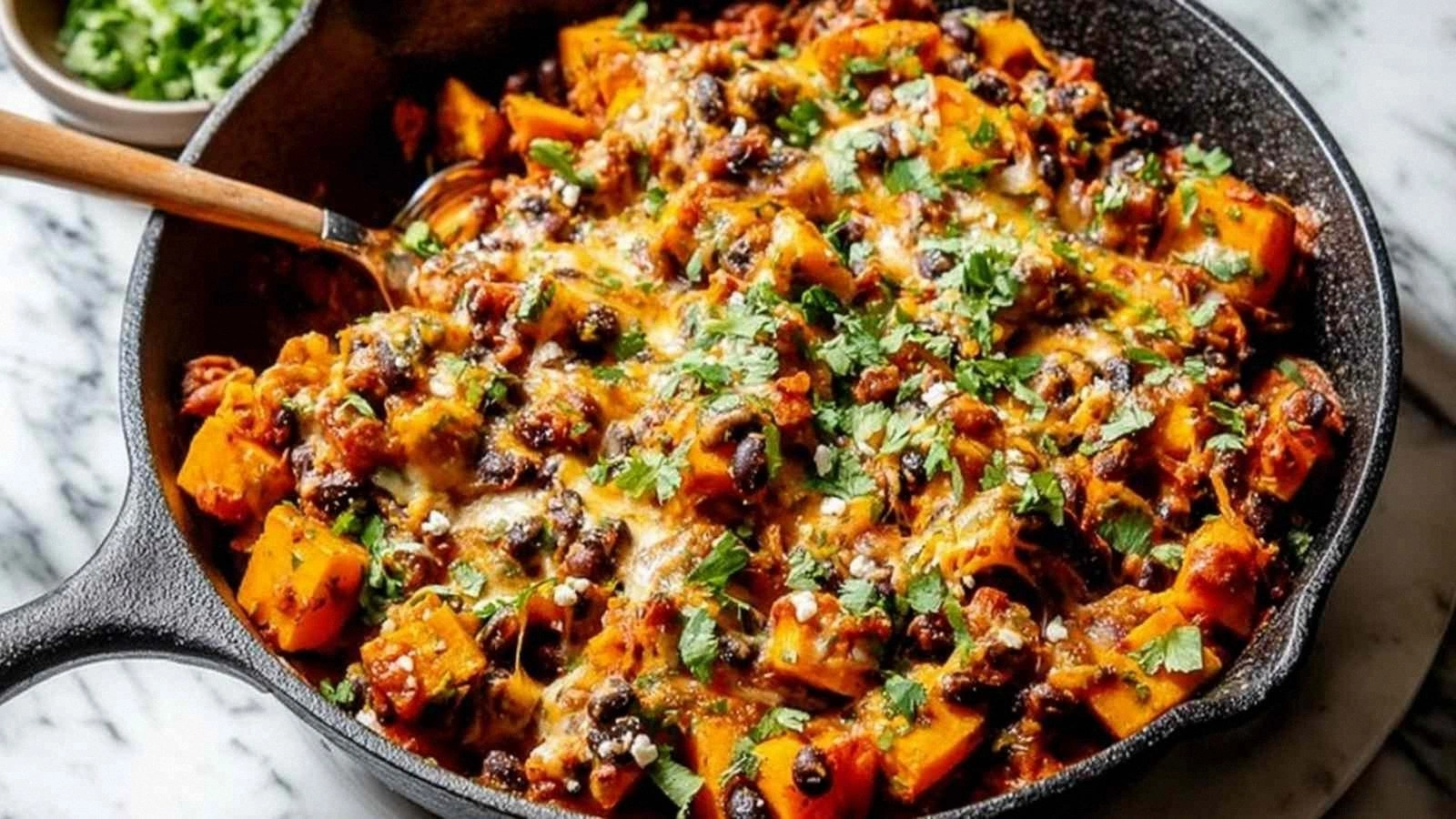
The Method — Step by Step
- Heat a large skillet over medium‑high heat and add the tablespoon of olive oil. Once the oil shimmers, add the diced butternut squash. Let it sear for about 5 minutes, stirring occasionally, until the edges start to brown. This caramelization locks in the natural sugars, giving the dish its sweet, nutty base.
- Add the chopped onion and minced garlic to the skillet. Cook for 3–4 minutes until the onion becomes translucent and the garlic releases its aroma. The sound of the garlic sizzling is a cue that the base is ready for the next step.
- Stir in the jalapeño, cumin, and chili powder. Toast the spices for 30 seconds, allowing their oils to bloom. This step intensifies the flavor profile and gives the dish its signature Mexican warmth.
- Pour in the red enchilada sauce and the can of black beans, drained and rinsed. Stir everything together and bring the mixture to a gentle simmer. Let it cook for 5 minutes, allowing the beans to absorb the spices and the sauce to thicken slightly.
- Lay the corn tortillas flat in the skillet, one at a time. Press them gently into the sauce, allowing them to soak up the flavors. The tortillas will soften slightly but retain their shape, creating a hearty base for the rest of the ingredients.
- Sprinkle the shredded cheese evenly over the top of the skillet. Cover the skillet with a lid and let the cheese melt for 2–3 minutes. The cheese will create a golden, gooey blanket that ties all the flavors together.
- Remove the skillet from heat and let it sit for a minute. This brief rest allows the flavors to settle and the cheese to set slightly, making the dish easier to serve.
- Finish with a handful of chopped cilantro and a dollop of Greek yogurt or sour cream. The fresh herbs add brightness, while the yogurt cools the heat and adds a creamy contrast. Plate the dish and serve immediately for maximum enjoyment.
That's it — you did it. But hold on, I've got a few more tricks that'll take this to another level. These insider tips will help you avoid common pitfalls and elevate the dish to professional quality.
Insider Tricks for Flawless Results
The Temperature Rule Nobody Follows
Cooking at the right temperature is crucial for caramelization without burning. Start at medium‑high to sear the squash, then lower to medium for simmering the sauce. A consistent temperature ensures even cooking and a beautiful golden crust. I once tried to cook the squash at high heat and ended up with a burnt exterior and raw interior.
Why Your Nose Knows Best
Smell is your best indicator of doneness. When the onions and garlic start to smell sweet, the squash is ready. The aroma of cumin and chili powder should be fragrant but not overpowering. Trust your nose, and you’ll avoid over‑cooking or under‑seasoning.
The 5‑Minute Rest That Changes Everything
Letting the skillet rest for 5 minutes after cooking allows the flavors to meld. The cheese will set slightly, making the dish easier to slice. A quick rest also lets the heat distribute evenly, preventing hot spots on the tortillas.
Use Fresh Beans for a Creamier Texture
Canned beans are convenient, but fresh or frozen beans can give a creamier texture. If you have time, soak and cook your own beans for a richer, more authentic flavor. The natural sweetness of fresh beans complements the squash beautifully.
Add a Splash of Lime Juice at the End
A squeeze of lime juice brightens the dish and cuts through the richness. Lime adds a zesty finish that enhances the cilantro and balances the heat. I’ve found that a small amount of lime juice can transform a good dish into a great one.
Creative Twists and Variations
This recipe is a playground. Here are some of my favorite ways to switch things up:
Smoky Chipotle Version
Swap the jalapeño for chipotle peppers in adobo. The smoky heat adds depth and pairs well with the sweet squash. This version is perfect for those who love a bold, smoky flavor.
Vegetarian Protein Boost
Add a handful of cooked quinoa or lentils for extra protein. The grains absorb the sauce and add a hearty texture that keeps the dish filling. This is a great option for vegetarians looking for a balanced meal.
Pineapple Pineapple Twist
Incorporate diced fresh pineapple for a tropical flair. The pineapple’s sweetness complements the squash and adds a juicy burst of flavor. This variation works wonderfully during summer gatherings.
Cheese Swap
Use pepper jack or mozzarella for a different melt and flavor profile. Pepper jack adds a subtle kick, while mozzarella offers a milder, creamier texture. Experiment with different cheeses to find your favorite.
Gluten‑Free Take
Ensure your tortillas are labeled gluten‑free. The rest of the recipe remains the same, and you’ll get a gluten‑free version that tastes just as good. This is a great option for those with gluten sensitivities.
Storing and Bringing It Back to Life
Fridge Storage
Cool the skillet completely before transferring the dish to an airtight container. Store in the refrigerator for up to 3 days. The flavors will deepen, and the cheese will stay creamy.
Freezer Friendly
Pack the dish in a freezer‑safe container, leaving a little space for expansion. Freeze for up to 2 months. When ready to eat, thaw overnight in the fridge and reheat gently.
Best Reheating Method
Reheat in the skillet over medium heat, adding a splash of water or broth to keep the dish moist. This steams the dish back to life, restoring the cheese’s gooey texture. A quick microwave reheat is fine, but the skillet method keeps the flavor intact.