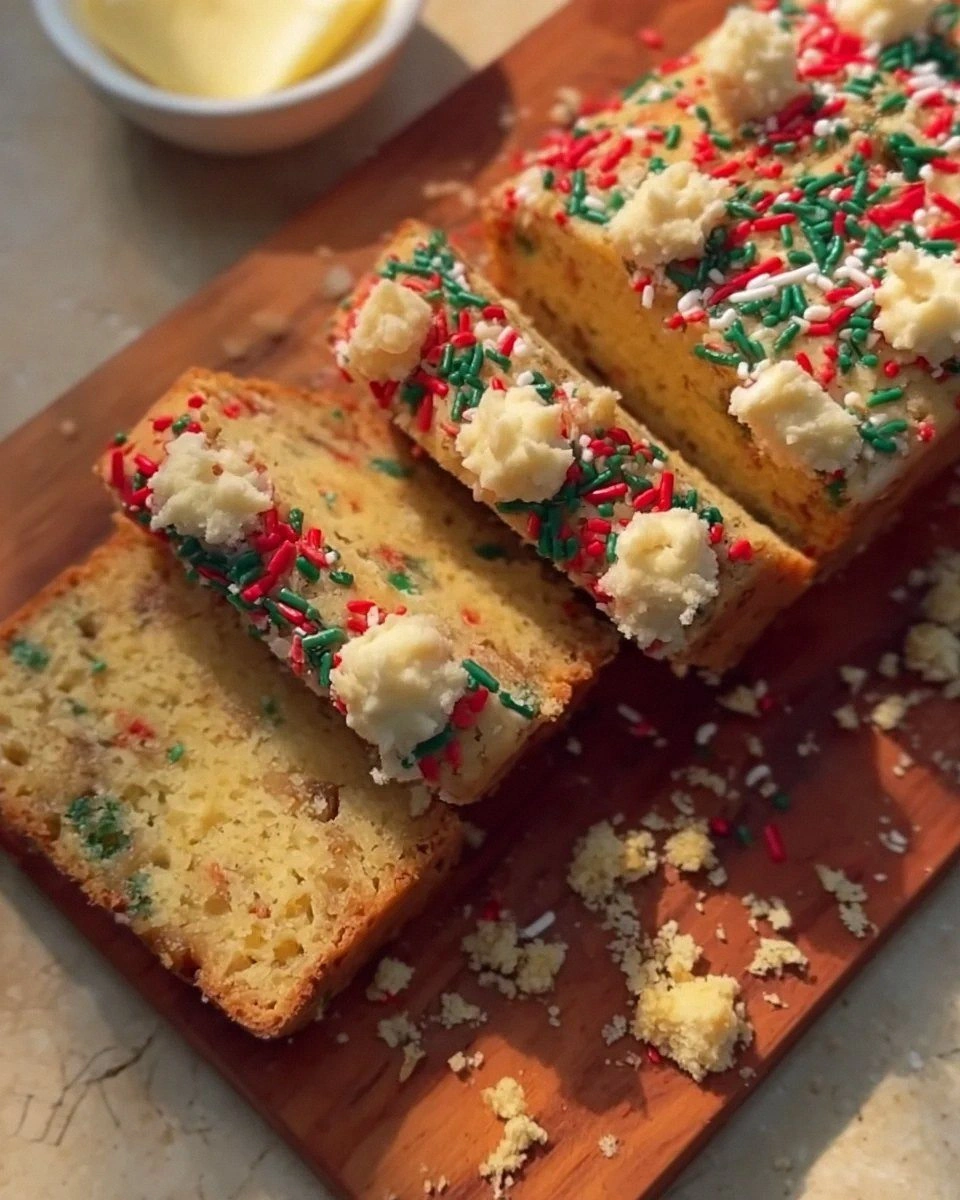
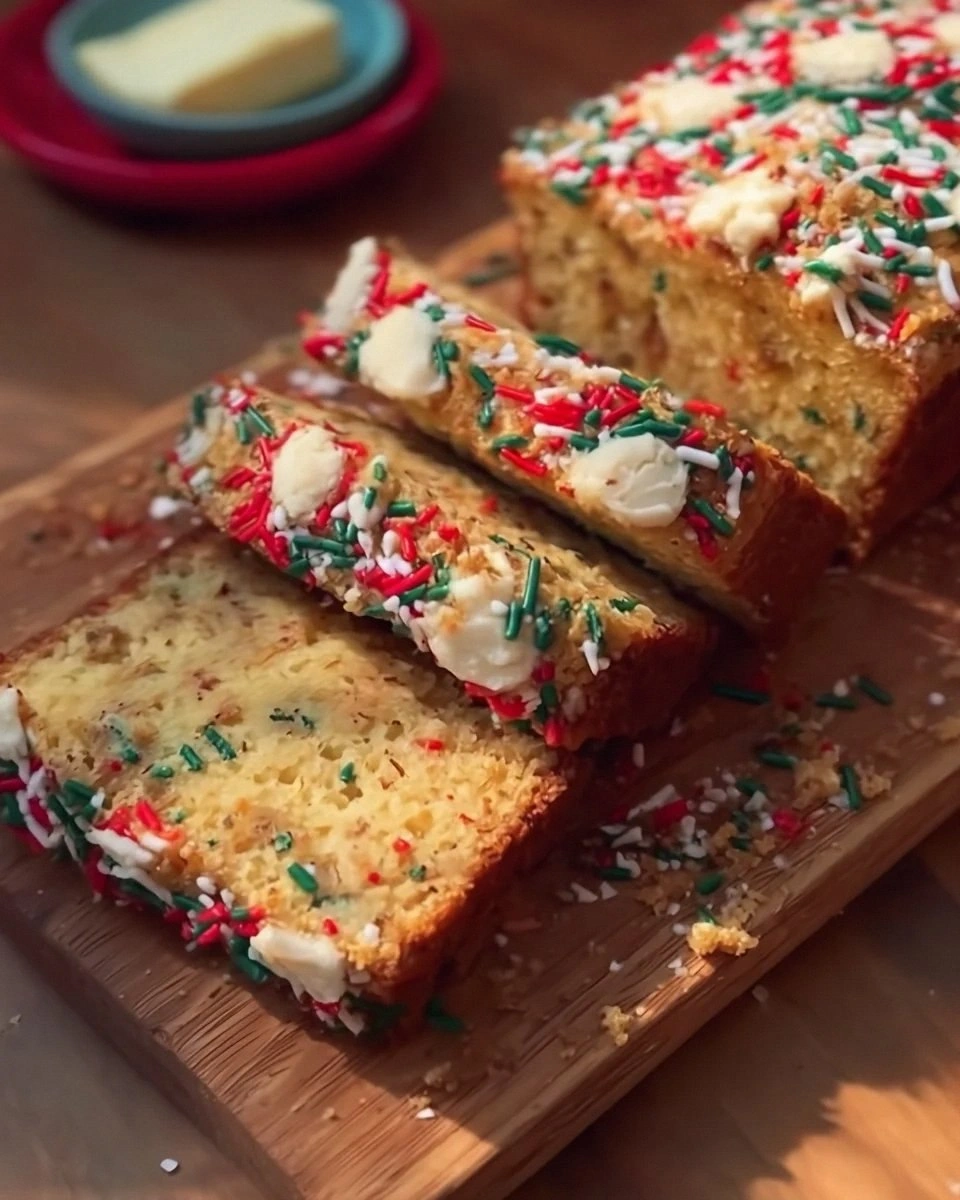
Last Tuesday at 3:47 p.m. I was staring at a bunch of bananas so speckled they looked like they'd been hit with a dalmatian paintbrush, a stick of butter that had been taunting me from the fridge door, and a half-eaten sleeve of sugar cookies left over from book-club night. In that moment—equal parts desperation and culinary daydream—I decided to smash them together into one loaf pan and hope for the best. What came out was so outrageously good that I burned my tongue twice because I couldn't wait for it to cool, then immediately texted three friends demanding they drop everything and preheat their ovens. This is not your mother's banana bread, unless your mother happens to be a pastry wizard who browns butter until it smells like toasted hazelnuts and folds crushed sugar cookies right into the batter for shattering, caramel-laced edges.
Picture this: the crust crackles like the top of a crème brûlée while the interior stays so tender it practically sighs when you poke it. The brown butter perfumes the whole kitchen with a nutty, almost butterscotch aroma that makes neighbors knock on your door "just to check if everyone's okay in here." And those cookie bits? They melt into chewy pockets of vanilla sweetness that contrast with the banana's tropical funk in a way that feels illegal in several states. If you've ever struggled with dry, one-note banana bread—or worse, the gummy center that tastes like baby food—this recipe is your redemption arc.
I'll be honest: I ate half the loaf standing up at the counter, swatting away my partner's hand while claiming quality-control duties. The rest disappeared by breakfast the next day, toasted and slathered with more butter because we're not savages. Traditional banana bread is fine, like elevator music is fine, but this version is a sold-out arena concert where the lead singer crowd-surfs on flavor. The secret weapon isn't some exotic ingredient you have to special-order; it's simply treating humble components with the respect they deserve—browning the butter until it sings, coaxing the bananas into full candy-like sweetness, and letting sugar cookies crash the party.
Okay, ready for the game-changer? We're going to brown that butter until the milk solids turn chestnut-brown and smell like a Parisian nut shop, then fold in crushed sugar cookies so they create little molten pockets throughout the loaf. The batter comes together in one bowl if you're feeling lazy (guilty), and bakes into something that tastes like banana bread, snickerdoodle, and the best part of a pound cake had a beautiful, swirly baby. Let me walk you through every single step—by the end, you'll wonder how you ever made it any other way.
What Makes This Version Stand Out
- Brown-Butter Nirvana: Most recipes stop at melted butter, but we take it past nutty into full caramel territory, lending deep, toffee-like notes that make white sugar taste like brown sugar and brown sugar taste like liquid gold.
- Cookie Crumble Magic: Sugar cookies aren't just a cute garnish; they melt into chewy strata that create textural drama in every slice, so you get soft banana crumb and candy-like edges in the same bite.
- One-Bowl Brilliance: Despite tasting like a bakery project, the batter comes together with a whisk and a prayer—no stand mixer, no creaming, no fuss. Dirty-dish haters, rejoice.
- Make-Ahead Champion: Flavors bloom overnight, so bake it today, wrap it up, and tomorrow morning you'll slice into something that tastes like it spent a semester abroad in flavor town.
- Crowd-Pleasing Flexibility: Kids think it's cake, adults taste sophistication, and that one friend who "doesn't like banana bread" will ask for the recipe before the plate is empty.
- Freezer-Friendly Luxury: Double the batch, freeze one loaf, and you'll have edible insurance against houseguests, breakups, or random Tuesday emergencies that require warm carbs.
Alright, let's break down exactly what goes into this masterpiece...
Inside the Ingredient List
The Flavor Base
Butter is the diva here, and we let it take center stage. Start with 113 g (one stick) of good unsalted butter; salted will hijack the flavor, and cheap butter tastes like the plastic it came from. Brown it slowly over medium heat, swirling—not stirring—until the foam subsides and the milk solids at the bottom turn chestnut brown and smell like toasted hazelnitos dipped in caramel. This isn't optional; it's the difference between a loaf that tastes like banana and one that tastes like banana wearing a silk dress. Cool the brown butter for five minutes so it doesn't scramble the eggs, but use it while still liquid gold.
Ripe bananas should be so freckled they look embarrassed about their age; the blacker the peel, the sweeter the deal. You need one and a half cups mashed, which translates to about three medium bananas or two large ones that have given up on life. If your bananas are still yellow and perky, roast them at 300 °F for 15 minutes until they slump and ooze; it concentrates sugars and makes the kitchen smell like a tropical vacation. Skip the banana extract—Mother Nature already did the heavy lifting.
The Texture Crew
All-purpose flour keeps the crumb tender yet sliceable; cake flour makes it too delicate and bread flour too chewy. Measure by spooning and leveling unless you enjoy banana-flavored bricks. A single teaspoon of baking soda lifts the loaf just enough so it domes proudly without collapsing into a sinkhole; too much and it tastes metallic, too little and you'll be serving banana pound cake. Salt is non-negotiable—half a teaspoon wakes up every other flavor like a splash of cold water on a sleepy face.
Brown sugar deepens the butterscotch notes from the brown butter, while white sugar keeps the crust crisp. We're using a fifty-fifty split for the best of both worlds. Eggs provide structure and richness; use large, room-temperature eggs so they mix evenly and don't seize when they hit the cooled brown butter. A splash of whole milk loosens the batter just enough to swirl in those cookie pieces without them sinking to the bottom like sugary anchors.
The Unexpected Star
Here come the sugar cookies—four average-sized ones, blitzed into coarse crumbs the size of peas. Use store-bought for convenience or leftover homemade ones you've been ignoring on the counter. They dissolve into chewy pockets and leave tiny vanilla freckles throughout the crumb. If you only have chocolate chip cookies, swap them in; the chocolate adds mocha vibes that play shockingly well with banana. Graham crackers work in a pinch, but they won't give you the same shattering sugar-cookie edge.
The Final Flourish
A teaspoon of good vanilla extract rounds the corners, while a pinch of cinnamon whispers warmth without announcing itself. Skip the nutmeg; it's a bully that stomps all over banana's delicate perfume. A squeeze of lemon juice brightens the batter and keeps the bananas from oxidizing into a grayish mess, but don't go overboard or you'll end up with banana lemonade bread. Everything's prepped? Good. Let's get into the real action...
The Method — Step by Step
- Start by browning the butter: place the stick in a light-colored saucepan so you can see the color change. Melt over medium heat, then keep swirling every few seconds as it foams, crackles, and finally quiets down. You'll see golden flecks turn toasted-brown; the moment they smell like hazelnuts and the bubbling slows, pull the pan off the heat and pour the butter into a heat-proof bowl to stop the cooking. Let it cool for five minutes so it's warm but not screaming hot—this prevents scrambled eggs later and gives you time to crush your cookies.
- While the butter cools, preheat your oven to 350 °F with the rack dead center. Grease a 9×5-inch loaf pan with a little of the residual butter fat, then line it with a parchment sling that overhangs the long sides; this sling is your golden ticket to effortless removal later. Trust me, nothing kills the vibe like a beautiful loaf that rips in half because you tried to coax it out like a stubborn cat. Slide the pan into the oven for two minutes to warm it slightly; a hot pan sets the edges faster, giving you that coveted domed top.
- Grab those sugar cookies and place them in a zip-top bag. Bash them with a rolling pin or wine bottle until you have a mix of pea-sized chunks and sandy rubble—too fine and they disappear, too chunky and they sink. You should have about three-quarters of a cup; snack the rest because quality control is important. Toss the crumbs with a teaspoon of the measured flour; this dusting helps them stay suspended instead of plummeting to the bottom like sugary meteors.
- In a large bowl, mash the bananas with a fork until mostly smooth but still sporting a few pea-sized bits for texture. Whisk in both sugars; the gritty mixture will look like wet sand at first, but keep whisking until it turns glossy and thick, about one minute. This dissolves the sugar so you don't get a gritty crumb. Stream in the warm brown butter, whisking constantly; it should emulsify beautifully and smell like a candy shop on payday. If the mixture looks curdled, your butter was too hot—pop the bowl in the fridge for two minutes and whisk again.
- Crack in the eggs one at a time, whisking each until completely incorporated before adding the next. The batter should look like silky caramel pudding at this point. Splash in the milk, vanilla, and lemon juice, and whisk just until combined. Over-whisking now can start developing gluten, leading to rubbery bread, so channel your inner lazy baker and stop while you're ahead. Take a whiff—if it doesn't smell like you want to dive in face-first, something's wrong.
- Sprinkle the flour, baking soda, salt, and cinnamon across the surface like you're dusting a crime scene. Switch to a spatula and fold—don't stir—until only a few streaks of flour remain. The batter will be thick and slightly lumpy; that's perfect. Add the reserved cookie-crumb mixture and fold just until distributed; over-mixing here toughens the crumb and makes the cookies disappear into sad, soggy flecks. The dough should feel like a thick pancake batter that reluctantly plops off the spatula.
- Scrape the batter into the prepared pan and smooth the top into a gentle dome. Tap the pan on the counter twice to release any air bubbles that will rise and create cavernous tunnels. For the signature crack down the center, run a thin line of melted butter—just a teaspoon—along the length; it encourages the loaf to split in a controlled, photogenic way rather than a random earthquake pattern. Slide the pan into the oven and set a timer for 55 minutes, but don't wander too far.
- Bake until the top is deeply golden, the edges pull slightly away from the sides, and a toothpick inserted at a 45-degree angle comes out with a few moist crumbs—no wet batter, but not completely clean. If the top is browning too fast (around the 40-minute mark), tent loosely with foil and keep baking. The house should smell like a carnival where bananas and butter are running the funnel-cake stand. Cool in the pan on a rack for 15 minutes; any longer and condensation turns the bottom soggy, any less and the loaf will fracture like a fault line when you try to lift it out.
- Use the parchment sling to lift the loaf onto the rack and peel away the paper. Admire the crackly, cookie-studded crown that looks like it belongs under a bakery cloche. Resist slicing for at least an hour—steam trapped inside is still finishing the bake, and cutting too early compresses the crumb into a gummy layer. If you absolutely must taste, shave off the tiniest corner; it will be warm, fragrant, and just enough to keep you from losing your mind while the rest sets up like a custard.
That's it—you did it. But hold on, I've got a few more tricks that'll take this to another level...
Insider Tricks for Flawless Results
The Temperature Rule Nobody Follows
Room-temperature eggs and milk aren't just chef fluff; they mix into the batter without seizing the brown butter. Cold eggs can re-solidify the fat, creating little waxy pockets that refuse to incorporate. Pull them out 30 minutes ahead, or cheat by placing eggs in warm (not hot) water for five minutes and microwaving milk for eight seconds. Your batter will emulsify like velvet, and the rise will be higher and more even. I learned this the hard way after a loaf that looked like a topographical map of the Rockies.
Why Your Nose Knows Best
When browning butter, ignore the clock and listen to your senses. First it melts, then it foams, then the foam subsides and the milk solids at the bottom turn chestnut-brown while the smell shifts from dairy to toasted hazelnuts to butterscotch. The moment it smells like you're walking into a Parisian patisserie, yank it off the heat; carry-over cooking will push it right. If you wait for a specific color, you'll overshoot—nostrils before eyeballs, every time.
The 5-Minute Rest That Changes Everything
After mixing, let the batter rest for five minutes before scraping it into the pan. This brief pause hydrates the flour fully, dissolves any stubborn sugar crystals, and relaxes the gluten so the crumb stays tender. It's like letting a steak rest, but way shorter and without the juicy puddle. You'll notice the batter thickens slightly and looks silkier—bake it now and the texture will be bakery-level plush instead of home-kitchen average.
How to Avoid the Soggy Bottom
Even with parchment, condensation can turn the base gummy. After the 15-minute pan rest, transfer the loaf to a wire rack and place the rack in front of a running fan or near an open window. The circulating air cools the underside quickly, preventing steam from softening that beautiful crust. If you're in a humid climate, slip a folded paper towel under the rack to wick away any rogue moisture. A crisp bottom is the difference between good banana bread and legendary banana bread.
Creative Twists and Variations
This recipe is a playground. Here are some of my favorite ways to switch things up:
Chocolate Chunk Trailblazer
Swap half the sugar cookies for roughly chopped dark chocolate (60% cacao) and fold in a tablespoon of cocoa powder with the flour. The chocolate melts into lava-like puddles that pair with banana like they were born together. Sprinkle flaky salt on top before baking for a sweet-salty edge that makes grown adults close their eyes in public.
Coconut Rum Vacation
Replace the milk with full-fat coconut milk and add a tablespoon of dark rum plus half a cup of toasted coconut flakes. Toast the flakes at 325 °F for five minutes until golden; they add nutty crunch that plays off the chewy cookie bits. You'll taste beach vacation even if you're eating it in a snowstorm.
Peanut Butter Cup Remix
Dollop quarter-cup peanut butter over the batter in the pan and swirl with a skewer, then press mini peanut butter cups into the top before baking. The peanut butter bakes into a ribbon while the cups sink slightly and melt into molten centers. If you're allergic, sun-butter works, but you'll lose that salty edge that makes this version addictive.
Berry Burst Summer
Fold in one cup of frozen raspberries straight from the bag; the cold berries keep the surrounding crumb tender and bleed magenta swirls that look like watercolor. Reduce the sugar by two tablespoons to balance the tart berries, and serve slices with a scoop of lemon sorbet for a dessert that tastes like July even in February.
Espresso Morning Jolt
Dissolve a tablespoon of instant espresso powder in the vanilla before adding it to the batter; it deepens the brown-butter notes without screaming coffee. Add a crunchy streusel of brown sugar, flour, and more cookie crumbs on top for a café-style crown that crackles under your fork like thin ice.
Spiced Autumn Glow
Swap the cinnamon for pumpkin-pie spice and fold in half a cup of chopped candied ginger. The ginger heats up each bite with a gentle burn that makes your tongue tingle in the best way. Serve warm with maple-whipped cream and watch people propose marriage.
Storing and Bringing It Back to Life
Fridge Storage
Wrap the cooled loaf tightly in plastic wrap, then slip it into a zip-top bag with the air squeezed out. It keeps up to five days in the fridge, though flavor peaks at day two when the brown-butter and banana meld into one harmonious dream. Bring slices to room temp for 20 minutes or toast them straight from cold; toasting revives the crust's snap and warms the cookie bits back to chewy life.
Freezer Friendly
Slice the loaf and freeze pieces on a parchment-lined sheet until solid, then transfer to a freezer bag with sheets of parchment between layers. They'll keep three months without freezer burn, ready for midnight cravings or surprise guests. Microwave a slice for 20 seconds, then pop it into a hot toaster oven for two minutes to restore the crisp edges.
Best Reheating Method
Add a tiny splash of water on the plate before microwaving; the steam rehydrates the crumb so it tastes freshly baked instead of sad and rubbery. For a full loaf, thaw overnight in the fridge, then warm in a 300 °F oven for 12 minutes wrapped in foil. Your kitchen will smell like day one all over again, and no one will know you baked it last month.